

REVIEW · AUCKLAND HOT SPRINGS
Ex Auckland: TE PUIA Geothermal, Redwood & Blue Springs
Rotorua’s Pōhutu Geyser is the star here, sending steam and boiling water skyward in the Te Whakarewarewa Thermal Valley. You also get kiwi conservation, Māori carving and weaving, and a performance with poi, chant, song, and haka, all at one major cultural site.
I like the efficient mix of natural power and living culture. I also like the small stop in Tirau, where corrugated-iron sheep and dogs make a quick coffee break more memorable than a motorway service station. The catch is the long day: you leave Auckland before 6 AM, spend many hours on the road, and the supplied details do not clearly include the Redwood Forest or Blue Springs despite their appearance in the experience title.
Key points to know
- Pōhutu Geyser is the main natural spectacle: It is the largest active geyser in the Southern Hemisphere.
- Te Puia visits are guided for 90 minutes: Arrive 15 minutes early so you do not lose part of the experience.
- Māori culture is central, not an add-on: See carving and weaving, then attend a performance in Te Aronui a Rua meeting house.
- The kiwi viewing is a major bonus: The Kiwi Conservation Centre gives you a chance to see New Zealand’s famous flightless bird.
- Tirau breaks up the long drive: Allow 15 minutes for restrooms, coffee, and photos of its unusual metal buildings.
- Check the route before booking: The provided itinerary describes Te Puia, Tirau, Rotorua, and a Waikato River stop, but not clear visits to Redwood or Blue Springs.
Why Pōhutu Geyser makes this day worth considering
Te Puia gathers several of Rotorua’s best-known experiences in one place. You get boiling mud, steaming ground, Māori art, a kiwi conservation center, and a cultural performance without arranging separate admissions or local transport.
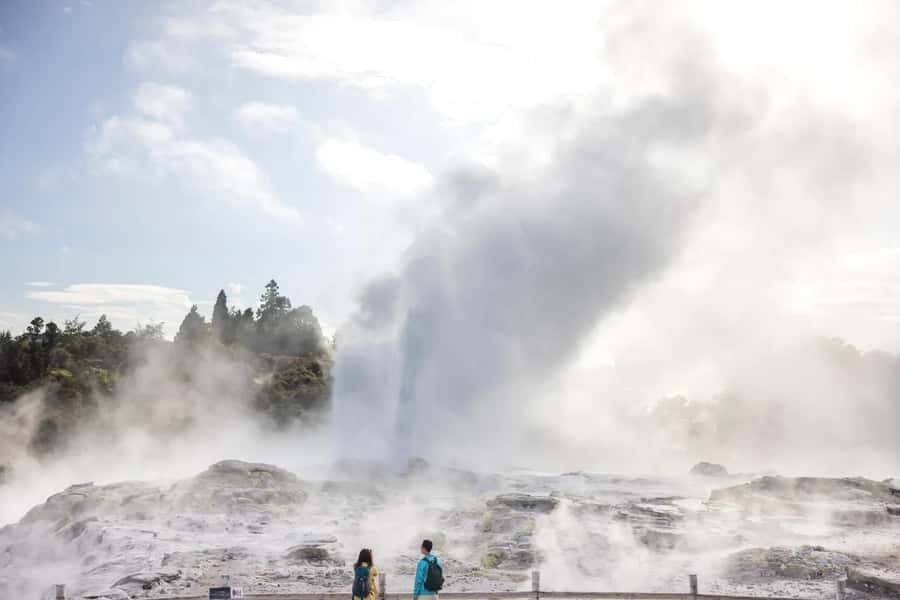
Pōhutu Geyser gives the visit its visual punch. The geyser’s eruptions are part of the natural activity in the thermal valley, so the exact timing and force can vary. You will see steam and geothermal heat throughout the area, with bubbling mud pools adding a slower, thicker kind of drama.
The useful thing about Te Puia is context. A guided visit helps connect the geothermal features with Māori culture and the people who have worked to preserve local arts. You are not simply walking past hot pools with a camera. You hear stories, see traditional skills in practice, and enter a meeting house built for cultural performance.
This is a good choice if you want a broad Rotorua introduction in a single day. It is less suitable if you prefer a quiet, unhurried walk or want to spend most of the day at one natural site.
More Hot Springs and Thermal Baths in New Zealand:
- Rotorua: Wai-O-Tapu Geothermal Park Entry Ticket
★ 4.6 · 2,601 reviews - Rotorua Rafting: Kaituna River White Water Rafting & Free Sauna
★ 5.0 · 1,952 reviews - Rotorua: Hell’s Gate Outdoor Mud Spa & Guided Walk
★ 4.7 · 1,140 reviews
The early Auckland departure and the long road south
Pickup is scheduled from Auckland CBD hotels between 5:45 and 6 AM. Auckland Airport hotel pickup is listed for 6:15 to 6:30 AM. You need to be at the hotel entrance at least 10 minutes early, and you should look for a vehicle marked ENZOY TOURS or use the vehicle number provided after booking.
This is an early start, but it buys you a full day in Rotorua. The drive takes about two hours to Tirau, followed by another hour to Rotorua. That means the transport is not a minor part of the trip. If you are prone to back trouble, note that the activity specifically warns it may not suit people with back problems.
The vehicle also picks up or drops off other people connected with Rotorua attractions and hotels. That can make the schedule less direct. One low-rated experience specifically cites a long wait, so bring patience and avoid planning a tight evening appointment in Auckland.
The guides can make a difference here. Denish is noted for being kind and flexible with a family traveling with two small children. Ambrose is also described as willing to adjust plans and fit in requests. That does not guarantee a private itinerary, but it suggests the operator may be responsive when the day allows.
Tirau gives you a useful 15-minute break
Tirau is the first scheduled stop. This small Waikato town is known for sculptures and buildings made from corrugated iron, including its familiar dog and sheep shapes.
You get about 15 minutes here. That is enough to use the restroom, stretch your legs, take a few photos, and perhaps buy a coffee or light snack. It is not enough for a slow café visit or serious browsing, so keep your watch in view.
I like this stop because it breaks the Auckland to Rotorua run with a place that has a bit of local character. It is also practical. After an early pickup, a clean restroom and a chance to walk around matter more than another roadside viewpoint.
Do not treat Tirau as a major attraction. Its value is as a short, cheerful pause before the main visit. If you need coffee, ask about timing before wandering away from the pickup point.
Entering Te Whakarewarewa Thermal Valley
Te Puia sits in the geothermal area known as the Te Whakarewarewa Thermal Valley. The setting combines heat, steam, mud, carving, sculpture, and Māori storytelling.
The guided experience now lasts 90 minutes, and all experiences at Te Puia are guided. Arrive 15 minutes before your scheduled time. This matters because the site is not presented as an open-ended visit where you can simply arrive whenever you like.
As you move through the valley, you can expect boiling mud pools and geothermal features around the paths. The ground and air may feel hot in places, while weather can change quickly. Wear comfortable shoes, carry water, and bring a hat, sunscreen, and clothing suited to the forecast.
The geothermal activity is impressive, but it is not a theme-park show built to a fixed timetable. Pōhutu’s activity is natural. Your guide can explain what you are seeing, but nobody can promise an identical eruption every time.
Another pool worth the trip:
- Rotorua Rafting: Kaituna River Rafting Experience-Free Sauna
★ 4.9 · 401 reviews - Polynesian Spa Rotorua: Deluxe Lake Spa Hot Spring Bathing
★ 4.5 · 358 reviews - Geothermal Mineral Baths Experience: Pavilion Pools for 12+
★ 4.5 · 296 reviews - Polynesian Spa Rotorua: Deluxe Lake Spa Hot Spring Bathing
★ 4.5 · 227 reviews
Pōhutu Geyser is the headline sight
Pōhutu is described as the largest active geyser in the Southern Hemisphere. It is the sight most likely to define your memory of Te Puia.
You will see steam rising from the thermal valley and may see the geyser send water upward with force. The surrounding mud pools provide contrast. Geysers are sudden and loud, while mud pools bubble and pop at a lower, steadier pace.
Keep your camera ready, but do not spend the whole visit staring through a screen. The geothermal valley is best understood from several angles, including the smell of sulfur, the sound of escaping steam, and the sense that the ground beneath you is active.
A guide is useful here because the same hot water that creates a dramatic photograph also demands respect. Stay with the group and follow the route. Smoking is not allowed.
Kiwi conservation adds a rare New Zealand encounter
The Kiwi Conservation Centre gives this day a second major focus. New Zealand’s kiwi is one of the country’s best-known native birds, but it is not an animal you can count on seeing in the wild during a short Auckland-based trip.
At the center, you get a chance to see kiwi in a protected setting. The experience is especially useful for first-time visitors who want to learn about the bird rather than simply collect a landscape photograph.
The kiwi is nocturnal, so viewing conditions may be dim. A camera may be less useful than your own eyes. Take your time and listen to the guide’s instructions around the enclosure.
This stop also adds balance to the day. Without it, the visit would lean heavily toward geothermal activity and performance. With the conservation center, you see a living part of New Zealand’s natural identity as well.
Māori arts and the wānanga at Te Puia
Te Puia is home to the New Zealand Māori Arts and Crafts Institute. Skilled carvers and weavers demonstrate traditional methods, while guides explain the stories and practices passed down through generations.
This is one of the most valuable parts of the visit for anyone who wants more than a quick haka photo. Māori carving and weaving are not decorative extras here. They are presented as active skills taught through the institute’s wānanga, or school.
Look closely at the carved figures and patterns around the site. The artwork helps explain how Māori design communicates people, ancestors, place, and identity. Your guide can give the symbols a meaning that a quick self-guided walk would likely miss.
The setting also matters. Māori artwork and sculptures appear alongside the geothermal features, so the cultural experience is tied to the place rather than separated into a museum room. That combination is a strong reason to choose Te Puia over a stop focused only on geysers.
The Te Aronui a Rua performance
The cultural performance takes place in the carved Te Aronui a Rua meeting house. It includes a Pōhiri, or Māori welcome, Waiata song, Mōteatea chant, poi, and haka.
Expect a performance with movement, rhythm, formal welcome, and strong vocal energy. The haka is the portion many people anticipate, but the full program gives you a better sense of the range of Māori performance traditions.
You should enter with respect. This is not simply a stage show added to a sightseeing ticket. The welcome and meeting house have cultural meaning, and the presentation works best when you pay attention to the words, gestures, and sequence.
The performance also gives you a comfortable change of pace after walking near the geothermal features. If you are traveling with children, the movement and sound can hold attention better than a long museum talk, although very young children may still find the full day tiring.
Lunch, Rotorua sights, and the return north
Lunch is not included. You are asked to eat at the Te Puia café or restaurant at your own expense. Budget for that meal, and consider carrying water or a small snack for the road.
After Te Puia, the schedule includes about an hour of driving highlights around Rotorua. The vehicle may collect people from other attractions and drop off people staying at Rotorua hotels. This is not described as a long, dedicated Rotorua sightseeing tour, so keep your expectations modest.
The return journey includes a stop by the Waikato River. It offers a peaceful place to stretch and take in the water and surrounding views before the final drive to Auckland.
Drop-off in Auckland CBD is expected around 6 PM, though traffic, pickups, and waiting can affect the exact time. If you are staying near the airport or outside the CBD, confirm the drop-off arrangements before booking.
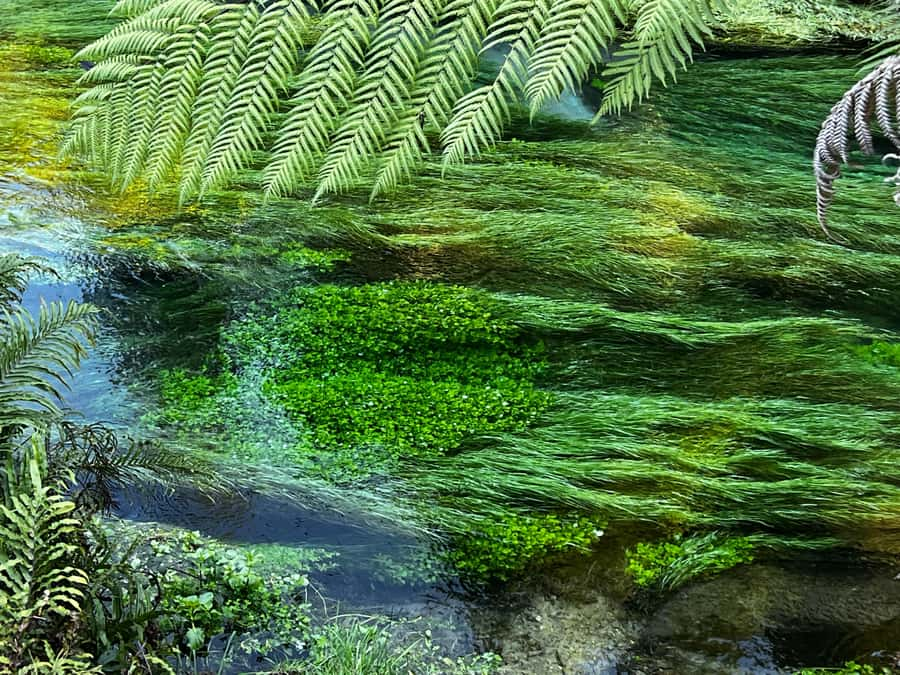
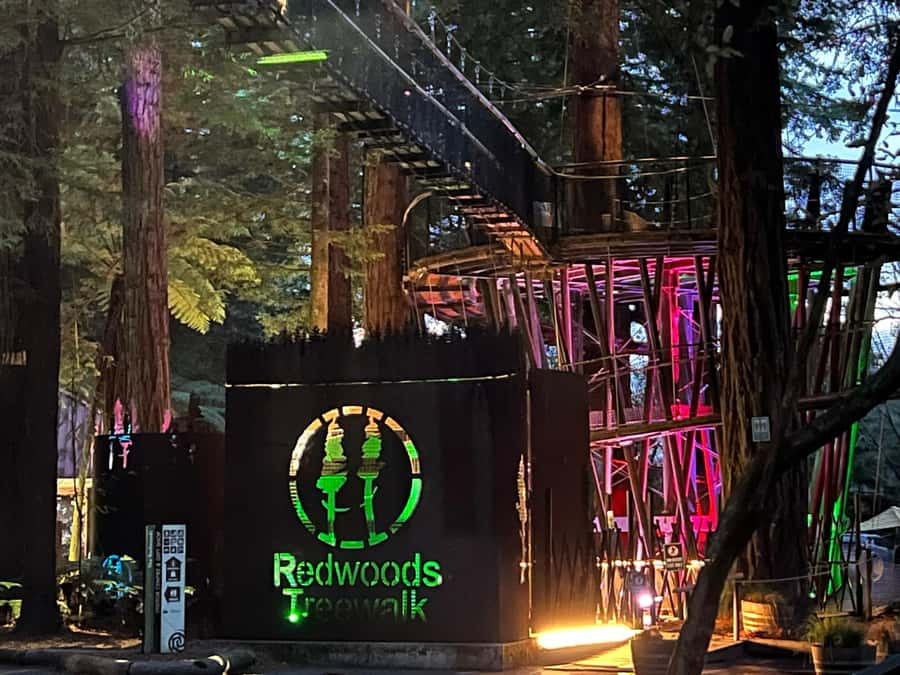
One important point deserves attention: the supplied title mentions Redwood and Blue Springs, but the detailed schedule does not clearly list visits to either place. The described route includes Te Puia, Tirau, a Rotorua driving segment, and the Waikato River. If Redwood Forest or Blue Springs is essential to your plan, ask ENZOY Tours to confirm exactly what is included on your date.
Is the $234 price good value?
At $234 per person, the price is not low, especially once you add lunch and coffee. Still, it covers a great deal of transport and admission in a single day: hotel pickup and return, round-trip bus travel, Te Puia entry, the guided geothermal visit, the kiwi center, and the Māori performance.
For a person based in Auckland without a rental car, the value is easier to see. You avoid driving several hours each way, finding parking, and arranging separate Te Puia tickets. You also get an English-speaking guide and a planned route.
The value is weaker if you already have a car or plan to spend several nights in Rotorua. In that case, you may prefer more time at Te Puia and the freedom to choose additional sites at your own pace.
Remember that the day is long and includes a fair amount of driving. You are paying for access and convenience, not for a relaxed resort-style outing.
Who should book this day trip?
I would recommend it to first-time New Zealand visitors with limited time, families who want several major Rotorua experiences in one place, and people who prefer not to drive on unfamiliar roads.
It is also a good fit if Māori arts and performance matter as much to you as geothermal scenery. The combination of the institute, carved meeting house, performance, and thermal valley gives the day more depth than a geyser-only visit.
I would hesitate if you have back problems, dislike early starts, or want a slow day with long breaks. The activity is marked wheelchair accessible in one section, but another section says it is not suitable for wheelchair users. Confirm the practical access arrangements directly before paying, especially because the route includes a geothermal park and vehicle transfers.
Should you book ENZOY Tours to Te Puia?
Book this tour if you want the most important Te Puia sights in one organized day from Auckland, and you accept an early start and a long ride. The mix of Pōhutu Geyser, kiwi viewing, Māori arts, and the Te Aronui a Rua performance is the real strength.
Before booking, confirm two points: the exact inclusion of Redwood Forest and Blue Springs, and the accessibility arrangements. Also allow extra time for the return to Auckland, since pickups and traffic can stretch the schedule.
If the answers fit your plans, this is a practical way to reach Rotorua without a car. If you want a quieter pace or several Rotorua sites beyond Te Puia, stay overnight instead.
FAQ
How long does the tour last?
The full experience lasts about 12 hours. Auckland CBD drop-off is expected around 6 PM, with early morning pickup.
Where does pickup take place?
Pickup is available from Auckland CBD hotels between 5:45 and 6 AM, or Auckland Airport hotels between 6:15 and 6:30 AM. Arrive at the hotel entrance at least 10 minutes early.
What is included in the price?
The price includes hotel pickup and drop-off, round-trip bus transport, entry to Te Puia Rotorua Geothermal Park, the guided geothermal tour, the Māori cultural performance, and the Kiwi Conservation Centre.
Is lunch included?
No. Lunch and coffee are not included. You are asked to eat at the Te Puia café or restaurant at your own expense.
How long is the guided visit at Te Puia?
All Te Puia experiences are guided and last 90 minutes. You should arrive 15 minutes before the scheduled time.
Is the tour wheelchair accessible?
The activity information gives conflicting guidance. It lists wheelchair access as available but also says the experience is not suitable for wheelchair users. Confirm the route and vehicle arrangements directly with ENZOY Tours before booking.
Can I cancel for a full refund?
You can cancel up to 24 hours in advance for a full refund.
Freshly added soaks in New Zealand
- West Auckland: Sunset with Thermal pool & Wine Tasting★ 5.0 · 3 reviews
- WAI-O-TAPU Geothermal, Rotorua – Group Day Tour Ex Auckland★ 4.3 · 4 reviews
- Whakarewarewa: Self-Guided Geothermal Trails★ 4.5 · 41 reviews
- Te Puia Geothermal, Kiwi and Māori Art★ 3.5 · 3 reviews
- Hells Gate Geothermal, Mud & Sulphur Spa★ 4.0 · 7 reviews
- Wai-O-Tapu Geothermal Valley, & Hot River★ 5.0 · 4 reviews
- Private, via beaches, Kiwi farm to Rotorua 8 lakes & Geothermal★ 5.0 · 20 reviews
- Tauranga: Mount Maunganui Hot Pools Experience★ 4.5 · 7 reviews
Auckland Hot Springs, compared.
Auckland to Hobbiton Movie Set and Rotorua’s Geothermal Valley
Read our review →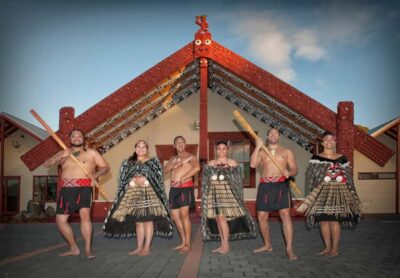
Rotorua Cultural & Geothermal Small Group Tour From Auckland
Read our review →
Romantic Auckland Sunset tour with Winery & Thermal pool
Read our review →
Rotorua Māori Cultural & Geothermal Tour & Lunch
Read our review →
Waitomo Glow Worm Caves & Te Puia – Rotorua’s Geothermal Valley
Read our review →
Wai-O-Tapu, Maori Haka & Hot Springs Rotorua Tour
Read our review →
Private 2 Day Tour: Hobbiton, Waitomo, Rotorua Geothermal & Hamilton Gardens
Read our review →More soaks worth the detour