
REVIEW · SELF-GUIDED TOURS
Whakarewarewa: Self-Guided Geothermal Trails
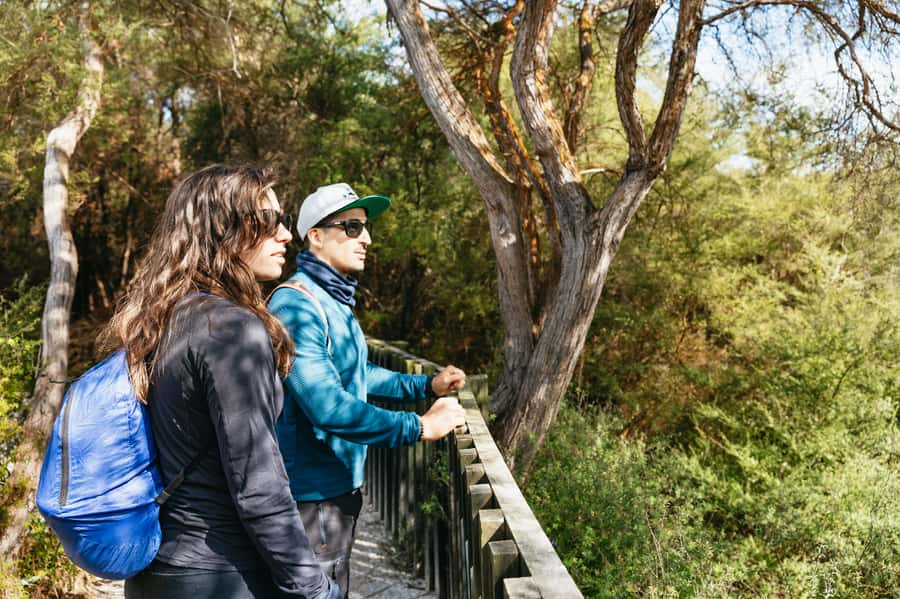
Whakarewarewa’s geothermal trails put you close to the raw, restless earth of Rotorua. You walk past steaming lakes, bubbling mud, native manuka, edible plants, and village sites without being tied to a tour group or a fixed script. The setting can feel like a film set, but the heat and sulfur are very real.
I like the freedom to stop for photos and read the information boards at your own pace. I also like the mix of natural features and Māori cultural context, beginning with the guiding legacy inside the admissions area and continuing through the memorial archway and rahui, or main village area. The main consideration is that this is a self-guided walk, so you do not get a live guide to explain each pool or answer questions as you go.
Key points to know before you go
- Steam, mud, and hot-spring lakes: See several forms of geothermal activity in one compact walk.
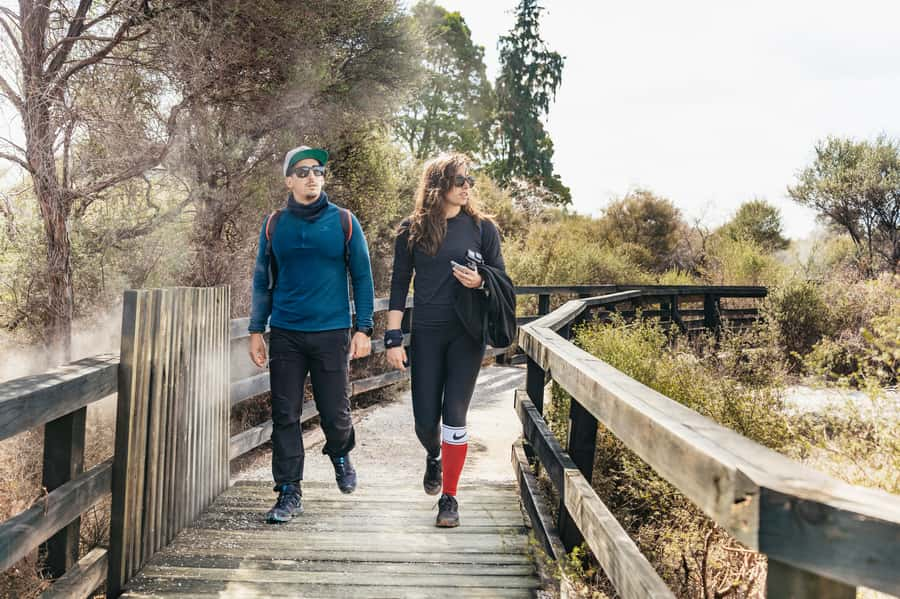
- A self-guided route: Read the information boards, set your own pace, and plan on roughly one hour.
- Village and geyser viewpoints: Stop at viewpoints for broad views over Whakarewarewa and its geysers.
- A Māori cultural setting: Begin with the village’s guiding legacy, memorial archway, and rahui area.
- Simple pricing: At $23 per person, the ticket is reasonable for an independent geothermal visit.
- Easy planning: Enter between 9:00 AM and 3:00 PM, with the last call at 3:00 PM.
Starting near Geyser Café
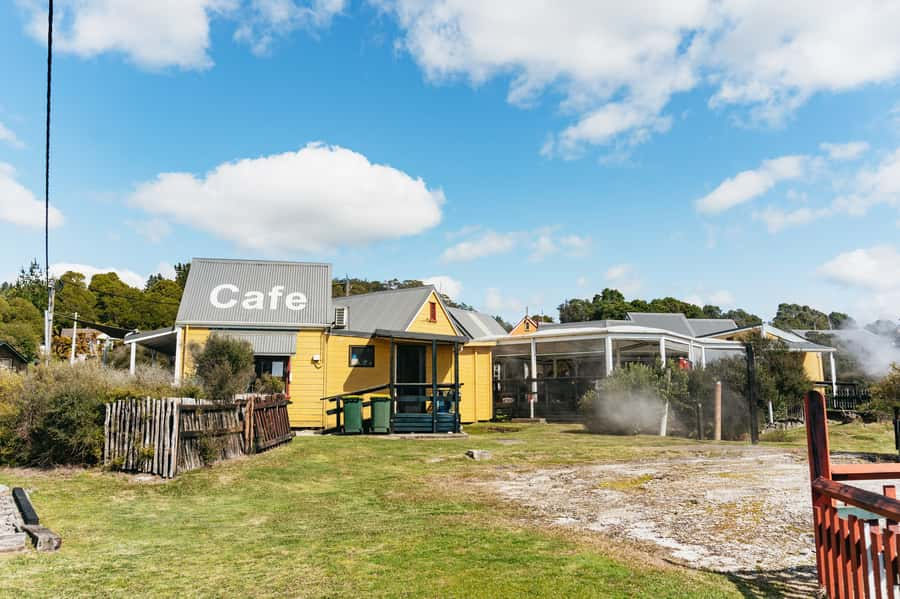
Your visit begins at the Geyser Café area, but the key first step is at the admissions office. Exchange your voucher there before entering. This matters because the digital booking confirmation itself is not the entry point.
Inside, you can read about Whakarewarewa’s guiding legacy and the world-famous guides connected with the village. No guide name is supplied for this activity, and there is no live guide included, so these introductory boards do much of the work of setting the scene.
I recommend giving yourself a few minutes here instead of rushing straight outside. The geothermal features are the obvious draw, but the opening information helps you understand that this is more than a quick walk beside hot water. You are entering a living Māori village setting with a long connection to guiding and visitors.
The walk is listed as taking about one hour. That is a useful estimate for someone who wants to see the main features without lingering at every sign. If you stop often for photographs or read all the boards carefully, your pace may be slower. The ticket is valid for one day, so you are not forced into a tight timed departure after exchanging your voucher.
More Self-Guided Tours in Rotorua:
- Whaka Geothermal Trails Self-Guided Tour
★ 3.5 · 44 reviews - Self-Guided Geothermal Tour in Orakei Korako
★ 5.0 · 178 reviews - Hellisheiði Geothermal Exhibition: Entry and Audio Tour
★ 4.6 · 88 reviews
Passing under the memorial archway
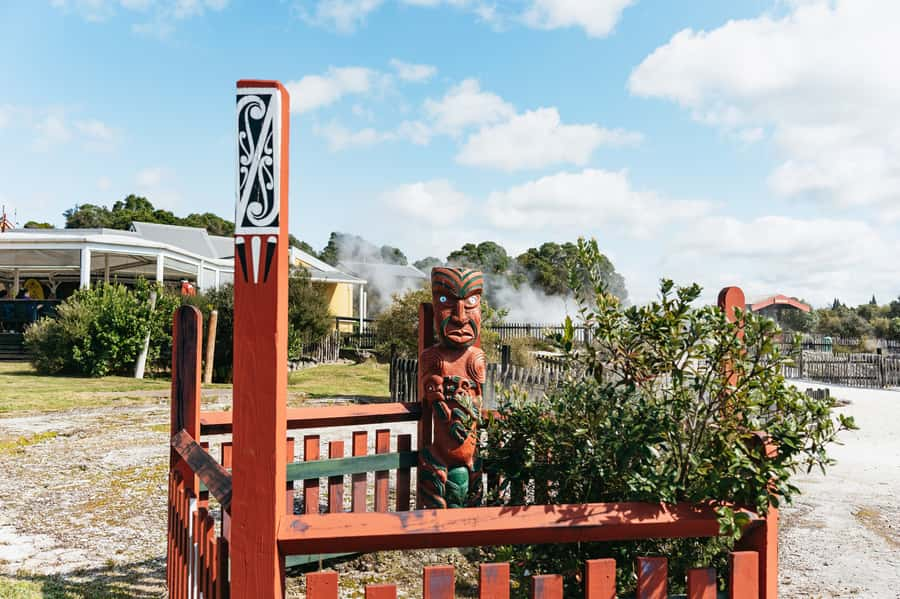
From the admissions area, you move outside and pass beneath the memorial archway. This gives the walk a clear sense of arrival. You are not simply stepping onto a public path with hot pools nearby. You are entering Whakarewarewa through a meaningful village gateway.
The route then passes the rahui, described as the main area of the village. This is an important cultural detail, and it helps place the geothermal activity in its local setting. The hot springs are not isolated curiosities. They are part of the environment around the village.
Because the experience is self-guided, take your time around this opening section. Read the signs, look at the village context, and note how quickly the natural and cultural parts of the visit come together. A guided tour might give you more spoken explanation, but this format lets you pause quietly and choose how much information you want.
A Jurassic Park feel among steaming waters
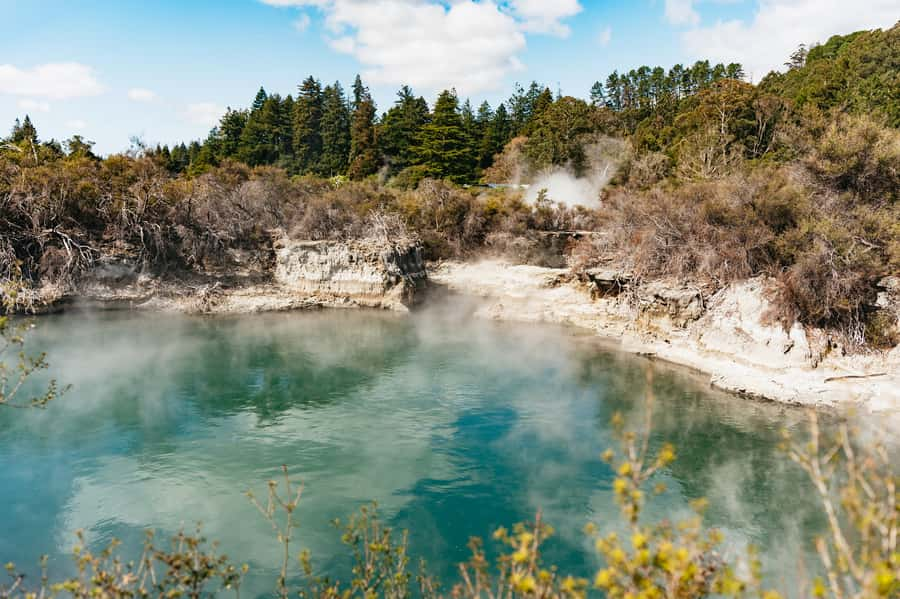
The route soon takes on a dramatic look. The supplied description compares the scenery to Jurassic Park, which is a fair way to picture the combination of steam, wet ground, dark pools, and thick native growth. You may find the most striking moments are not one single attraction, but the changing mix of water, vapor, plants, and open views.
You will pass bubbling waters that some people believe have healing properties. Treat that as part of the local story, not as medical advice. The activity does not say that visitors can bathe in or touch the water, and the geothermal setting calls for sensible caution. Stay on the marked trail and do not put your hands into pools or mud.
The bubbling water is also a good reason to slow down. Geothermal features can look still in one moment and active in the next. A self-guided walk gives you the chance to watch the surface, listen to the bubbling, and take photographs without holding up a group.
This section should suit anyone who likes natural sights that feel a little strange and unpredictable. It is less suited to someone seeking a polished attraction with constant commentary, staged displays, or a long list of organized activities. The appeal here is the direct encounter with the ground beneath you.
Hot-spring lakes and bubbling mud pools
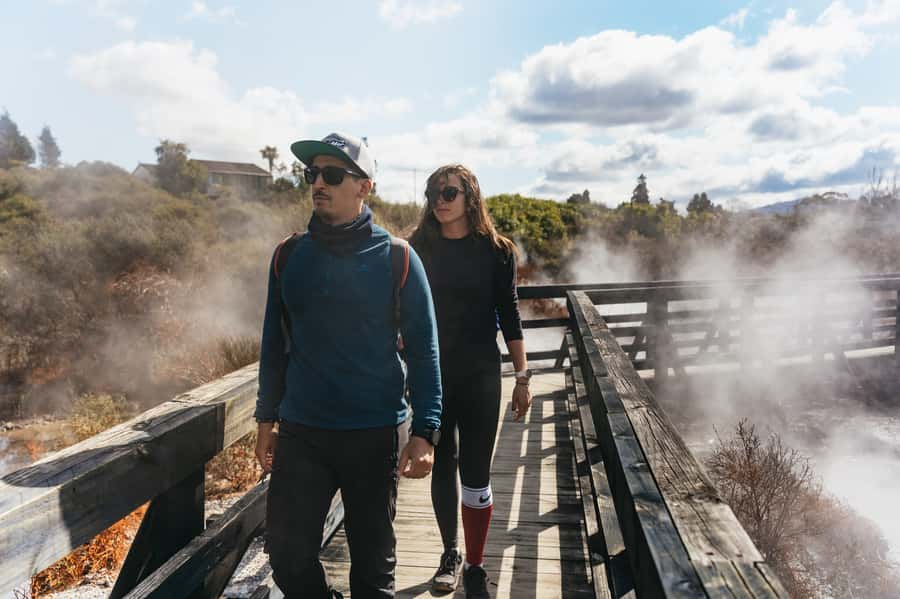
The main reward is the close look at hot-spring lakes, thermal pools, and mud pools. Each feature gives you a different view of geothermal activity. Steaming lakes provide broad, colorful surfaces. Thermal pools bring the heat closer to eye level. Mud pools bubble and shift in a way that feels almost alive.
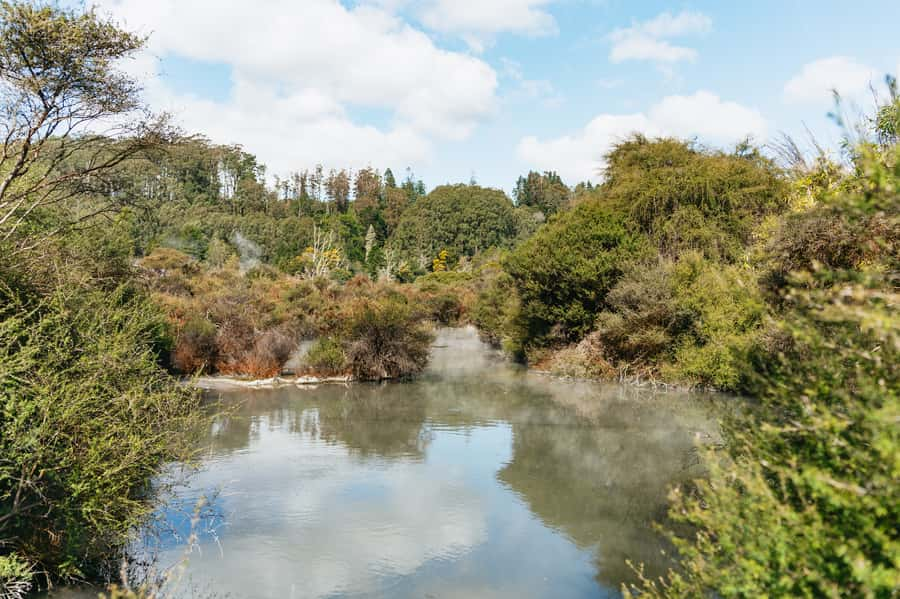
The description points to colorful steaming lakes and thermal pools, but it does not promise any particular colors on a given day. Light, steam, and weather can change how the pools appear. Bring your camera, but also allow time to look without framing every moment through a screen.
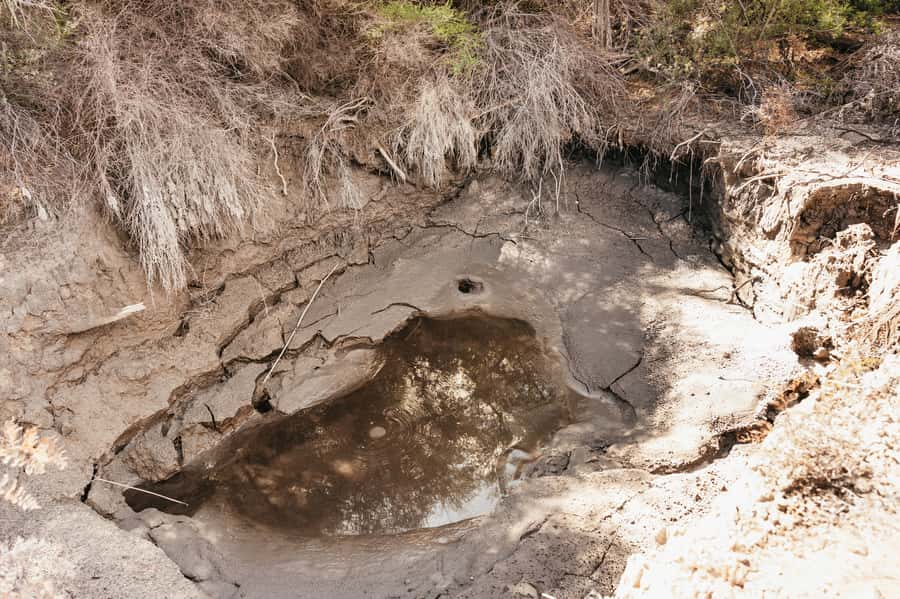
The mud pools are especially useful for understanding that geothermal activity is not only about famous geysers. Mud, steam, hot water, and mineral-rich ground all form part of the same system. You get a wider picture of Rotorua’s volcanic setting from this short walk.
There is no live guide included, so the information boards are important. They help you identify what you are seeing and provide context that may not be obvious from the path. If you enjoy asking questions, keep in mind that this ticket does not include a guide who can explain changes in the pools or discuss local traditions in detail.
More Guided Tours in Rotorua:
- Rotorua: Hell’s Gate Outdoor Mud Spa & Guided Walk
★ 4.7 · 1,140 reviews - Lake Rotoiti Guided Hot Pools Kayak Trip
★ 5.0 · 23 reviews - Lake Rotoiti & Hot Pools Guided Kayak
★ 5.0 · 3 reviews - Bali: Mount Batur Sunrise Guided Hike and Natural Hot Spring
★ 4.8 · 9,284 reviews
Manuka, ferns, and useful native plants
The walk is not just bare rock and steam. You also pass native manuka bushland, ferns, and edible plants. That change in scenery gives the route a more natural feel and keeps it from becoming a series of hot pools with signs beside them.
I like this part because it shows how geothermal ground and native plants share the same place. You get close views of vegetation, then turn toward a steaming pool or hot-spring lake. The contrast makes the walk more interesting than a single-purpose viewpoint.
The mention of edible plants adds another layer, though the activity does not specify which plants you will see or whether any tasting takes place. Do not assume that you can pick or eat anything along the route. Read the information provided and stay within the marked visitor area.
Comfortable shoes are the right choice. The walk is described as easy in a verified booking comment, but the activity does not provide a detailed surface description or an exact distance. Wheelchair access is available, yet you may still want to confirm route conditions if you need specific information about slopes, surfaces, or access to every viewpoint.
Viewpoints over the village and geysers
The route includes viewpoints with panoramic views of the village and geysers. These stops give you a chance to step back from the close-up details and see how the geothermal area fits together.
The viewpoints are also likely to be the best places for wider photographs. Close shots of steam and mud show texture, while a higher or more open viewpoint gives your pictures a sense of scale. If the air is moving, steam may open and close the view, so wait a moment rather than taking only one photograph.
The wording does not promise a particular geyser eruption schedule or a live demonstration. You should visit for the wider geothermal setting, not to guarantee a timed eruption. If geysers are your only priority, check what other Rotorua attractions offer before choosing this ticket.
For many people, this combination is the strongest part of the visit: you get intimate views of hot water and mud, then broad views of the village and geysers. The route works best when you treat the viewpoints as pauses in the walk rather than racing from one feature to the next.
What the $23 ticket really includes
At $23 per person, the ticket is a fair buy if you want a quiet, independent look at Whakarewarewa’s geothermal setting. Your fee covers entrance to the geothermal trails, access to the village approach and viewing areas, and the chance to spend the day within the stated opening window.
The price does not include food, drinks, hotel pickup, or drop-off. It also does not include a live guide. That keeps the cost below a guided outing, but it means you are paying for access and interpretation through signs rather than personal storytelling.
The strongest value comes from flexibility. You can enter any time from 9:00 AM to 3:00 PM, with last call at 3:00 PM, and walk at your own pace. The route is listed at about one hour, so it can fit neatly into a Rotorua day with other plans.
The value is weaker if you want a full cultural program, transport, or detailed spoken explanations. In that case, you may prefer a guided village experience. This ticket is best seen as a focused geothermal walk with cultural context, not an all-inclusive day tour.
Who will enjoy this self-guided walk
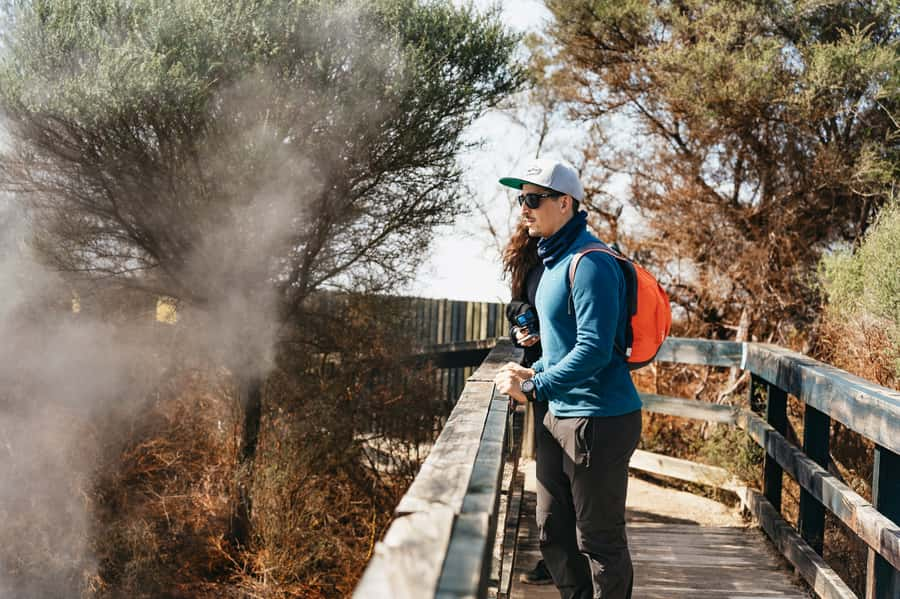
I would recommend this experience to independent visitors who like setting their own pace. You can stop at information boards, wait for steam to shift, and take photographs without keeping up with a group.
It also suits photographers, families who want a manageable outdoor activity, and anyone with an interest in volcanic features. The combination of mud pools, steaming lakes, plants, village views, and geysers gives you plenty to look at within a relatively short visit.
It may be a good option for people who want some structure but not a tightly managed tour. The admissions point, marked trail, information boards, and viewpoints provide direction, while the self-guided format leaves room to wander at a relaxed speed.
You should think twice if you need a guide to explain Māori culture or geothermal science in depth. The host or greeter language is English, but no live guide is included. The introductory boards and route information provide help, yet they cannot respond to personal questions.
Practical timing and what to bring
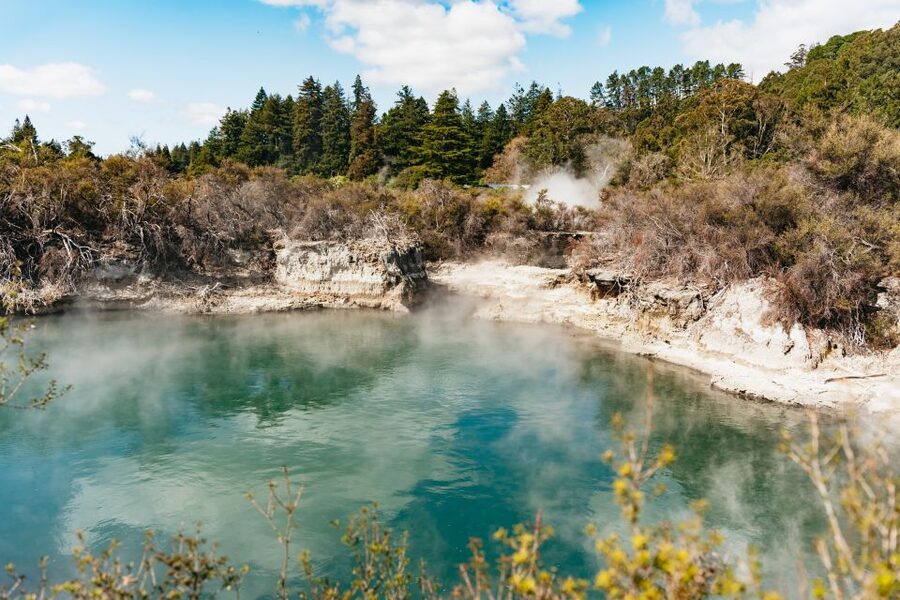
Plan your visit inside the 9:00 AM to 3:00 PM access period. The last call is at 3:00 PM, so do not arrive at the final minute if you want a relaxed walk and time to read the signs.
Wear comfortable shoes. The walk is described as easy, but the available details do not give a full route map, distance, or surface breakdown. Good footwear is still sensible around an outdoor geothermal site.
Bring a camera. You will have close views of steam, pools, bubbling mud, manuka, ferns, and broader viewpoints over the village and geysers. You may also want to leave room in your schedule for pauses, since the best photographs often come when the steam changes.
The activity is wheelchair accessible. If you rely on a wheelchair and need precise information about individual trail sections, ask the admissions office before entering. The supplied details confirm accessibility but do not explain every surface or viewpoint.
Free cancellation is available up to 24 hours in advance for a full refund. You can also reserve now and pay later, which helps if your Rotorua plans are still shifting.
Should you book Whakarewarewa’s geothermal trails?
Book it if you want a reasonably priced, easy self-guided walk through a geothermal area with more variety than a single viewing platform. The strongest reasons are the bubbling mud, steaming lakes, native plants, village setting, and viewpoints over the geysers. The ability to go at your own pace is a real advantage.
Skip it if your main goal is a live cultural presentation, hotel transport, or expert explanation at every stop. This is a simple entry ticket, not a guided tour.
For $23, I think it makes the most sense as a flexible one-hour stop in a Rotorua day. Arrive before the 3:00 PM last call, spend a few minutes with the guiding history at the admissions office, and resist the urge to hurry past the information boards. The geothermal features are memorable, but the village setting is what gives the walk its character.
FAQ
How much does entry to the Whakarewarewa geothermal trails cost?
Entry costs $23 per person.
How long does the walk take?
The scenic walk is listed as taking about one hour. You can go at your own pace and stop to read the information boards or take photographs.
What time can I visit the trails?
The trails are available from 9:00 AM to 3:00 PM. The last call is at 3:00 PM.
Where do I exchange my voucher?
Exchange your voucher at the admissions office before entering the trails. The listed starting area is near Geyser Café.
Is a live guide included?
No. This is a self-guided experience. English information is available, and an English-speaking host or greeter is listed.
What can I see on the walk?
You can see steaming lakes, hot springs, bubbling mud pools, thermal pools, native manuka, ferns, edible plants, village areas, and viewpoints over the village and geysers.
Is the experience wheelchair accessible?
Yes, the activity is listed as wheelchair accessible.
Can I cancel for a refund?
Yes. You can cancel up to 24 hours in advance for a full refund. You can also reserve now and pay later.
Freshly added soaks in Rotorua
- WAI-O-TAPU Geothermal, Rotorua – Group Day Tour Ex Auckland★ 4.3 · 4 reviews
- Private Tour Waiotapu Geothermal Shore Excursion up to 8 passengers★ 5.0 · 6 reviews
- Whaka Geothermal Trails Self-Guided Tour★ 3.5 · 44 reviews
- Lake Rotoiti Guided Hot Pools Kayak Trip★ 5.0 · 23 reviews
- Wai Ariki Hot Springs and Spa Restorative Journey (2hrs)★ 4.5 · 73 reviews
- Polynesian Spa Rotorua: Family Hot Pools and Freshwater Pool★ 3.5 · 14 reviews
- Lake Rotoiti Evening Kayak Tour including Hot Springs, Glowworm Caves and BBQ Dinner★ 5.0 · 60 reviews
- Rotorua: Secret adventure kayaking to natural hot springs★ 3.8 · 3 reviews
Self-Guided Tours, compared.

Hellisheiði Geothermal Exhibition: Entry and Audio Tour
Read our review →

Banff Cave & Hot Springs Audio Walking Tour (Not a Ticket)
Read our review →
More soaks worth the detour