
REVIEW · HOT SPRINGS WITH LUNCH
Auckland: Rotorua Māori Cultural & Geothermal Tour & Lunch
Rotorua’s best two draws are packed into one long day here: a Māori cultural gathering at Mitai Māori Village and the strange, colorful world of Wai-O-Tapu. You’ll eat hangi food cooked in an earth oven, watch warriors glide along the Wai-o-Whiro stream, and walk past hot springs and volcanic craters.
I like the mix of culture and nature, plus the small-group Auckland transport, which saves you from arranging a long self-drive day. Guides such as Karthik add useful context, keep the day moving, and provide water and onboard refreshments.
The tradeoff is the clock. Rotorua is a long way from Auckland, so this is a 13-hour day with plenty of driving. Mitai is a staged cultural presentation rather than a permanently inhabited village, and some dietary needs may be difficult to meet.
Key points to know before booking
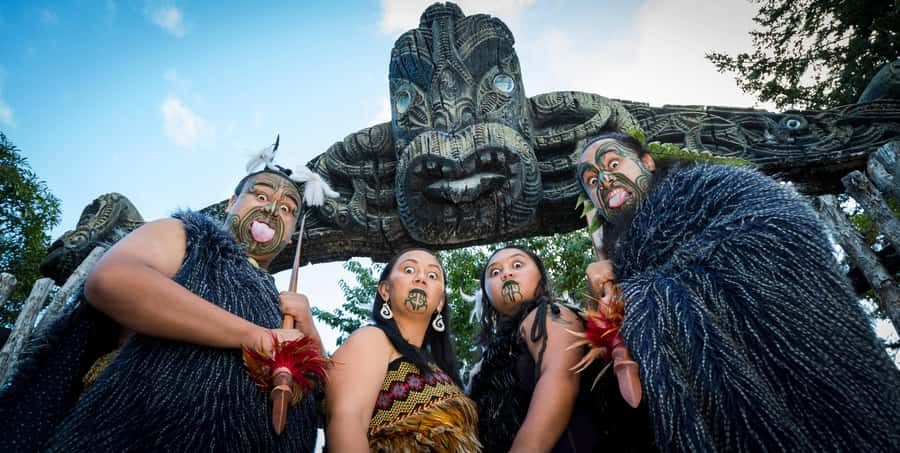
- Māori culture in one concentrated visit: See a pōwhiri welcome, waiata, mōteatea, poi, haka, weapon displays, carving, and tā moko traditions.
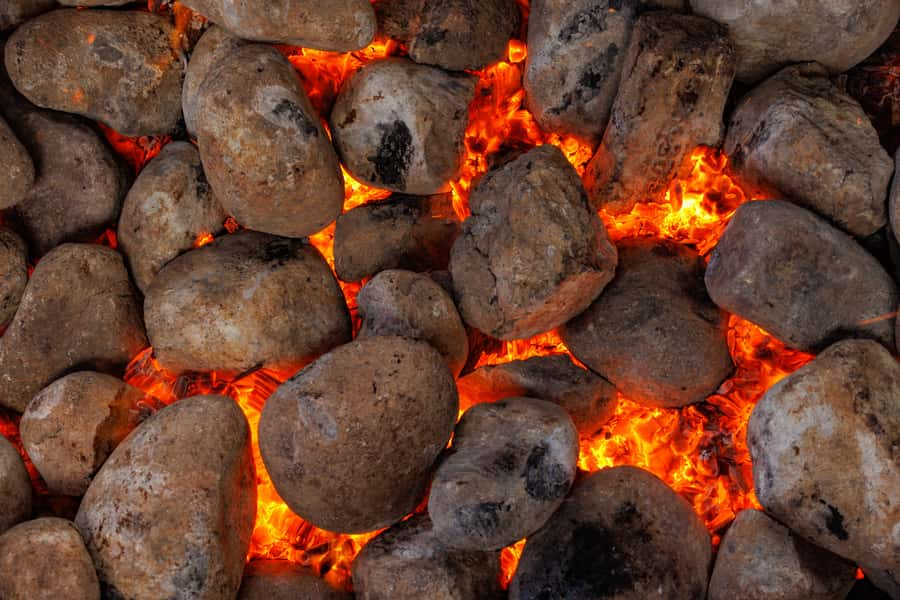
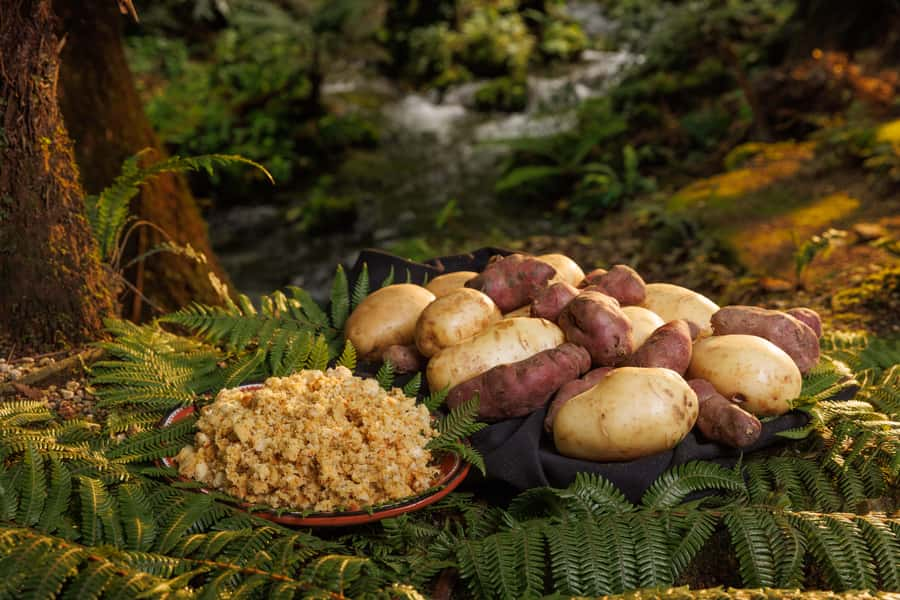
- A hangi buffet is included: Food is cooked in baskets over hot stones in a pit dug into the ground.
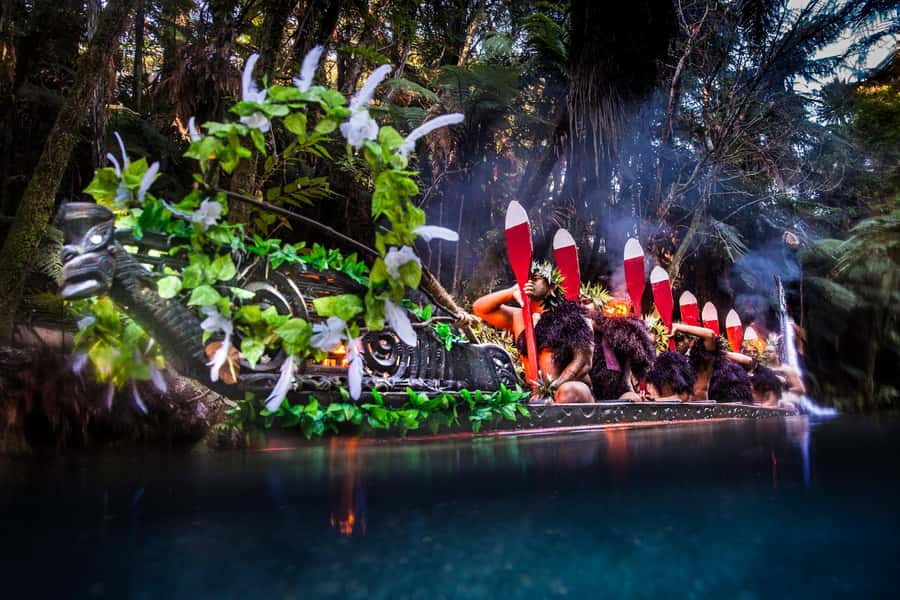
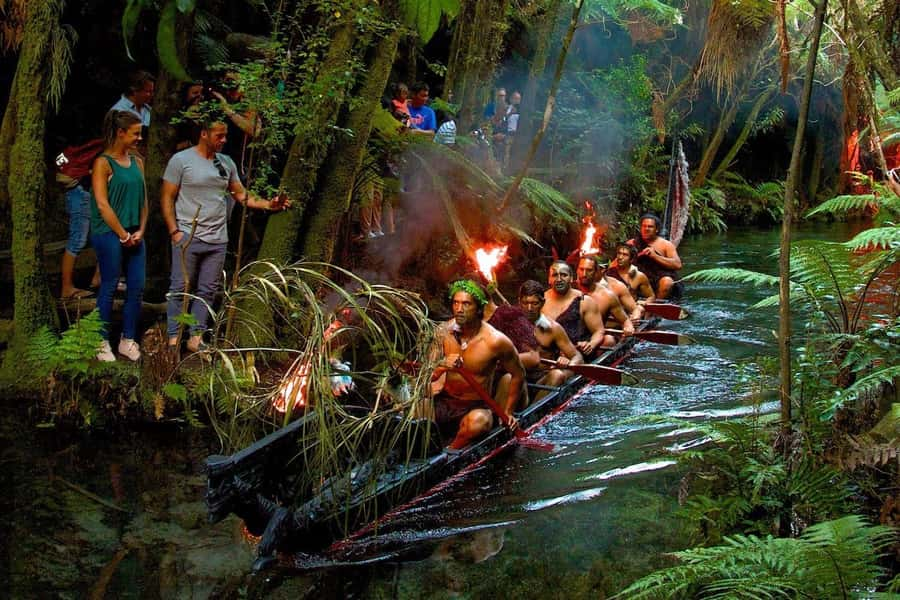
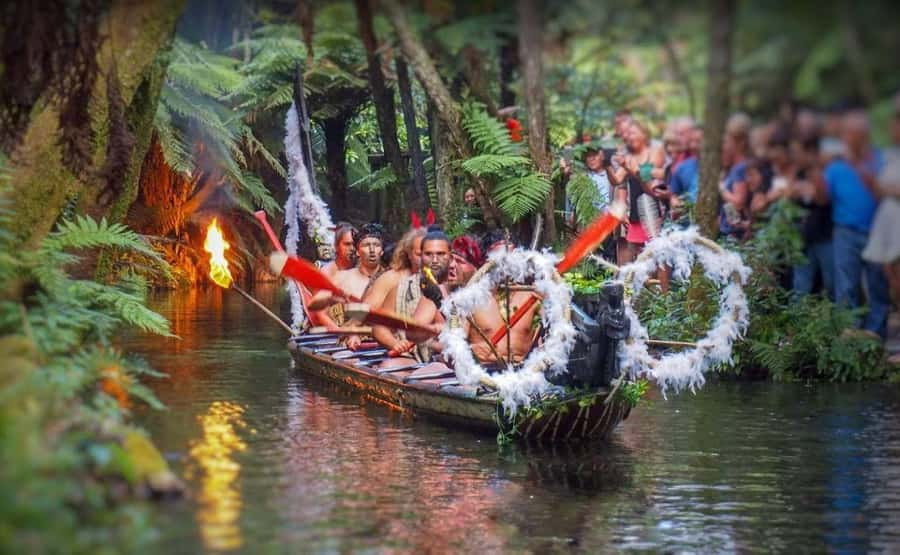
- The warrior canoe is a memorable opening: Māori performers travel along the Wai-o-Whiro stream before the main cultural presentation.
- Wai-O-Tapu is self-guided: Allow roughly 45 to 90 minutes for the walking trails and colorful geothermal features.
- The day begins and ends in Auckland: Hotel pickup and drop-off in Auckland CBD are included, along with minibus transport, water, refreshments, and Wi-Fi.
- Good shoes matter: Wai-O-Tapu has uneven, unpaved sections, and sandals or flip-flops are not suitable.
Why this Auckland to Rotorua day works
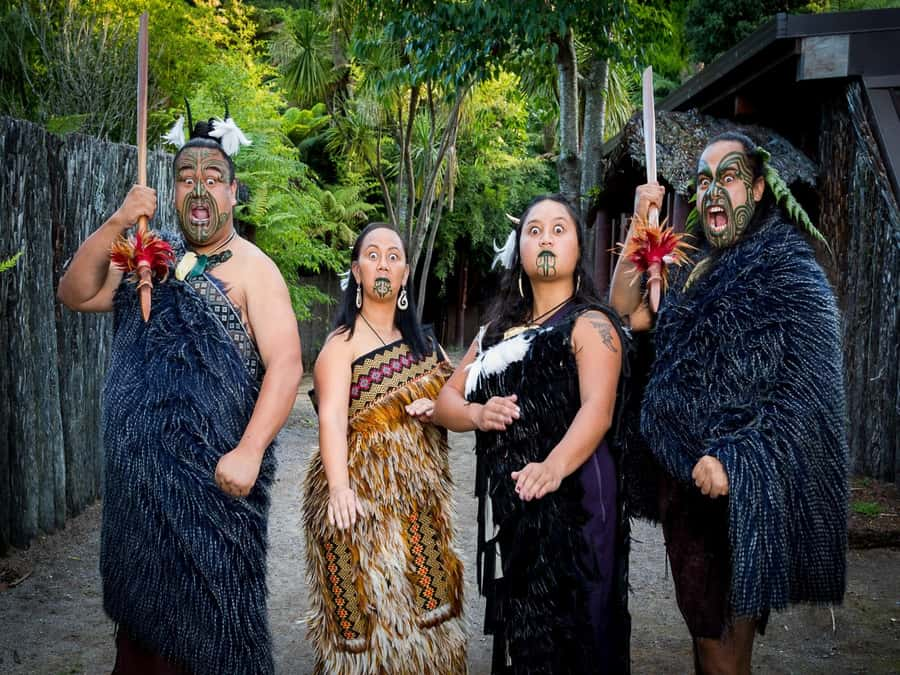
This outing gives you two very different reasons to visit Rotorua without asking you to plan several moving parts. The morning and early afternoon focus on Māori culture, food, and performance. Later, you walk through an active geothermal area where the ground steams, mud bubbles, and hot pools show off nature’s less tidy side.
I like that the cultural visit is not treated as a quick photo stop. You have time to see several elements of Māori performance and learn about carving, tattoo art, and traditional weapons. The hangi also makes the visit feel grounded in everyday food traditions, even though the presentation itself is designed for a touring audience.
The Wai-O-Tapu walk changes the mood completely. After the noise and energy of the haka, you get quiet paths, sulfurous air, bright mineral colors, and broad views across volcanic craters. It is a smart pairing, but you need to accept a full day on the road. The trip is best for you if Rotorua is not already part of your New Zealand itinerary.
More Hot Springs with Lunch in New Zealand:
- Lake Rotoiti Evening Kayak Tour including Hot Springs, Glowworm Caves and BBQ Dinner
★ 5.0 · 60 reviews - Hot Pools Kayak & Evening Barbecue
★ 5.0 · 12 reviews - Antalya Pamukkale Hot Springs & Hierapolis Tour With Lunch
★ 5.0 · 1,092 reviews
The long ride through Waikato
Pickup is from Auckland CBD, and you should be at the meeting point 10 minutes early. The minibus has a registration number shown with your booking, either KYQ418 or TOURME, so check that detail before you leave your hotel.
The vehicle is temperature-controlled, and the tour includes water, refreshments, and complimentary high-speed internet. Those are small comforts, but they matter on a day with several hours of road time. A live English-speaking guide travels with you, rather than leaving you to follow a printed schedule.
The drive through the Waikato region is part of the experience. Expect countryside, mountains, farm animals, and changing views as you move south toward Rotorua. It is not a sightseeing stop-by-stop drive, so do not expect a series of formal photo breaks. Still, the rural scenery gives you a useful sense of New Zealand beyond Auckland.
One recent departure had just six people in the minibus. Group size can vary, but the small-group format usually makes it easier to ask questions and hear the guide. Karthik received especially strong praise for his pleasant manner, local information, patience, and steady handling of the schedule. He also made a point of offering rest stops, something older passengers may appreciate.
Mitai Māori Village and the warrior canoe
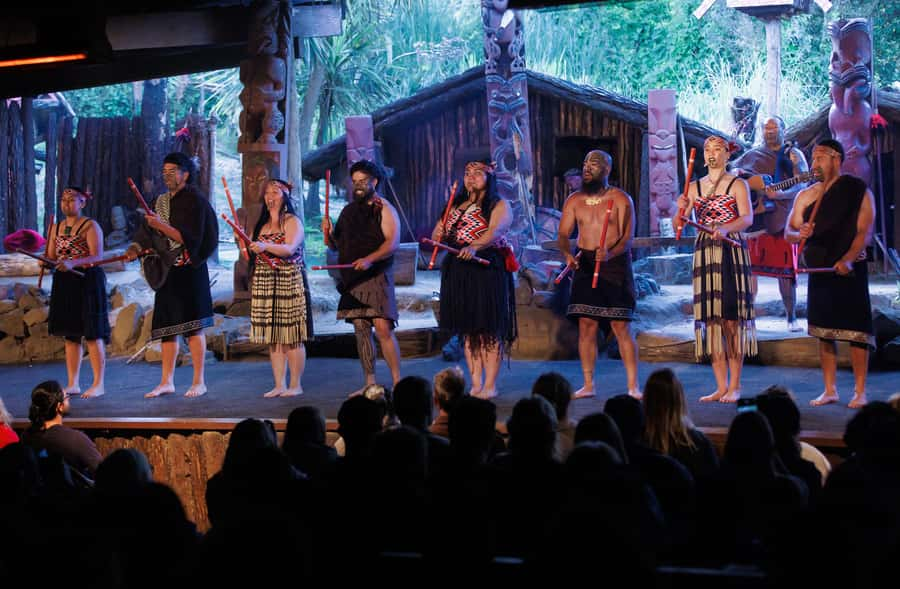
The cultural portion takes place at Mitai Māori Village. Set aside any idea that you are entering a normal residential village. This is a purpose-built cultural experience, with performers presenting Māori customs, stories, music, and martial traditions for visitors.
That does not make the material worthless. It simply helps you set the right expectations. You are watching a carefully prepared performance, not observing private community life. The value comes from the range of traditions presented and the chance to see them explained in one place.
The first strong image is the warrior canoe. Māori performers travel along the calm Wai-o-Whiro stream in a traditional war canoe. The scene has a quiet build before the more forceful parts of the performance, and it gives you an immediate sense of how water, movement, and ceremony fit together.
You’ll then see a wero, or challenge, followed by a pōwhiri, the traditional Māori welcome. Waiata, or song, and mōteatea, a traditional chant, add a more reflective side. Poi performance brings rhythm and movement, while the haka supplies the fierce energy most people expect from a Māori cultural program.
The haka can be powerful, but the best reason to watch closely is the meaning behind the movements. Facial expressions, posture, calls, and gestures all carry purpose. The presentation also covers traditional weapons and combat, explaining why Māori warriors developed such a strong reputation in battle.
Carving and tā moko, the Māori tattoo tradition, are part of the cultural explanation. These sections help prevent the visit from becoming only a sequence of loud performance numbers. You get a look at artistic and symbolic traditions as well as combat and ceremony.
Your guide can add context during the journey, while Māori presenters handle the cultural performance itself. The balance works well when you listen for the explanation between the big moments. I recommend keeping your attention on the smaller details, including the chants, weapon handling, and patterns of movement.
What the hangi lunch adds
The included lunch is a traditional hangi buffet. Hangi food is cooked in an earth oven, with a pit dug roughly one to two meters into the ground. Baskets of kai, or food, are placed on hot stones at the bottom, allowing the heat and steam to cook the meal.
This method is not simply a restaurant theme. It shows how cooking, land, heat, and community come together in Māori food traditions. The result has distinctive flavors and a preparation method you will not get from an ordinary buffet in Auckland.
The meal is one of the strongest practical reasons to choose this outing. You do not have to find lunch during a tightly timed day, and the food gives you a chance to pause after the performance. The dining setup is part of a large visitor experience, so it may feel organized and commercial rather than intimate.
Food standards can also vary from person to person. Some people have found the meal excellent, while one recent assessment raised concerns about the cleanliness of the dishes. That does not mean you should expect a problem, but it is fair to know that the setting is not a small family kitchen.
Dietary flexibility is limited. Some requests may be possible, but the operator cannot meet every need, and vegan options are not assured. If you have serious allergies or strict dietary requirements, contact the operator before booking rather than relying on the buffet.
More Hot Springs and Thermal Baths in New Zealand:
- Rotorua: Wai-O-Tapu Geothermal Park Entry Ticket
★ 4.6 · 2,601 reviews - Rotorua Rafting: Kaituna River White Water Rafting & Free Sauna
★ 5.0 · 1,952 reviews - Rotorua: Hell’s Gate Outdoor Mud Spa & Guided Walk
★ 4.7 · 1,140 reviews - Rotorua Rafting: Kaituna River Rafting Experience-Free Sauna
★ 4.9 · 401 reviews
Walking through Wai-O-Tapu Thermal Wonderland
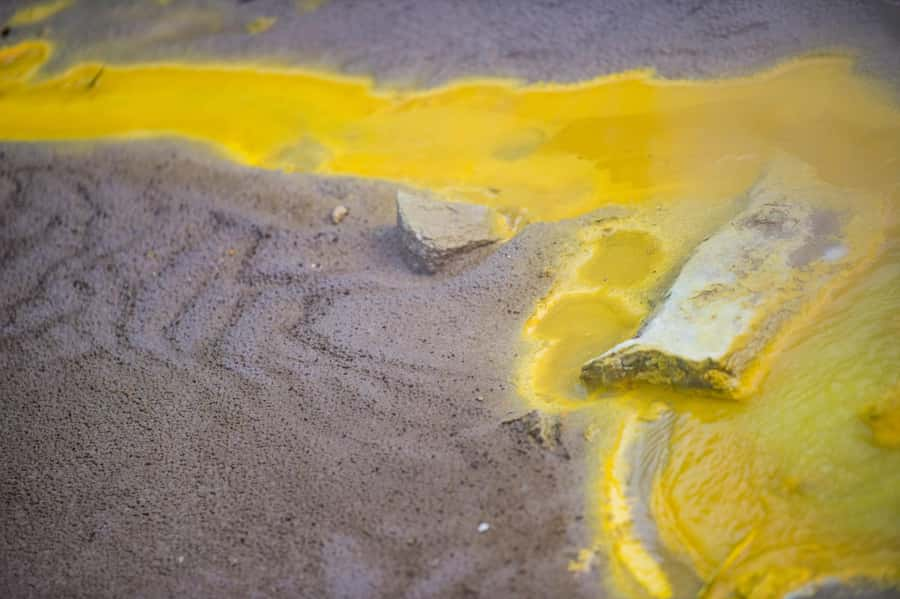
Wai-O-Tapu is the second major stop and a sharp contrast to Mitai. This is one of New Zealand’s most colorful geothermal areas, formed over thousands of years by volcanic heat and mineral deposits.
The visit is self-guided, which gives you some freedom after the fixed cultural program. Walking routes generally take 45 to 90 minutes. Your actual time depends on how often you stop for photographs and how comfortably you handle uneven ground.
The Champagne Pool is the headline feature. Its vivid colors and steaming surface make it one of the most recognizable sights in the park. You cannot treat the area like a normal picnic spot, though. It is an active geothermal environment, and you must stay on the marked paths and avoid touching plants or natural features.
You’ll also see naturally colored hot and cold springs, Devil’s Bath, bubbling mud, steaming ground, large volcanic craters, and sinter terrace formations. Each feature has a different texture and color. Some areas look almost polished, while others appear raw and unsettled, with gas pushing through mud or steam rising from the earth.
Bring a camera or phone, but do not let photographs turn the walk into a rushed checklist. The colors can change with light and weather, and the best view may not be the most famous one. The walk is short enough for many age groups, but it still demands a reasonable level of fitness.
Wear sturdy shoes with good grip. Unpaved and uneven paths are part of the visit, and jandals, high heels, sandals, and flip-flops are specifically unsuitable. Comfortable clothing, sunscreen, a hat, water, and a jacket or warm layer are wise choices because weather can shift during the day.
Timing, comfort, and the real cost
At $264 per person, this is not a cheap day trip. The price makes more sense when you count what is included: Auckland CBD pickup and return, a temperature-controlled minibus, an English-speaking escort, Wi-Fi, water, refreshments, admission to Mitai, the cultural program, the hangi buffet, and entry to Wai-O-Tapu.
You are also paying to avoid a long day of self-driving. That has real value. The route from Auckland to Rotorua takes planning, and the driver must stay alert after a full day of walking and activities. Here, you can look out the window, ask questions, and use the journey as recovery time.
The weak point is that you spend much of the 13-hour schedule in transit or following a set timetable. If you are staying in Rotorua, booking a local cultural evening and a separate geothermal visit would give you more time in each place. If Auckland is your base and your time is short, this package is more efficient.
The program can run slightly behind if a cultural explanation lasts longer than planned. One recent day lost some time after the Māori guide spoke at length, though the Auckland guide kept the pace under control. Build in patience rather than expecting every stop to run to the minute.
Tours operate in all weather. Rain will not automatically cancel the day, and the geothermal walk can be slippery or uncomfortable if you arrive unprepared. Bring sun protection, a warm layer, and footwear that can handle wet or uneven paths.
Who should book this experience?
I would recommend this tour to you if you have one free day from Auckland and want both Māori culture and Rotorua’s geothermal sights. It also suits first-time visitors who prefer a guide, included meals, and door-to-door transport over a long independent drive.
Families can use the day well because the program changes pace often. There is a scenic drive, a canoe display, music, movement, food, and an outdoor walk. It is also suitable for older adults who can manage stairs and uneven terrain, especially if they value planned rest stops.
The tour is less suitable if you want a quiet, private cultural encounter. The Mitai visit is presented for groups, and the performances are structured. It is also a poor fit for wheelchair users, pregnant women, and people with serious back or heart problems, according to the activity restrictions.
You should also think carefully about food. If you require a fully vegan meal or have complex dietary needs, the hangi buffet may not work for you. And if you dislike long road days, consider staying overnight in Rotorua instead.
Should you book it?
Book this Auckland to Rotorua tour if you want a well-organized first look at Māori culture and geothermal Rotorua in one day. The strongest features are the range of the Mitai program, the hangi lunch, the warrior canoe, and the vivid Wai-O-Tapu walk. A good escort, especially Karthik, can make the long schedule easier.
Skip it if you already have Rotorua lodging, want a slower pace, or prefer cultural experiences that are not staged for groups. At $264, the value comes from convenience and breadth, not from lingering time at each stop. For a single Auckland-based day, that is a reasonable trade.
FAQ
How long is the Auckland to Rotorua tour?
The experience lasts 13 hours, including the return journey between Auckland and Rotorua.
Is pickup included?
Yes. Pickup and drop-off are included from Auckland CBD.
What food is included?
The tour includes a hangi buffet lunch at Mitai Māori Village. The food is cooked in an earth oven over hot stones.
Are vegetarian or vegan meals available?
Some dietary requests may be met, but not all needs can be accommodated. Vegan options are not assured, so contact the operator before booking if you have strict requirements.
What will I see at Mitai Māori Village?
The program includes a Māori welcome, warrior canoe display, waiata, mōteatea, poi, haka, a wero, weapon and combat displays, and explanations of carving and tā moko.
How long is the Wai-O-Tapu walk?
Self-guided walks at Wai-O-Tapu generally take 45 to 90 minutes.
What should I wear and bring?
Wear comfortable clothing and sturdy shoes suitable for uneven ground. Bring a hat, camera, sunscreen, water, and a jacket or warm layer.
Is the tour suitable for wheelchair users?
No. The activity is not suitable for wheelchair users and requires you to climb and descend stairs and walk on unpaved or uneven terrain.
Freshly added soaks in New Zealand
- West Auckland: Sunset with Thermal pool & Wine Tasting★ 5.0 · 3 reviews
- WAI-O-TAPU Geothermal, Rotorua – Group Day Tour Ex Auckland★ 4.3 · 4 reviews
- Whakarewarewa: Self-Guided Geothermal Trails★ 4.5 · 41 reviews
- Te Puia Geothermal, Kiwi and Māori Art★ 3.5 · 3 reviews
- Hells Gate Geothermal, Mud & Sulphur Spa★ 4.0 · 7 reviews
- Wai-O-Tapu Geothermal Valley, & Hot River★ 5.0 · 4 reviews
- Private, via beaches, Kiwi farm to Rotorua 8 lakes & Geothermal★ 5.0 · 20 reviews
- Tauranga: Mount Maunganui Hot Pools Experience★ 4.5 · 7 reviews
Hot Springs with Lunch, compared.

Antalya Pamukkale Hot Springs & Hierapolis Tour With Lunch
Read our review →
Furnas: Night-Time Experience with Thermal baths and Dinner
Read our review →
Active Volcano, Rice Field, Hot Spring, Fruit market, Tea Plantation with Lunch
Read our review →
Private Golden Circle, Sky Lagoon and Friðheimar Greenhouse Lunch
Read our review →
Hoover Dam & Hot Springs Kayak Tour with Lunch & Expert Guide
Read our review →
Batu Caves,Waterfalls and Hot Springs Tour With Lunch
Read our review →
Akureyri Port: Lake Mývatn & Goðafoss Guided Tour with Lunch
Read our review →
National Park Hike & Finnish Smoke Sauna Experience with Campfire Lunch
Read our review →More soaks worth the detour