
REVIEW · GUIDED
Self-Guided Geothermal Tour in Orakei Korako
Orakei Korako gives you a close look at New Zealand’s volcanic forces without putting you in a large tour group. After a short ferry ride, you follow a 2.5-kilometre boardwalk past boiling pools, steaming vents, mud, terraces, and the rare Ruatapu geothermal cave. The setting feels remote, and the ferry adds a pleasant sense of arrival.
I like the freedom to stop whenever something catches your eye, and I like that the path brings you close to the geothermal action while keeping you on a marked route. The main caution is the physical effort: steps and steady climbs make this a poor choice for pushchairs and anyone who struggles with uneven or sloping paths.
Key points to know before you go
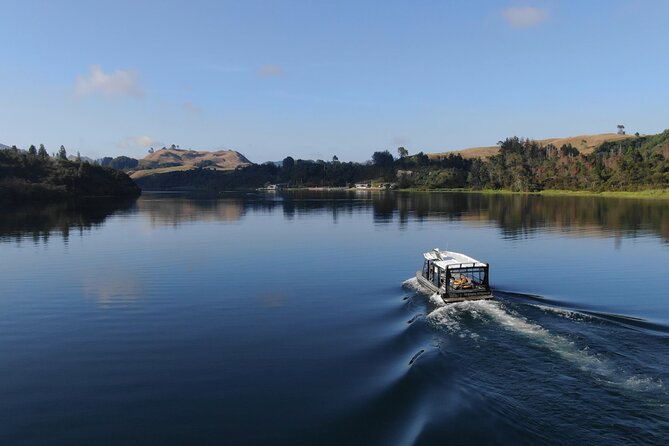
- A short ferry starts the adventure: Return boat rides across the lake are included and run on demand.
- Ruatapu Cave is the unusual highlight: This rare geothermal cave contains a striking thermal mirror pool.
- The walk covers 2.5 kilometres: Allow around two hours, including stops for photographs and close looks at the pools.
- Geysers appear on nature’s schedule: The park has up to 23 active natural geysers, but eruptions are not guaranteed during your visit.
- Self-guided means genuine flexibility: There is no guide or fixed group, so you can move quickly or linger.
- Expect stairs and warm conditions: Good walking shoes, water, and layered clothing will make the visit easier.
Why Orakei Korako feels different from a standard thermal park
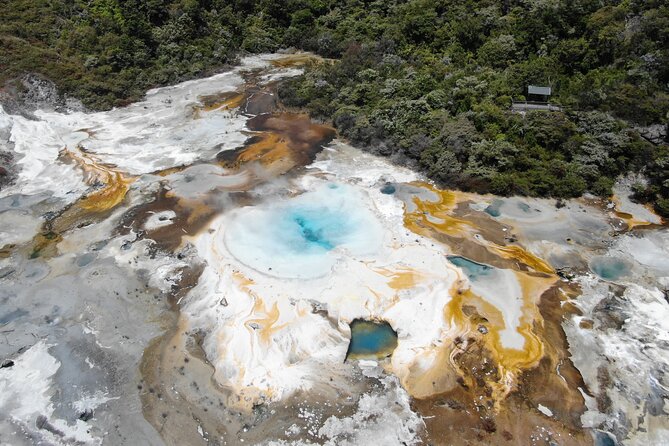
Many geothermal attractions near Taupo and Rotorua are built around a single viewing area, a show, or a short route between major features. Orakei Korako feels more like a proper walk through an active volcanic area. You move from one section to the next, with steam, colour, bubbling water, and mineral deposits changing around you.
The ferry helps set the tone. You leave the visitor area, cross the lake, and arrive at the boardwalk as if you are entering a separate pocket of bush and geothermal activity. The crossing is brief, but it gives you broad views back toward the shore and makes the experience feel less like a roadside stop.
I also like the lack of a fixed tour script. You do not have to keep up with a guide or wait while a group gathers around one feature. If a steaming vent deserves five minutes of your attention, take five minutes. If the weather turns wet, you can keep moving and shorten your visit.
The trade-off is that you must supply your own context. Signs explain the main sights, but nobody is walking beside you to answer questions or point out a small change in the ground. If interpretation and local storytelling matter most to you, a guided geothermal experience may suit you better.
Other hot springs and bathhouses people book in New Zealand:
- Rotorua: Wai-O-Tapu Geothermal Park Entry Ticket
★ 4.6 · 2,601 reviews - Rotorua Rafting: Kaituna River White Water Rafting & Free Sauna
★ 5.0 · 1,952 reviews - Rotorua: Hell’s Gate Outdoor Mud Spa & Guided Walk
★ 4.7 · 1,140 reviews
The ferry crossing sets the scene
Start at Orakei Korako Geothermal Park and Cave on Orākei Kōrako Road. The ferry takes you across the lake to the geothermal area, with return trips available on demand. This transfer is included in the admission price, so you are not paying separately for the boat.
The crossing is one of the most enjoyable practical features of the visit. It breaks up the arrival and gives you a view of the water and surrounding bush before you begin walking. The boat also makes the site feel quieter and more removed from the main road.
There is no need to treat the ferry as a scheduled cruise. It is simply your transport to and from the park. Keep your visit within the opening hours, currently listed as 8:00 a.m. to 3:30 p.m. daily for the stated operating period, and allow enough time to complete the walk before returning to the landing.
A 2.5-kilometre route through active geothermal ground
Once across the lake, follow the signed boardwalk through the thermal area. The route is about 1.5 miles, or 2.5 kilometres, and most people should allow roughly 90 minutes for the walk itself. With the ferry, photographs, pauses, and time at the cave, plan on about two hours overall.
The path takes you past boiling hot springs, mud pools, steam vents, mineral deposits, and silica terraces. These features are close enough to feel dramatic, but you remain on the marked route. The boardwalk is well laid out and easy to follow, though the route includes steps and climbs.
This is not a flat stroll. You will move between different levels to see the pools and terraces from changing angles. Going downhill can be harder on the knees than expected, so take care on the steps and do not rush. A moderate level of fitness is advised.
The route is not suitable for pushchairs or buggies. Young children can be carried in backpacks, and children must be accompanied by an adult. Bring water, especially on a warm day. The site can feel hotter than the visitor area, and the combination of walking, steam, and sun may have you removing a layer.
Silica terraces, colour, and steam
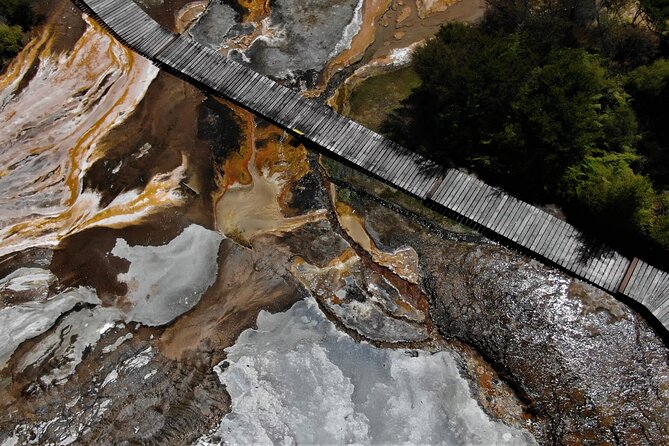
The silica terraces are among the most memorable parts of the walk. Mineral-rich water has created pale and coloured surfaces that contrast with the dark ground, wet pools, and rising steam. The colours can look different depending on the weather and light.
You might find the terraces more impressive in soft morning light, while fog or cloud can give the area a stranger, more atmospheric feel. Do not expect every photograph to match what you see in person. Steam shifts, the weather changes, and some colours appear muted on a grey day.
The route gives you close views rather than one grand overlook. You are constantly adjusting your position, looking down into a pool, across a terrace, or through steam toward another vent. That makes the walk rewarding for anyone who enjoys small details as much as big views.
The volcanic activity is not presented as a controlled performance. Water bubbles when it bubbles, steam rises where it rises, and geyser eruptions are unpredictable. That natural timing is part of the appeal, but it also means you should not book this expecting a guaranteed geyser show.
More Guided Tours in New Zealand:
- Bali: Mount Batur Sunrise Guided Hike and Natural Hot Spring
★ 4.8 · 9,284 reviews - Ubud Hot Springs and Waterfall Private Guided Tour
★ 5.0 · 719 reviews - Hoover Dam & Hot Springs Kayak Tour with Lunch & Expert Guide
★ 5.0 · 318 reviews - From Reykjavik: Golden Circle & Secret Lagoon Guided Tour
★ 4.9 · 214 reviews
Mud pools and geysers on nature’s timetable
The park is described as having up to 23 active natural geysers, the highest number among New Zealand’s geothermal parks. That sounds promising, but it does not mean you will see all of them erupt. Eruptions can happen at intervals ranging from about 35 minutes to months apart.
You may get lucky and see one or two geysers during your walk. You may also see only steam, bubbling pools, and the other features along the route. I would treat a geyser eruption as a bonus rather than the reason to buy the ticket.
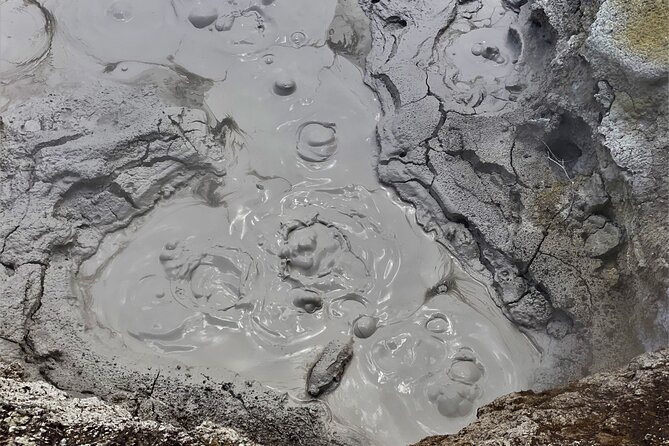
The mud pools are more dependable and often more mysterious. Thick mud bubbles and pops beneath the surface, while nearby vents hiss and send up steam. The close viewing distance gives the pools a strong physical presence. You can hear the activity as well as see it.
Follow the barriers and boardwalk carefully. This is active ground, not a decorative garden. Stay on the route, keep children close, and resist the urge to step off for a better photograph.
Ruatapu Cave and the thermal mirror pool
Ruatapu Cave is the feature that sets this visit apart. It is described as one of only two geothermal caves in the world, and it contains a thermal mirror pool. The cave is not simply a dark gap in the rock. Its heat, water, and unusual setting make it one of the most memorable stops on the route.
The thermal pool can appear reflective and still compared with the noisy mud and hissing vents outside. That contrast gives the cave its force. After the open terraces and steam vents, you enter a place that feels enclosed, quiet, and slightly mysterious.
Take your time here, but do not expect a long underground excursion. The cave is one stop along the boardwalk, not a separate caving tour. Its value comes from the rarity of the feature and the way it changes the rhythm of the walk.
What self-guided really means here
This is a completely self-guided visit. You receive admission and follow the route at your own speed, with signs helping you understand what you are seeing. There is no guide, no group commentary, and no fixed departure time once you arrive.
That setup works well for independent visitors, photographers, families who need flexibility, and anyone who prefers not to listen to a set explanation at every stop. You can pause for pictures, walk ahead, or take a quiet moment without worrying about holding up a group.
It also places more responsibility on you. Read the signs, pay attention to the route, and allow enough time before the park closes. If you want detailed explanations of volcanic chemistry, Māori connections, or the history of the area, you may find the information here more limited than on a guided tour.
Price, timing, and practical value

The listed price is $35.37 per person. For that cost, you receive admission to the thermal park, the self-guided walk, GST, and return ferry rides on demand. Food, drinks, and souvenir photographs cost extra.
I consider the price reasonable if you want several hours of outdoor sightseeing rather than a short viewing platform. The ferry, the maintained boardwalk, the cave, and the range of geothermal features all come within one admission. You are also paying for the chance to explore without being tied to a group.
The value is weaker if you are hoping for a guaranteed geyser eruption or a guided lesson. Nature controls the display, and the visit depends on your interest in walking, looking, and reading as you go.
The park is open daily from 8:00 a.m. to 3:30 p.m. during the stated operating dates. Give yourself a comfortable margin before closing. The experience lasts about two hours, but the exact time depends on how often you stop and how quickly you manage the steps.
Clothing, weather, and fitness
The park operates in all weather. Bring a waterproof layer if rain is possible, and wear shoes with a good grip. The boardwalk is easy to follow, but wet conditions can make steps feel more demanding.
Dress in layers. The geothermal area may feel warmer than the visitor centre, especially when you are near steam and hot pools. You may want to remove a jacket during the walk, then put it back on for the ferry or in cooler weather.
Carry water. The route is not extremely long, but it includes hills and stairs, and the warmth can catch you by surprise. There are no toilets on the explored thermal site, so use facilities at the visitor area before crossing.
The park is manageable for many people with moderate fitness, but it is not ideal for anyone who cannot handle repeated steps. Pushchairs and buggies are not suitable. An eight-year-old who enjoys walking may have a fine time, while younger children may need to be carried for parts of the route.
Who will enjoy this visit most
I would choose Orakei Korako if you want a quieter, more independent geothermal outing near Taupo. It suits people who enjoy walking through nature, taking photographs, and deciding how long to spend at each feature.
It is also a strong choice for anyone looking for something less crowded and less staged. The ferry, the bush setting, and the changing route give the visit a sense of discovery without requiring a full-day excursion.
Families can enjoy it, provided adults are ready to manage the steps and keep children close to the geothermal features. Couples and solo visitors may especially appreciate the freedom to move at their own pace.
You might choose another attraction if you need wheelchair-friendly access, a flat route, guaranteed eruptions, extensive guided interpretation, or a café break during the walk. A small café is available at the visitor area, but food and drinks are not included, and the thermal route itself has no toilets.
Should you book Orakei Korako?
Book this experience if you want the freedom of a self-guided walk, a short ferry crossing, and a close look at mud pools, terraces, steam vents, and a rare geothermal cave. The strongest reasons to go are the quiet setting, the unusual Ruatapu Cave, and the chance to explore without a group dictating your pace.
Think twice if stairs are a serious problem or if you need a guaranteed geyser show. For most reasonably fit walkers, though, the $35.37 admission offers a rewarding two-hour stop between Rotorua and Taupo, especially when you want geothermal scenery that feels more natural and less crowded.
Free cancellation is available if you cancel at least 24 hours before the start time. Changes or cancellations made inside that window are not accepted for a refund.
FAQ
Where is the Orakei Korako geothermal tour located?
It starts at Orakei Korako Geothermal Park and Cave, 494 Orākei Kōrako Road, Taupo 3083, New Zealand.
How long does the experience take?
Allow about two hours overall. The walking route itself is approximately 1.5 miles, or 2.5 kilometres, and the listed park visit lasts about 90 minutes.
Is the ferry included in the ticket?
Yes. Return ferry rides are included and operate on demand.
Is this a guided tour?
No. This is completely self-guided. You follow the marked boardwalk and use the information provided along the route.
How many geysers are in the park?
The area has up to 23 active natural geysers. Eruptions are unpredictable and are not guaranteed during your visit.
Can I see Ruatapu Cave?
Yes. Ruatapu Cave is part of the geothermal walk. It is described as one of only two geothermal caves in the world and contains a thermal mirror pool.
Is the walk suitable for children?
Children can visit, but they must be accompanied by an adult. Young children can be carried in backpacks.
Is the route suitable for pushchairs?
No. Pushchairs and buggies are not suitable for the route.
What should I wear?
Dress appropriately for the weather and wear sturdy walking shoes. The geothermal area can feel warmer than the visitor centre, and the park operates in all weather.
What does the ticket include?
The ticket includes GST, admission for the self-guided visit, and return ferry rides. Food, drinks, and souvenir photographs are not included.
Freshly added soaks in New Zealand
- Boutique tour , Mt Maunganui, NZ farm, Rotorua lakes/geothermal★ 4.5 · 50 reviews
- Rotorua: ‘Thermal Path Tour’ Geothermal half day Tour★ 4.9 · 15 reviews
- Half-Day Tour – Ex Rotorua: WAI-O-TAPU Thermal Wonderland★ 4.0 · 8 reviews
- From Rotorua: WAI-O-TAPU Geothermal Wonderland Half-Day Tour★ 4.6 · 76 reviews
- ROTORUA – Hell’s Gate Geothermal Park & Mud Spa Day Trip★ 4.5 · 41 reviews
- Rotorua Cultural & Geothermal Small Group Tour From Auckland★ 5.0 · 22 reviews
- Ex Auckland: Rotorua Māori Village with Haka and Hot Springs★ 5.0 · 55 reviews
- From Auckland: Rotorua Māori Village & Hot Springs with Haka★ 4.8 · 58 reviews
Guided, compared.
Mount Batur Sunrise Guided Hike and Natural Hot Spring
Read our review →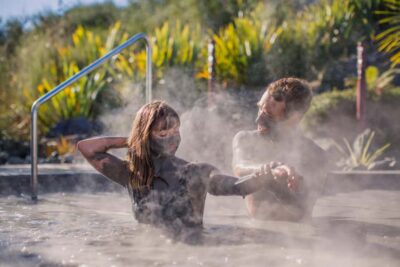
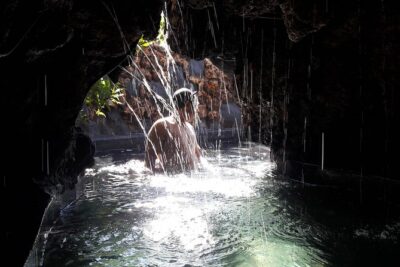
Ubud Hot Springs and Waterfall Private Guided Tour
Read our review →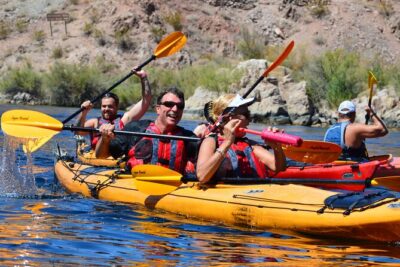
Hoover Dam & Hot Springs Kayak Tour with Lunch & Expert Guide
Read our review →
Akureyri Port: Lake Mývatn & Goðafoss Guided Tour with Lunch
Read our review →
Lagoa do Fogo: Biologist-guided Volcano e-Tour +Hot Springs
Read our review →
Arenal Hanging Bridges, Guided Walk, Hot Springs Optional
Read our review →More soaks worth the detour