
REVIEW · SELF-GUIDED TOURS
Hot Springs National Park Self Guided Audio Tour
Hot Springs National Park is unusual: its main attraction is not a geyser or a grand overlook, but hot water flowing through the middle of town. This GPS-guided driving tour connects the springs, Bathhouse Row, old medical buildings, forest roads, fountains, and mountain viewpoints without forcing you into a set schedule.
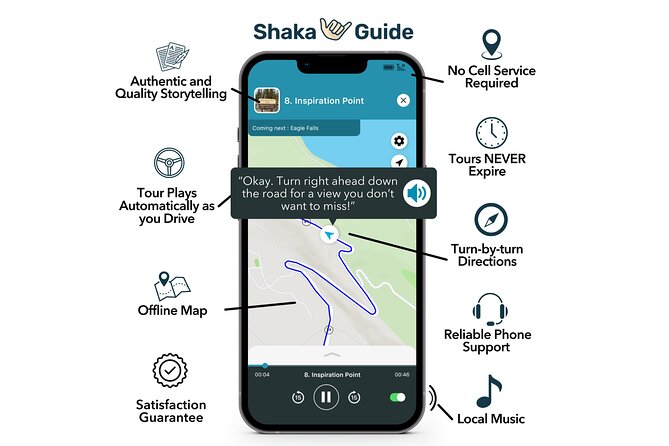
I like the one-price-per-car setup, which makes $12.79 a terrific value for a group. I also like the way the narration follows your location, telling you about the building or spring you are actually seeing instead of making you hunt through a guidebook. The one drawback is the app setup. It may take a little patience at first, so download the route on strong Wi-Fi before you arrive.
Key points to know before you go
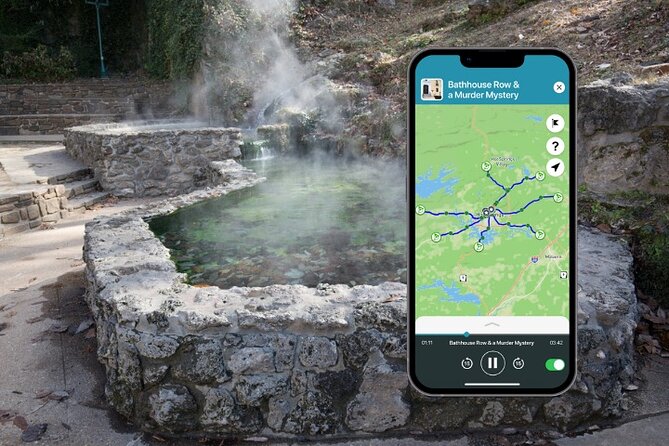
- GPS-triggered storytelling: Narration, directions, music, and travel tips play automatically as you drive.
- A private group tour: One purchase covers up to 15 people in your vehicle.
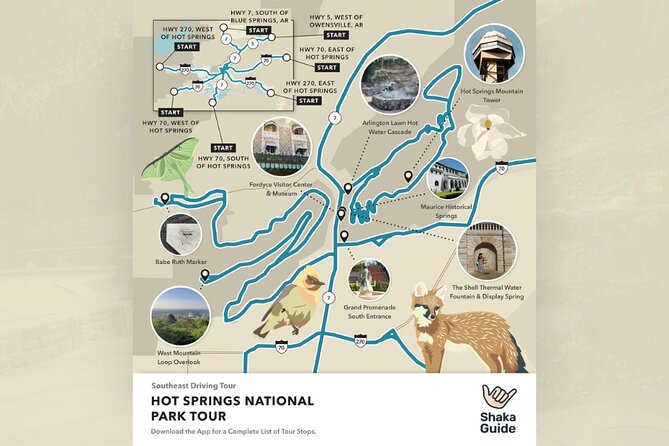
- A full Hot Springs circuit: The route includes Bathhouse Row, thermal fountains, Hot Springs Mountain, North Mountain, and West Mountain.
- Flexible timing: Pause, skip, or resume the tour at your own pace, even across multiple days.
- Excellent value: The tour costs $12.79, while the historic buildings and most stops are free to visit.
- Plan for extras: Parking, meals, transportation, and the elevator to Hot Springs Mountain Tower are not covered.
Why this audio tour works well in Hot Springs
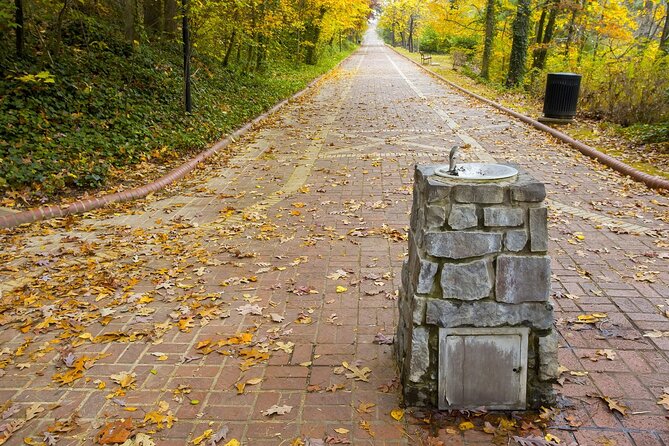
Hot Springs National Park can feel confusing at first because the park is woven into the city. Bathhouse Row sits downtown, the springs appear beside sidewalks and promenades, and the mountain roads lead to viewpoints several miles from the historic center.
That is where this tour earns its keep. Instead of treating the park as one short stop, it gives you a connected route through the town and surrounding hills. You get directions while driving, then short stops where you can walk, look around, refill a bottle, or visit a building.
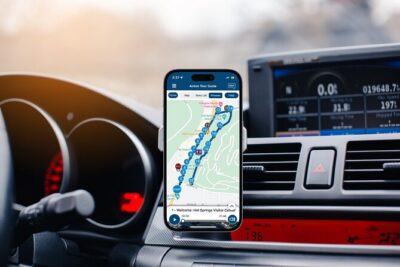
The narration is GPS activated, so you do not need to keep checking your phone for the next story. Once the app is working, it should tell you where you are and explain the place in front of you. One useful detail from the experience is that the GPS can help when your own navigation is less certain, especially on the mountain roads.
You should still download the tour before setting out. The app uses offline maps, so you do not need continuous Wi-Fi or mobile data, but the route must be downloaded in advance. The instructions have you redeem a code in the Shaka Guide app, open the tour under the My Stuff tab, choose the starting point, and follow the suggested route.
More National Park Trips in the USA:
- National Park Hike & Finnish Smoke Sauna Experience with Campfire Lunch
★ 5.0 · 182 reviews - From Helsinki: Hike and Sauna in Sipoonkorpi National Park
★ 4.9 · 85 reviews - ZipLine, Horseback Riding, Tubing, Hot Springs & Lunch @ Volcano National Park
★ 5.0 · 38 reviews
Starting downtown at the city visitor center
The route begins at 3079 North Highway 7, then moves toward the Hot Springs Village Area Visitor Center. Do not confuse this with the National Park Visitor Center farther along Bathhouse Row.
If the city center is open, you can pick up a map of historic downtown Hot Springs, use the restrooms, collect brochures, and ask staff for local help. This is a sensible first stop because it gives you a physical sense of the town before the tour takes you through its springs and bathhouses.
Nearby Hill Wheatley Plaza brings together the city visitor center, a water jug fountain, and Bill Clinton Park. Hill Wheatley was a local businessman who donated the land, and his statue overlooks one of the fountains. Bill Clinton Park, named for the former president and Hot Springs resident, is a pleasant place to rest in the shade.
These early stops are brief. I would not rush them if you need a map or a quiet pause, but you also do not need to spend much time here if your main goal is Bathhouse Row.
Thermal water and the first historic buildings
The tour then points you toward the National Park Administration Building on Central Avenue and Reserve Street. Built in 1936, it is not one of the original bathhouses, but two fountains outside help explain the park’s long tradition of public spring water. One is a decorative fountain; the other is a water jug fountain where you may drink.
Bathhouse Row is the heart of the experience. The Lamar Bathhouse, built in 1923, now houses the National Park Emporium. You can sample spring water, pose for a photo in an old bathtub, and browse souvenirs.
There is more to Lamar than the public displays. The building also contains park offices, archives, museum storage, and a small research library. You will not see all of those work areas, but knowing they remain part of the building makes the bathhouse feel less like a preserved shell.
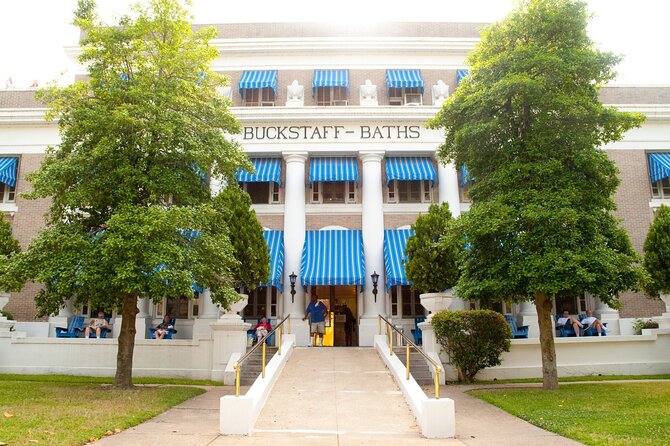
The Buckstaff Bathhouse, built in 1911, is one of only two bathhouses on the row still operating. It has never stopped operating, and you can go inside to ask about mineral-water soaks, massages, and other treatments.
The tour does not turn this into a spa reservation, so treat the Buckstaff as an optional add-on. If you want a treatment, you will need to arrange it separately and allow more time than the five-minute sightseeing stop suggests.
Ozark, Quapaw, and Fordyce
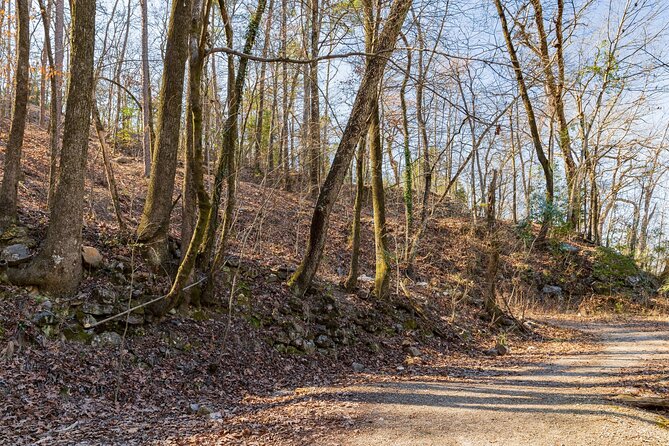
The Ozark Bathhouse now serves as the Hot Springs National Park Cultural Center. Its hours are limited, generally on Saturdays and Sundays during summer, so do not count on an interior visit every day. When open, it is free and offers gallery space for the park’s Artist in Residence program and other temporary exhibits.
Quapaw Baths and Spa is the other operating bathhouse. It takes its name from the Quapaw Tribe and has a gift shop plus a simple cafe with light food. Unlike Buckstaff, Quapaw sat empty for more than 20 years before renovation work began in 2007.
The Fordyce Bathhouse is the major indoor stop and deserves the full hour allowed in the route. Built in 1915, it closed in the 1960s as modern medicine changed the demand for thermal treatments. Today, it serves as the Fordyce Bathhouse Visitor Center and Museum.
Inside, you can get a much clearer picture of how bathing worked during the heyday of Bathhouse Row. The building also connects the park to Samuel Fordyce, a railroad tycoon who moved his family to Hot Springs in 1876 and invested in hotels, utilities, infrastructure, and an opera house.
I would give Fordyce priority if your time is limited. The exterior row is easy to see from the street, but Fordyce explains the buildings, treatments, and social world that made Hot Springs famous.
More Self-Guided Tours in the USA:
- Hot Springs NP Self Guided Driving and Walking Audio Tour
★ 4.5 · 14 reviews - Self-Guided Geothermal Tour in Orakei Korako
★ 5.0 · 178 reviews - Hellisheiði Geothermal Exhibition: Entry and Audio Tour
★ 4.6 · 88 reviews - Whaka Geothermal Trails Self-Guided Tour
★ 3.5 · 44 reviews
Springs, promenades, and the old bathhouse district
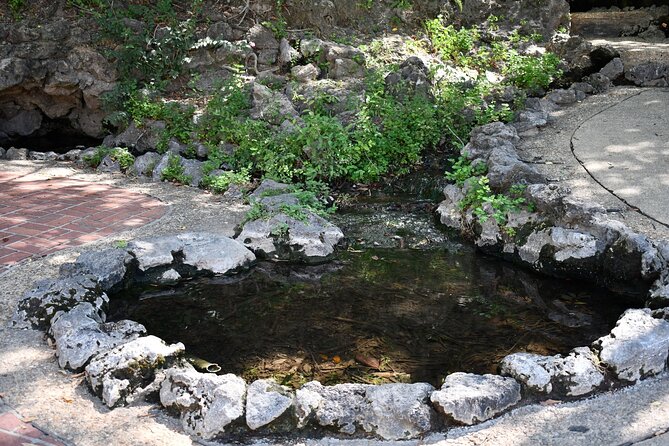
Between Fordyce and Maurice, the Grand Staircase leads up to the Hot Springs Grand Promenade. At its base, the Stevens Balustrade Shell Fountain carries hot water from the Maurice thermal spring.
The water may be too hot to handle at the source, so use care. Behind the Maurice Bathhouse, the Display Spring lets you watch water bubble from the mountain. It is a simple sight, but it brings the park’s main idea into view: this is a working spring system, not just a row of historic buildings.
Maurice was built in 1911 in a Mediterranean style and influenced the design of later bathhouses. As of 2024, it is the only bathhouse on the row that remains empty. That makes it interesting, but also a little frustrating. You can see the structure, yet there is no public interior experience to match Fordyce or Lamar.
The Maurice Historical Display Springs are set into natural tufa rock. Look for the Dripping Spring and Tunnel Spring, the park’s first two display springs. The stonework was completed in 1903 to make the water visible and accessible to the public.
Hotel Hale occupies the current Hale Bathhouse, at least the fourth building to use that name on the site. Built in 1892, it survived major fires in 1905 and 1913, making it the oldest structure on Bathhouse Row. Today it operates as a hotel with the Eden restaurant, which serves food in a garden-style setting.
The Superior Bathhouse Brewery has a different feel from the grander buildings. It was made of brick and was actually the smallest bathhouse on the row. Its historic services were basic hydrotherapy and massages. Today, the brewery gives the building a new use, and it is a natural place to consider if you want a drink or meal after the walking portion.
Arlington Lawn and the Grand Promenade
Arlington Lawn contains the park’s largest visible spring. Hot water flows from the hillside near the Grand Promenade, passes beneath the path, and drops into two pools.
The water begins hot enough to scald, but cools enough to touch by the time it reaches the pools. Still, I would treat the cascade as something to observe rather than a place for casual soaking. The stop is short, but it gives you one of the clearest views of the park’s natural feature.
You can reach the Grand Promenade by stairs, or use the northern access point farther up Fountain Street near the Arlington Hotel if stairs are a concern. The southern and northern ends connect with the Tufa Terrace Trail, where you can see natural tufa rock.
At the top of the Grand Staircase, a former bandstand once gave the promenade a social center. The bandstand is gone, but the broad walkway helps you picture the old crowds, music, and public life of Bathhouse Row.
This part of the tour works best on foot. The audio route may guide you by car, but plan to park and walk around the Fordyce, promenade, fountains, and bathhouses rather than trying to experience them only from the vehicle.
The former Army Navy Hospital and Hot Springs Mountain
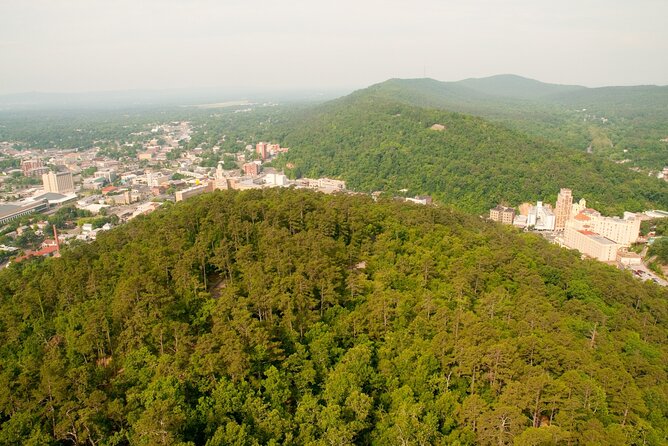
The former Army Navy Hospital is an imposing building near the historic district. The first hospital opened in 1887, while the current structure dates to 1933.
The hospital reflects the shift from thermal treatment to modern medicine. The military left in 1955, after which the building became a state rehabilitation center and later a career training institute. It closed in 2019 and now sits unused.
From downtown, the route climbs toward Hot Springs Mountain. The first mountain stop includes a picnic area, restrooms, and trailheads. The Hot Springs Mountain Trail is about one and a half miles around the summit area and has several overlooks. A Shortcut Trail leads down toward the Oertel Trail and Grand Promenade.
The Hot Springs Mountain Pagoda was built in 1910 to hold a fountain, but bringing water that high proved too difficult. Today, the pagoda is a scenic oddity rather than a functioning spring feature.
The Hot Springs Mountain Tower is the main payoff for this section. The tower rises 216 feet and is the third observation tower built at this location. A lower enclosed level contains signs and displays about Hot Springs, while the upper level provides open-air views of the city and the Zig-Zag Mountains.
There is a small per-person fee for the elevator, despite the surrounding park stops being free. The tower can also be windy, so keep that in mind before heading to the open level. The gift shop is on the ground floor.
North Mountain, cold springs, and baseball history
North Mountain Scenic Viewpoint looks over the Ouachita Mountains and provides access to Goat Rock Trail. The trail is a little more than two miles round trip and descends to a viewpoint on Goat Rock.
The parking-area view may be enough for you, especially if you are working within the four-to-five-hour estimate. The tour gives you the option without insisting that you make the hike.
At Happy Hollow Fountain, you can fill water bottles with cool spring water. This spring once belonged to McLeod’s Amusement Park, which included a photography studio, shooting gallery, zoo, and souvenir shop from the late 1800s into the 1940s.
The old spring was called Magnesia Spring, and a pitcher once cost a nickel. Today, the jug fountain is one of only a few cool-water springs in the park, making it a useful and memorable stop.
The Babe Ruth Home Plate marks the spot where Ruth hit a record-setting home run on March 17, 1918. The ball traveled more than 500 feet to an alligator farm that still exists. It is an unexpected piece of sports history in a national park better known for bathhouses and mountains.
Whittington Park has the second cold-water fountain in the park, where you can also fill a bottle for free. These fountains give the driving route a practical rhythm, especially on a warm day.
West Mountain and the final viewpoints
The West Mountain Lower Overlook looks back toward downtown, the former Army Navy Hospital, and Hot Springs Mountain Tower. The drive then reaches the West Mountain Trail, which can be used as part of a roughly two-mile loop with the Mountain Top Trail.
At the Loop Overlook, you can see across southwest Hot Springs toward the Ouachita River Valley. Behind the overlook, an outcrop of Arkansas Novaculite reveals the fractured, sharply angled rock that forms the mountains.
Those fractures matter because they let water seep into the mountain before it later emerges as spring water. This is one of the better places on the route to connect the geology with the thermal springs seen downtown.
The Loop Overlook also provides access to the Sunset Trail, a 10-mile, one-way route. You do not need to tackle that trail to enjoy the tour. A half-mile walk reaches the forested peak of West Mountain, giving you a manageable option if you want more than a viewpoint but less than a full mountain hike.
Price, timing, and who should book
At $12.79 for up to 15 people, this is unusually affordable if you are sharing a car. A couple pays the same total as a large family group, and you can pause the tour instead of paying for a guide by the hour.
The price does not include private transportation, parking, food, or other personal costs. Most stops have no admission charge, but the elevator to Hot Springs Mountain Tower has a small per-person fee. The Cultural Center may also be closed when you visit because its hours are limited.
Plan on four to five hours if you follow the route at a comfortable pace. Add time for the Fordyce museum, a spa treatment, a meal, the tower, or any hiking. The tour is valid from January 8, 2025 through December 20, 2026, and it can be started any day during the listed 24-hour operating window.
I recommend it most for independent visitors who want context without joining a group. It is also a smart choice for families, couples, and friends sharing a vehicle. You control the stops, and nobody has to match a guide’s walking speed.
It is less ideal if you want a live guide to answer questions on the spot, or if you dislike using an app. The first launch may feel harder than expected, so redeem the code and download the audio before you leave home. Once set up, the GPS narration should handle the route with little fuss.
Should you book the Hot Springs audio tour?
Book it if you want a low-cost private route that joins downtown history with mountain scenery. The strongest parts are the GPS-triggered narration, the Fordyce museum, the thermal displays, and the wide range of stops included in one purchase.
Skip it if you plan to spend your entire visit inside one bathhouse or prefer a human guide. For most people with a car and half a day, though, this tour gives you a useful road map through Hot Springs National Park and enough freedom to make the day your own.
FAQ
How much does the Hot Springs National Park audio tour cost?
The tour costs $12.79 per group, with up to 15 people included in one purchase.
How long does the tour take?
The estimated duration is four to five hours, depending on how long you spend at museums, bathhouses, viewpoints, restaurants, and trails.
Where does the tour begin?
The listed starting point is 3079 N Hwy 7, Hot Springs, Arkansas 71909. The activity ends back at the meeting point.
Is the tour guided in person?
No. It is a self-guided mobile audio tour using GPS-triggered narration, directions, music, and travel tips.
Does the tour work without mobile data?
Yes. You should download the tour using strong Wi-Fi before starting. After that, the offline map allows the tour to work without continuous Wi-Fi or data.
Are entrance fees included?
Most listed stops are free, but parking, meals, transportation, and other personal costs are not included. The Hot Springs Mountain Tower has a small per-person elevator fee.
Can I cancel the tour?
You can receive a full refund if you cancel at least 24 hours before the experience start time. Cancellations or changes made within 24 hours are not refunded or accepted.
More Audio Tours in the USA
- Banff Cave & Hot Springs Audio Walking Tour (Not a Ticket)
★ 3.0 · 6 reviews
Freshly added soaks in the USA
- Yellowstone Lake & Hot Springs / 3 Hour Morning or Twilight Tour★ 5.0 · 94 reviews
- Yellowstone, Grand Teton, and Hot Springs: Small Group 5-Day Tour★ 5.0 · 2 reviews
- Natural Indoor Hot Spring and Spa Utah Crater Soak & Swim★ 4.5 · 20 reviews
- Secret Desert Hot Springs: 4-Hour Private Adventure★ 5.0 · 2 reviews
- Spa Service: Hot Stone Body Massage with Private Sauna★ 4.5 · 13 reviews
- Hot Springs NP Self Guided Driving and Walking Audio Tour★ 4.5 · 14 reviews
- Hot Springs Hop Scavenger Hunt★ 4.5 · 10 reviews
- Signature Massage & Spa with Master Therapist and Infra Red Sauna★ 5.0 · 3 reviews
Self-Guided Tours, compared.

Hellisheiði Geothermal Exhibition: Entry and Audio Tour
Read our review →
Banff Cave & Hot Springs Audio Walking Tour (Not a Ticket)
Read our review →More soaks worth the detour