
REVIEW · CAVE & CANYON HOT SPRINGS
Taupo: Orakei Korako Geothermal Park and Cave Entry Ticket
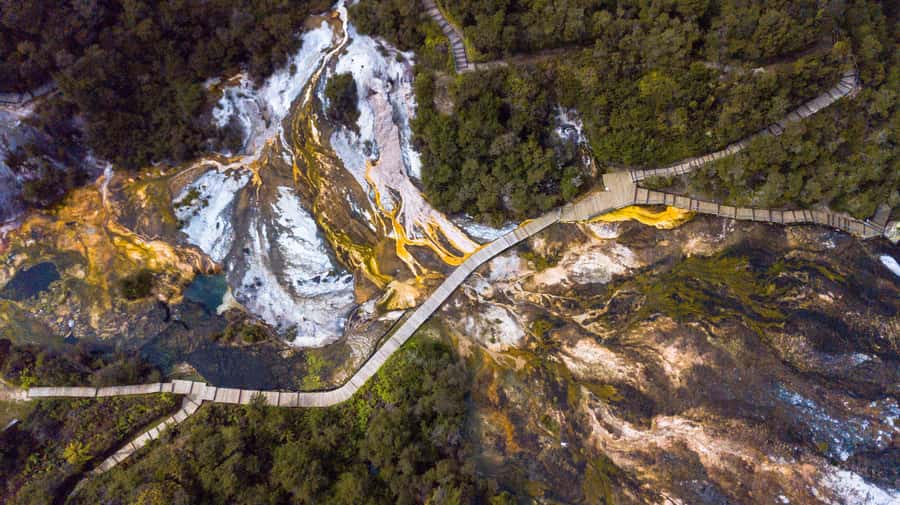
Orakei Korako is one of Taupo’s most rewarding geothermal stops, especially if you want to explore at your own pace. The short ferry ride leads to a quiet thermal valley with up to 23 active geysers, bubbling mud pools, hot springs, and broad silica terraces. The rare Ruatapu Cave, dropping about 35 meters to a hot pool, is the unusual feature that makes this park more than just another geothermal walk.
I like the freedom here. You are not pushed along in a large group, and the clear trail lets you stop for photographs, read the signs, or sit beside the warm pools. I also like the low-key setting and the friendly, well-organized arrival process. The main drawback is the walking: the boardwalk is easy to follow, but there are plenty of steps, and the full trail covers about 2.5 kilometers.
Key points to know before you go
- A short ferry is part of the admission: Ride from the visitor center across to the thermal area, with return trips running on demand.
- Ruatapu Cave is genuinely unusual: This rare geothermal cave drops roughly 35 meters to a clear hot pool.
- You explore independently: Follow the marked boardwalk and information panels at your own speed rather than staying with a fixed group.
- The walk includes steps: Most people can manage it at a steady pace, but comfortable shoes and moderate fitness matter.
- The park is quieter than some Taupo geothermal attractions: Its off-the-main-route position helps keep the visit calm.
- The $34 price covers the essentials: Entry, the self-guided walk, and both ferry rides are included.
Why Orakei Korako feels different from a standard geothermal stop
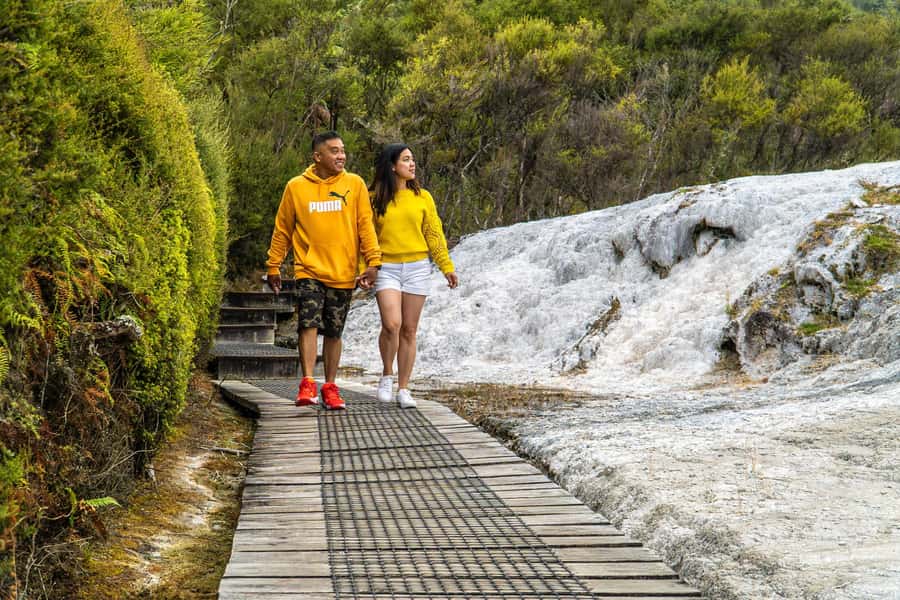
The Taupo Volcanic Zone is filled with places where hot water and volcanic gases reach the surface, but Orakei Korako has a particularly pleasant rhythm. You begin at a visitor center, cross the water by a small ferry, and then walk into a thermal valley where the features are spread along a marked route.
That short boat ride matters. It creates a clean break between the road and the geothermal area. Once you step off the ferry, the visit feels less like a quick roadside stop and more like a small outing in its own right.
Orakei Korako is also known as Hidden Valley. It lies between Taupo and Rotorua, making it a useful stop if you are traveling between those two towns. The setting is quieter and more understated than the busiest geothermal attractions. You get room to pause and look, rather than simply moving from one viewing platform to the next.
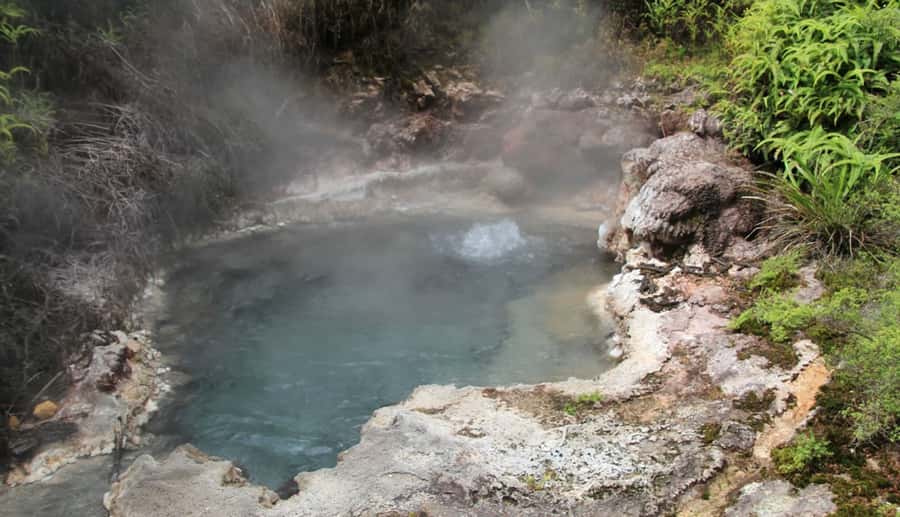
The scenery changes from bubbling pools and steaming ground to brightly colored silica formations and active vents. The smells can be strong, as you would expect in a geothermal area, and the heat rising from the pools makes the place feel very alive.
More Cave and Canyon Hot Springs in New Zealand:
- Krabi: Tiger Cave Temple, Emerald Pool and Hot Springs Tour
★ 4.8 · 3,616 reviews - Krabi: Tiger Cave, Hot Springs and Emerald Pool Jungle Tour
★ 4.2 · 2,643 reviews - Ao Nang: Hot Spring, Emerald Pool & Tiger Cave Temple Tour
★ 4.7 · 576 reviews
The visitor center, ferry, and first few minutes
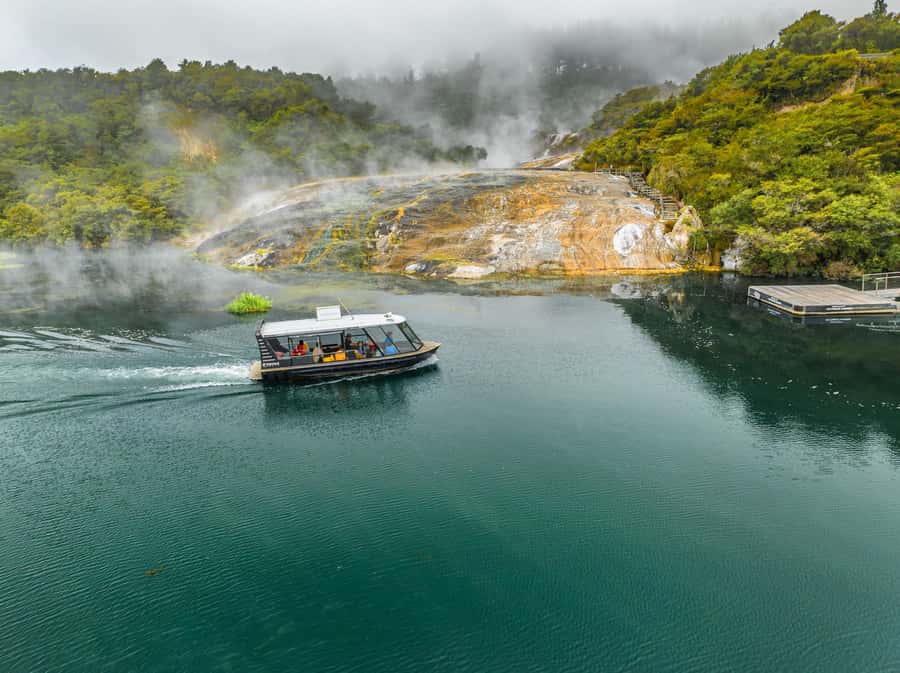
Your visit starts at the Orakei Korako Geothermal Park and Cave visitor center. There is a brief safety briefing, then you wait for the on-demand ferry. The crossing takes about three minutes, so the boat ride is short but memorable.
The ferry operates from 8 am. The final departures are at 4 pm during winter and 4:30 pm during Daylight Saving. That timing is important because you need to leave enough room for the return crossing. Do not treat the last ferry time as a suggested arrival time. Give yourself a comfortable margin for the walk, photographs, and pauses.
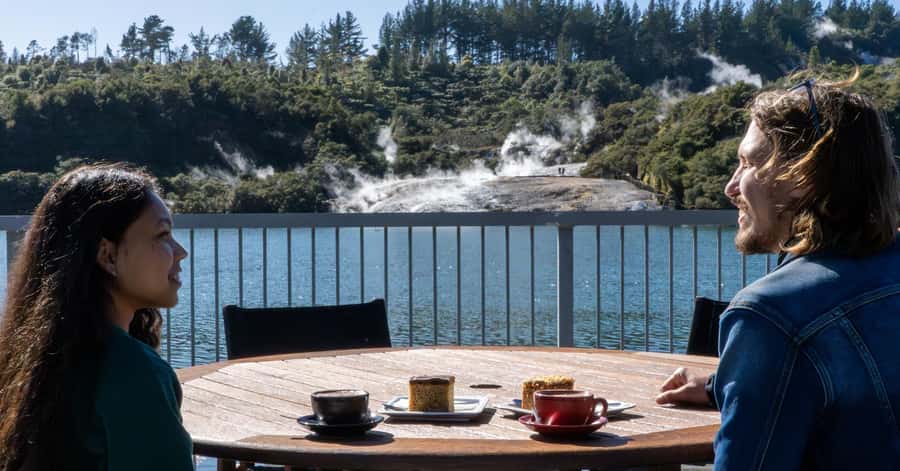
The visitor center also has a cafe area and shopping. You can stop for brunch or lunch before or after the walk, which is handy if Orakei Korako is part of a longer drive. The ferry runs on demand, so you are not tied to a formal tour departure in the same way you would be on a large coach excursion.
The practical process is simple. Show your ticket, receive the safety information, and wait for the boat. The staff are described as friendly and clear, which helps the visit get off to an easy start.
Walking the thermal valley at your own speed
Once you arrive, you follow the self-guided trail through the geothermal area. The route is well marked, and information panels explain the features as you go. You do not need a guide to make sense of the walk, but you should take time to read the signs because they give useful context to what you are seeing.
The main route takes roughly 1.5 hours at a comfortable pace. Some people may finish in 45 to 60 minutes, while others will want longer for photographs and quiet stops. The full trail is about 2.5 kilometers, and benches give you places to rest and take in the views.
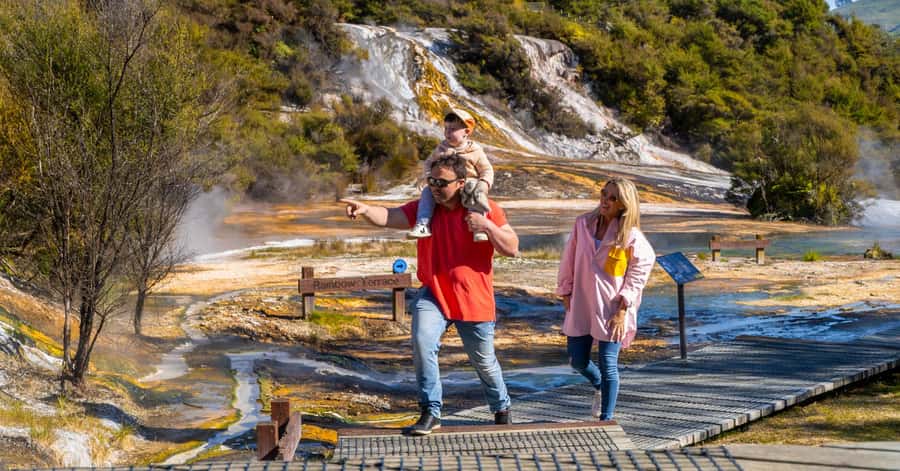
The boardwalk makes the route easy to follow and keeps you at a safe distance from the active thermal areas. Still, it is not a flat stroll. There are a lot of steps, so I would not recommend flip-flops or thin sandals. Wear trainers or other comfortable walking shoes, and bring water. The combination of warm air, sun, and steady walking can leave you more tired than expected.
You can set your own pace, which is one of the best reasons to choose this park. Stop when a pool catches your eye. Read the explanations. Let faster groups move ahead. If the weather turns cool or wet, the heated pools can make the walk especially pleasant, although cloud and weak light may reduce the intensity of the colors.
Geysers, mud pools, and silica terraces
Orakei Korako is known for having up to 23 active natural geysers, the largest number of active geysers in any geothermal park in New Zealand. Activity is natural, so you should not expect every geyser to erupt during your visit. One person may see plenty of movement, while another may find the park quieter at that moment.
That uncertainty is part of the experience, but it is also the main reason to keep expectations realistic. If you want a guaranteed dramatic eruption on a tight schedule, this may not be the right attraction. If you enjoy seeing hot water, steam, mud, and mineral formations in a natural setting, the park offers plenty to examine even when the geysers are quiet.
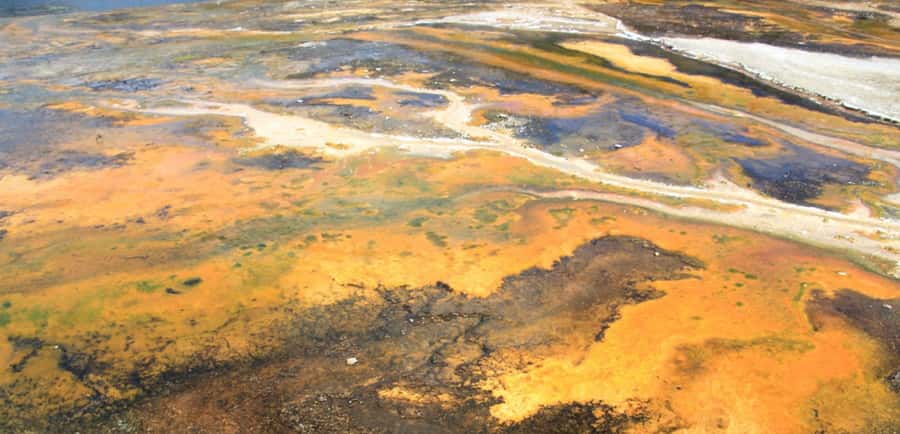
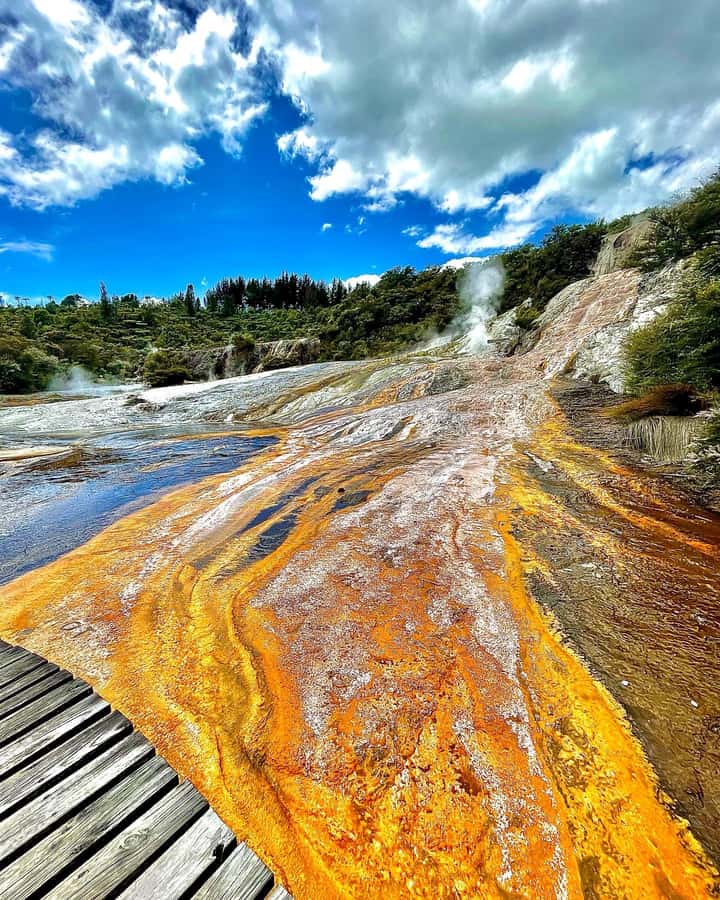
The bubbling mud pools are especially effective reminders that this ground is active below your feet. Hot springs pour and steam, while mineral deposits create pale and colorful surfaces beside the path. The silica terraces are among the most photogenic features, but their appearance depends on light and weather. Bright sun can bring out stronger colors. Overcast conditions can make the scene more muted, though the steam and heat may feel more dramatic.
Keep to the marked route. The boardwalk is there for your safety as well as for the protection of the fragile formations. The easy access can make the area look harmless, but these are hot, active geothermal features.
More Entry Tickets in New Zealand:
- Rotorua: Wai-O-Tapu Geothermal Park Entry Ticket
★ 4.6 · 2,601 reviews - Hanmer Springs: Thermal Pools Single or Return Entry Ticket
★ 4.7 · 107 reviews - Budapest: Széchenyi Spa Day Ticket with Optional Upgrades
★ 4.3 · 23,911 reviews - Budapest: Full-Day Gellért Spa Ticket
★ 4.2 · 3,340 reviews
Ruatapu Cave and the 35-meter drop
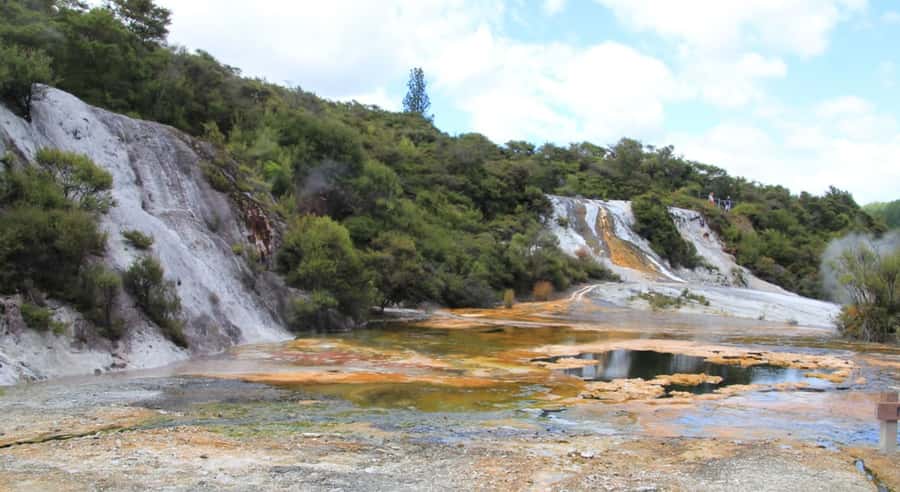
Do not skip Ruatapu Cave, also called Sacred Hole. It is one of only two thermal caves in the world, according to the supplied park information, and it gives Orakei Korako a feature few other geothermal stops can match.
The cave drops about 35 meters to a clear, hot pool at the bottom. You view it from the marked route rather than walking down into the pool. Its shape and depth make it feel very different from the open mud pools and steaming vents nearby. The cave has a prehistoric quality, especially when the surrounding rock is damp or the air is cool.
This is also a good place to slow down. The cave is not something to rush past while searching for a geyser. Read the sign, look carefully into the opening, and consider how unusual it is to find a hot pool enclosed within a geothermal cave.
How the price compares with the experience
At $34 per person, the admission includes entry to the thermal park, the self-guided walk, and return ferry rides. That makes the price easier to justify than an admission fee that covers only access to a viewing platform or a short path.
I see the value in the combination of freedom and variety. You get a boat ride, a marked walk, active geothermal features, the cave, and time to explore without a group schedule. The visit can take around 45 minutes if you move quickly, or roughly 1.5 hours at a more relaxed pace, with the option to linger around the visitor center before or after.
The value is strongest if you enjoy independent sightseeing. You are paying for access to a full thermal area, not for a highly scripted presentation. If you prefer a guide explaining every feature as you walk, you may find the self-guided format less satisfying.
Compared with other geothermal attractions around Taupo and Rotorua, Orakei Korako feels more peaceful and less commercial. That quiet atmosphere is part of what you are buying. The trade-off is that the park may not deliver a spectacular geyser display every time.
Weather, footwear, and physical effort
The park operates in all weather conditions, so plan for rain, wind, heat, or strong sun. Bring weather-appropriate clothing rather than assuming the thermal activity will make the whole walk warm. A light rain jacket can be useful, and layers give you more control as conditions change.
Wear trainers or sturdy walking shoes. The path is clearly marked and the boardwalk is generally easy to use, but the steps require care. Bring water, especially if you visit on a warm day. There are seats along the route, so you can take breaks and enjoy the views without rushing.
A moderate level of fitness is recommended. Children must stay with an adult, and unaccompanied minors are not allowed. Dogs are welcome, which makes this a useful option for people traveling with a pet, though you still need to keep your dog under control around the marked route and geothermal features.
The park is not suitable for wheelchair users. The steps and uneven parts of the route are important limitations, so check this carefully before booking.
Who will enjoy Orakei Korako most
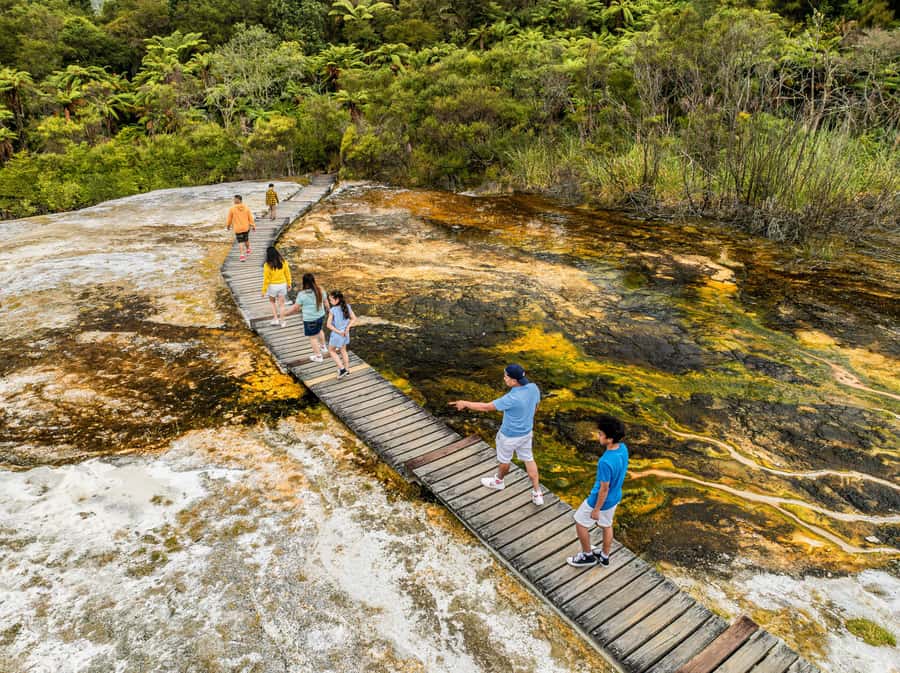
I would choose Orakei Korako if you want a geothermal experience that feels calm, flexible, and close to the features. It suits families with older children, couples, independent sightseers, photographers, and anyone driving between Taupo and Rotorua.
It is also a good choice if you dislike being moved through an attraction in a large group. You can stop, sit, read, and take photographs on your own timetable. The information panels give enough explanation for a self-guided visit, while the ferry adds a small sense of occasion.
You may want to choose another attraction if you need step-free access, have limited mobility, or have only a very short window before the last ferry. You should also think twice if your main goal is a guaranteed large geyser eruption. Orakei Korako offers active geothermal sights, but nature controls the schedule.
Practical details that make the visit smoother
Book with the weather in mind, but remember that the park stays open in rain. Cloudy weather may soften the colors, while cool conditions can make the steam and hot pools more enjoyable.
Allow about 1.5 hours for the walk, then add time for the ferry crossing and a possible cafe stop. Arrive early enough to avoid feeling rushed by the final ferry departure. The ferry crossing itself takes about three minutes in each direction.
Your $34 admission includes the return ferry, so there is no separate boat charge to budget for. The booking is valid for one day, and cancellation is available up to 24 hours before the visit for a full refund. You can also reserve now and pay later, which helps if your North Island route is still changing.
Should you book this thermal park?
Book Orakei Korako if you want a quiet, self-guided geothermal walk with a short ferry ride and an unusual cave. The combination of geysers, mud pools, hot springs, silica terraces, and Ruatapu Cave gives you plenty to see for the price.
I would make it a priority for a Taupo to Rotorua road trip, especially if you prefer a low-key stop over a large organized attraction. Wear proper shoes, bring water, leave enough time before the final ferry, and expect steps.
Skip it only if step-free access is essential or if you need a guaranteed geyser show. For everyone else, this is a worthwhile half-day outing that gives you space to experience New Zealand’s geothermal power at your own pace.
FAQ
How much does entry to Orakei Korako cost?
The listed price is $34 per person. It includes entry to the thermal park and cave, the self-guided tour, and return on-demand ferry rides.
How long does the Orakei Korako visit take?
The full activity is valid for one day. The self-guided walk usually takes about 1.5 hours, though a faster visit may take 45 to 60 minutes. Add time for both three-minute ferry rides and any cafe stop.
Is the ferry included in the ticket?
Yes. Return ferry rides from the visitor center to the geothermal area are included. Each crossing takes about three minutes, and the ferry operates on demand.
When does the ferry operate?
The ferry begins operating at 8 am each morning. The last trips leave at 4 pm during winter and at 4:30 pm during Daylight Saving.
Do I need to join a guided group?
No. The thermal area is explored through a self-guided tour, with marked paths and information panels.
What can I see at Orakei Korako?
You can see bubbling mud pools, hot springs, silica terraces, geysers, and Ruatapu Cave. The park has up to 23 active natural geysers, although geothermal activity can vary during your visit.
Is Ruatapu Cave included?
Yes. Entry to Ruatapu Cave, also called Sacred Hole, is included with admission. The cave drops about 35 meters to a clear hot pool.
Are children allowed?
Yes, children are allowed, but they must be accompanied by an adult. Unaccompanied minors are not permitted.
Can I bring my dog?
Yes. Dogs are welcome at the park.
Is Orakei Korako suitable for wheelchair users?
No. The activity is not suitable for wheelchair users. The route includes steps and requires a moderate level of physical fitness.
What should I bring?
Bring comfortable walking shoes, water, and clothing suited to the weather. Trainers are a better choice than flip-flops because the route includes steps.
Freshly added soaks in New Zealand
- Boutique tour , Mt Maunganui, NZ farm, Rotorua lakes/geothermal★ 4.5 · 50 reviews
- Half-Day Tour – Ex Rotorua: WAI-O-TAPU Thermal Wonderland★ 4.0 · 8 reviews
- Rotorua: ‘Thermal Path Tour’ Geothermal half day Tour★ 4.9 · 15 reviews
- From Rotorua: WAI-O-TAPU Geothermal Wonderland Half-Day Tour★ 4.6 · 76 reviews
- ROTORUA – Hell’s Gate Geothermal Park & Mud Spa Day Trip★ 4.5 · 41 reviews
- From Auckland: Rotorua Māori Village & Hot Springs with Haka★ 4.8 · 58 reviews
- Rotorua Cultural & Geothermal Small Group Tour From Auckland★ 5.0 · 22 reviews
- Ex Auckland: Rotorua Māori Village with Haka and Hot Springs★ 5.0 · 55 reviews
Cave & Canyon Hot Springs, compared.
Tiger Cave Temple, Emerald Pool and Hot Springs Tour
Read our review →
All day Krabi Jungle Tour (Hot Spring Water, Emerald Pool, Tiger Cave Temple)
Read our review →
Tolantongo Caves Hot Springs & Waterfalls Small Group Tour
Read our review →
Batu Caves,Waterfalls and Hot Springs Tour With Lunch
Read our review →
Roseau: Titou Gorge, Hot Spring, Falls & Champagne Reef Tour
Read our review →
Silver Circle Tour, Canyon Ride, & Thermal Baths
Read our review →
Shoreside Fun-Day with Titou Gorge, Hot Springs & Champagne Reef
Read our review →
More soaks worth the detour