
REVIEW · JAPANESE ONSEN TOURS
Solaniwa Onsen: Osaka Bay Tower
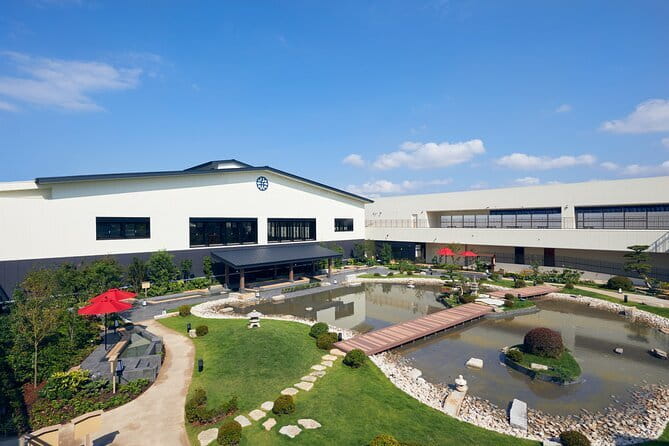
Solaniwa Onsen turns a city bathhouse into a small Osaka hot spring town, complete with festival-style streets, a rooftop garden, food, games, and nine bathing areas. I like the Tenku Garden most, especially its footbaths, thousand torii gates, waterfalls, and seasonal plants high above the city.
I also like the practical setup: towels and in-house clothes are included, and English information makes the facility easier to use if Japanese bathing customs are new to you. The main drawback is cost, since admission, food, and drinks can feel high for a bathhouse, and you must pay a 150-yen bathing tax on-site.
Key points
- Nine bathing options: Try the open-air bath, garden-view bath, carbonated spring bath, and other hot spring pools.
- A 3,000-square-meter rooftop garden: Walk among torii gates, waterfalls, seasonal trees, flowers, and footbaths.
- Natural spring water: The slightly alkaline Beautiful Hada no Yu rises from 1,000 meters underground.
- More than bathing: You can find saunas, scrubbers, food, arcade games, festival-style stalls, gacha machines, fish footbaths, and live shows.
- Easy access from Bentencho: The facility is near public transportation and can be reached from Bentencho Station on the JR Osaka Loop Line.
- Important rules: Tattoos, tattoo stickers, tattoo paint, alcohol use, and gang affiliations are listed as reasons for refusal.
A hot spring town inside Osaka Bay Tower
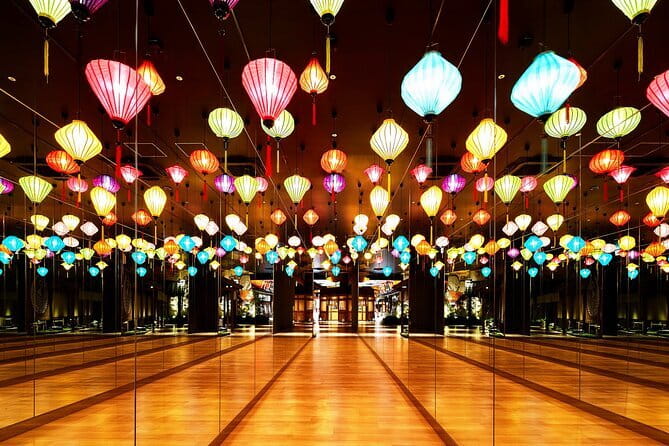
Solaniwa Onsen Osaka Bay Tower is not a quiet neighborhood sento where you slip in, wash, soak, and leave. It is designed as a full outing, with bathing at the center and plenty of distractions around it.
That makes the experience useful when you want a break from Osaka sightseeing but do not want to spend a night at a countryside ryokan. You can settle into the hot spring area, change into the provided in-house clothes, eat a meal, wander through the garden, and stay for several hours.
The setting borrows from classic Japanese town scenes. The facility aims to give you a traditional ryokan-style experience, but with the extra features of a modern entertainment complex. You get old-fashioned visual touches alongside arcade corners, carnival-style games, gacha stations, and food counters.
I would not treat it as a pure cultural experience. This is a polished urban attraction built around Japanese bathing customs. That mix is part of the appeal, especially if you want a low-pressure introduction to onsen culture.
More Onsen Tours in Japan:
- From Osaka: Himeji Castle, Arima Onsen & Mt. Rokko Day Tour
★ 4.6 · 339 reviews - From Tokyo: Private Tour to Fuji/Hakone – Onsen, Art, Nature
★ 5.0 · 116 reviews - Mt. Fuji, Hakone Private Tour from Tokyo – Onsen, Arts and Nature
★ 5.0 · 79 reviews
Getting there from Bentencho Station
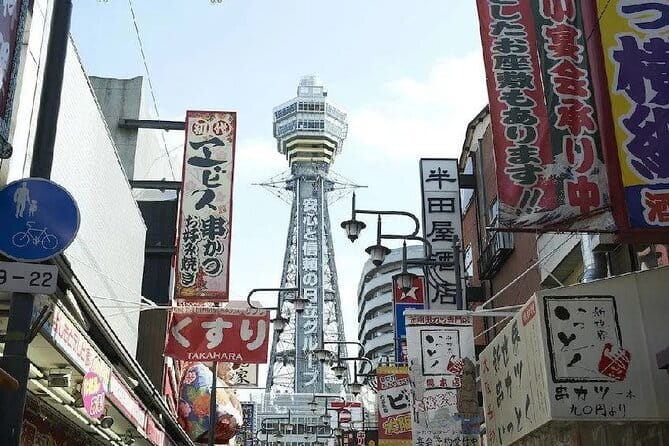
Solaniwa Onsen is in the Osaka Bay area, at Osaka Bay Tower. The nearest transportation information provided points to Bentencho Station, with access from the JR Osaka Loop Line.
The route from the station is practical rather than scenic. Clear directions lead you toward the facility, and it is close to public transportation, so you do not need a car. If you drive, remember that parking costs extra and is not included.
Your mobile ticket is useful at the entrance. Admission is included, along with a bath towel, face towel, and in-house clothes. That saves you from packing bathing supplies, though you still need to budget for the 150-yen bathing tax, which is paid on-site.
The listed visit time is about four to twelve hours. That is a wide range, but it makes sense here. You can use Solaniwa Onsen for a short two-hour soak, or turn it into a relaxed half-day stop with food, games, the garden, and a sauna.
Nine baths using water from underground
The main reason to come is the bathing area. The slightly alkaline natural hot spring water is called Beautiful Hada no Yu and rises from 1,000 meters below ground.
The facility has nine types of baths. The exact experience will depend on your pace and which pools are available when you visit, but the selection includes an open-air bath, a garden-view bath, and a carbonated spring bath.
The open-air bath gives you the most traditional feel. You can soak outdoors while still being in the middle of Osaka, a useful reminder that Japanese hot spring culture does not always require a remote mountain resort.
The garden-view bath connects the bathing experience with the Tenku Garden. If you prefer a calmer setting, this is likely to be one of the more appealing choices.
The carbonated spring bath offers a different feel from a standard hot pool. The range of bath types gives you a reason to move around instead of spending your entire visit in one tub. Still, the facility is popular enough that some areas may feel less private or quiet than a small rural onsen.
Before entering the baths, follow the usual Japanese routine: wash carefully first, then enter the pools without swimwear. The provided towels make the logistics simple, but the towel used for washing should not go into the bath water.
Tenku Garden and its rooftop footbaths
The Tenku Garden covers about 3,000 square meters on the rooftop. It is one of the most unusual parts of Solaniwa Onsen because it creates an open, leafy space above a central Osaka district.
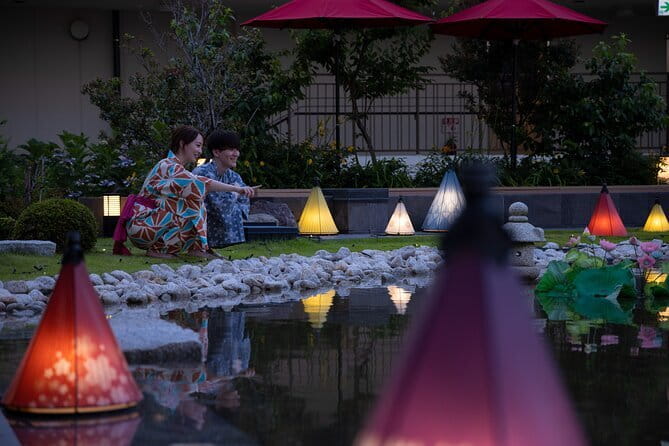
The garden includes seasonal trees and flowers, waterfalls, a thousand torii gates, and footbath areas. The torii display gives the garden a strong visual connection to Japanese shrine imagery, while the water features help soften the urban setting.
The footbath is a good choice if you want to rest without committing to a full soak. You can sit with your feet in warm water, look around the garden, and take a break between other parts of the facility.
I would allow extra time here rather than treating the garden as a quick photo stop. Its value comes from the contrast: Osaka is all around you, but the rooftop layout gives you a sense of space that is hard to expect in a city-center building.
The garden is also a useful option for anyone who wants a gentler activity after bathing. You might find the outdoor areas more enjoyable during pleasant weather, while the indoor facilities offer a backup when conditions are poor.
More Hot Springs and Thermal Baths in Japan:
- Osaka: Nara and Uji Day Trip with Deer Park and Hot Spring
★ 4.4 · 302 reviews - Kyoto: Traditional Concert at Townhouse or Bathhouse
★ 4.9 · 224 reviews - Tokyo: Mount Fuji 5th Station & Onsen Day Trip
★ 4.3 · 75 reviews - From Fukuoka: Mount Aso, Kurokawa Onsen, and Shrine Tour
★ 4.6 · 72 reviews
Saunas, scrubbers, and extra ways to relax
Solaniwa Onsen includes saunas and scrubbers in addition to the hot spring pools. These features give regular bathhouse users more ways to structure a visit, while first-time visitors can simply use the pools and explore at their own pace.
If you enjoy a sauna routine, you can build your visit around alternating heat and bathing. If you prefer a simple soak, you do not need to use every service to get value from the ticket.
The provided information does not list separate prices for every optional treatment or service. Ask at the facility before ordering anything beyond the included admission, towels, face towel, and clothes.
This is one area where the cost can rise. Admission already covers more than a basic public bath, but food, drinks, treatments, and other add-ons may make the visit feel expensive. I would decide in advance if you want a full entertainment outing or only a bath and garden visit.
Food, games, and a festival-style atmosphere
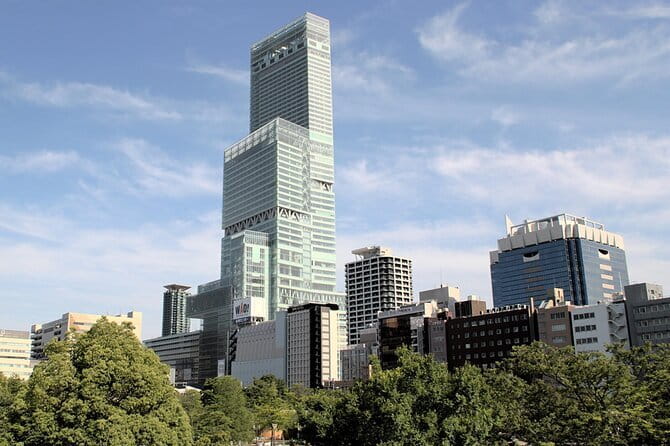
The facility goes well beyond bathing. You can find a restaurant with a broad selection of Japanese food, arcade games, carnival-type games, festival stalls, fish footbaths, live shows, and gacha stations.
That range changes the mood of the experience. Solaniwa Onsen can be relaxing, but it is not silent. Children, families, and people enjoying the games may add noise and movement, particularly in the entertainment areas.
The food selection is helpful if you want to stay for several hours. You do not need to leave the building to find a meal, and the Japanese menu gives the visit a stronger local flavor than a standard shopping-center food court.
Prices inside may be higher than nearby restaurants. I would think of the convenience as part of the cost. You are paying for the ability to eat, bathe, play, and rest in one place, not simply for a cheap bowl of noodles.
The fish footbath is another unusual extra. It is separate from the main hot spring experience and gives the facility a playful quality. If you prefer a quiet onsen, the entertainment program may feel like too much. If you are traveling with family or want a break from museums and temples, it can be a useful change of pace.
How long should you stay?
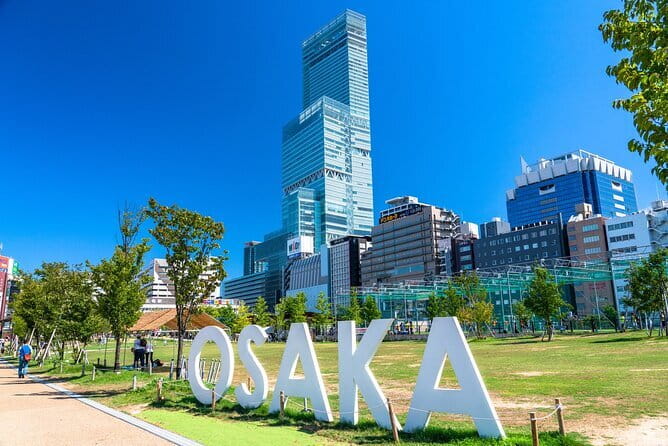
A short visit can work if you only want to use the baths and see the rooftop garden. I would allow at least a couple of hours so you are not rushing through the bathing process.
A four-hour visit gives you time to bathe, use the sauna, sit in the garden, and eat. The full twelve-hour window is better suited to someone who wants to treat Solaniwa as a large relaxation center rather than a quick sightseeing stop.
You cannot leave and return on the same ticket. That rule matters if you are planning your day around nearby attractions. Once you enter, plan to stay until you are finished.
The age rules also affect timing. Groups under 16 may use the facility until 7:00 PM, and groups under 18 may use it until 10:00 PM. If you are visiting with younger people, plan around those cutoffs rather than assuming you can remain until closing.
Tattoos and other entry rules
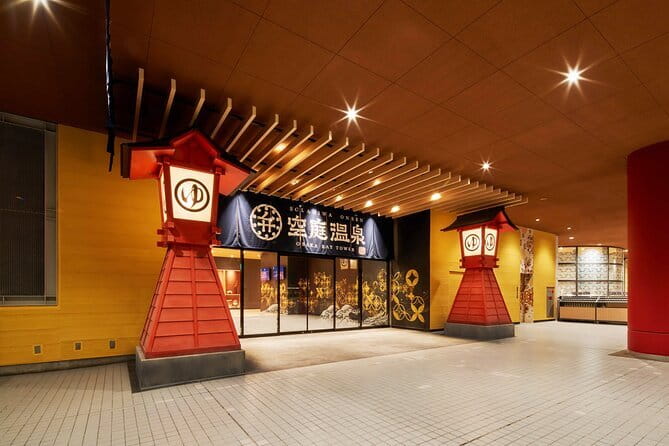
The published rules say that people with tattoos, tattoo stickers, or tattoo paint cannot use the service. Gang affiliations and being under the influence of alcohol are also listed as reasons for refusal.
One account describes using a patch to cover tattoos and booking a private bath, but you should not assume that this overrides the stated policy. If you have a tattoo, tattoo sticker, or tattoo paint, contact the facility before booking and confirm the current rule directly.
The private bath is mentioned as an available option in that account, but the supplied ticket details do not explain its price, availability, or booking process. Treat it as something to verify rather than an automatic part of admission.
These rules are worth checking before you pay because the ticket is non-refundable and cannot be changed. A rejected entry would therefore be an expensive surprise.
Is the admission good value?
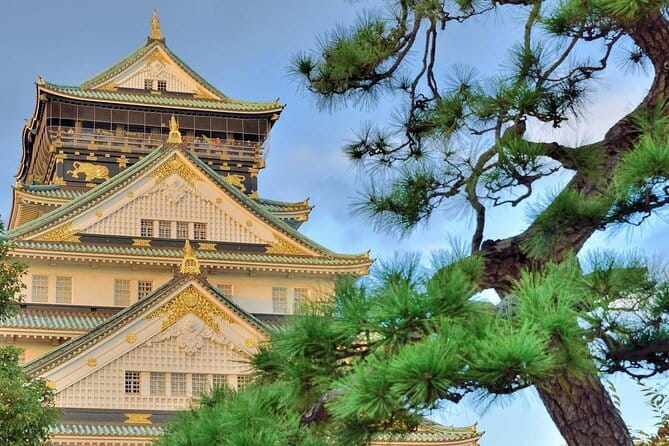
The supplied price is listed as $0.00, but that figure should not be read as proof that the visit is free. Admission is included with the ticket, while the actual booking price may depend on the sales channel, date, or offer available when you reserve.
The value is strongest when you plan to stay for several hours. Nine baths, a rooftop garden, towels, in-house clothes, saunas, games, and food access give you much more than a basic bathhouse visit.
The value is weaker if you only want a quick soak. A traditional neighborhood bath may cost less, and the food and drinks inside are reported as somewhat expensive. Solaniwa is selling convenience, variety, and atmosphere along with the hot spring water.
I would compare it with your other Osaka plans. If you have a long sightseeing day and want a place to rest, the broad opening window and included supplies are useful. If your schedule is packed, you may not use enough of the facility to justify the price.
Who will enjoy Solaniwa Onsen most?
I think this works best for you if you want a relaxed, easy-to-navigate introduction to Japanese hot spring culture. English information helps, and the layout offers more than one reason to stay.
It also suits families and mixed-interest groups. One person can enjoy the baths, another can visit the garden, and someone else can spend time with games or food. The facility is not limited to people who already love onsen bathing.
Couples and friends may enjoy the private-bath possibility, but details must be confirmed before booking. Solo visitors can also use the baths and garden, though the game areas and live entertainment may feel less important.
This is less suitable if you want a small, quiet, deeply traditional ryokan stay. Solaniwa recreates a traditional Osaka mood, but it remains a large, modern entertainment facility in an urban tower.
Should you book Solaniwa Onsen?
Book it if you want a half-day relaxation stop with natural hot spring baths, a memorable rooftop garden, towels included, and enough food and entertainment to keep you inside for hours.
Think twice if you are looking only for the cheapest bath in Osaka, or if you dislike busy entertainment areas and higher in-house prices. Also confirm the tattoo policy before paying, since the stated rules are strict and the ticket cannot be refunded or changed.
For most visitors, the best plan is to arrive with time to spare, use several of the nine baths, walk through the Tenku Garden, and treat the food and games as optional extras. That approach gives you the strongest value and lets Solaniwa function as intended, a small hot spring town in the middle of Osaka.
FAQ
Where is Solaniwa Onsen located?
Solaniwa Onsen Osaka Bay Tower is in Osaka, near Bentencho Station. The facility is close to public transportation, and access from Bentencho Station on the JR Osaka Loop Line is described with clear directions.
How long can I stay at Solaniwa Onsen?
The approximate visit duration is four to twelve hours. You can choose a shorter visit within that period or stay longer to use the baths, garden, food areas, and entertainment facilities.
What does admission include?
Admission includes the entry fee, a bath towel, a face towel, and in-house clothes.
Is there an extra bathing tax?
Yes. A bathing tax of 150 yen must be paid on-site.
Can I leave and return later?
No. Temporary exits and re-admission are not allowed.
Are people with tattoos allowed?
The stated rules say that people with tattoos, tattoo stickers, or tattoo paint cannot use the service. Gang affiliations and being under the influence of alcohol are also listed as restrictions.
Can children and teenagers use the facility at night?
Groups under 16 may use the facility until 7:00 PM. Groups under 18 may use it until 10:00 PM.
Is parking included?
No. Parking fees are not included in the admission ticket.
Freshly added soaks in Japan
- Japanese Head Onsen and Scalp Massage Retreat in Tokyo★ 4.5 · 2 reviews
- Tokyo Local Tattoo Friendly Public Bath Experience★ 5.0 · 4 reviews
- Mt. Fuji to Lake Kawaguchi, Lake Yamanaka and Onsen Day Tour★ 4.5 · 3 reviews
- Tattoo-friendly open-air Onsen & drink★ 5.0 · 25 reviews
- Mt. Fuji Tours to Lake Kawaguchi and Yamanaka Onsen English Guide★ 4.5 · 4 reviews
- Mt FUJI – Panoramic Tour w/ Hoto Lunch, JP Sake & Onsen tatto OK!★ 5.0 · 9 reviews
- Onsen Spa in Tokyo and Asakusa Bar Hopping with Local Guide★ 5.0 · 3 reviews
- Private Tour to Snow Monkey, Zenkoji Temple & Hot Springs Nagano★ 4.0 · 2 reviews
Japanese Onsen Tours, compared.
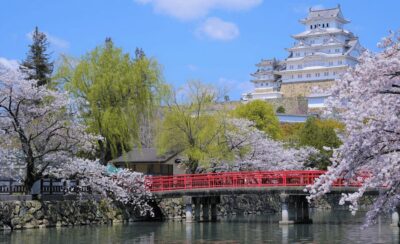
Himeji Castle, Arima Onsen & Mt. Rokko Day Tour
Read our review →
Private Tour to Fuji/Hakone – Onsen, Art, Nature
Read our review →
All-Day Pass to Yunomori Sathorn Onsen Bath and Spa
Read our review →
Mt. Fuji, Hakone Private Tour from Tokyo – Onsen, Arts and Nature
Read our review →
From Fukuoka: Mount Aso, Kurokawa Onsen, and Shrine Tour
Read our review →
Private Nagano 1-Day Tour:Snow Monkeys,Zenko-ji,Obuse,Sake,Onsen
Read our review →More soaks worth the detour