
REVIEW · NATURAL HOT SPRING TOURS
Pokhara: 7-Day Annapurna Base Camp Trek & Natural Hot Spring
The best part of this seven-day Annapurna Base Camp trek is the quick change in scenery. You start near Pokhara among villages and terraced fields, then walk through thick forest, narrow mountain valleys, and finally into a high alpine bowl surrounded by Annapurna I and Machhapuchhre. Finishing with a hot spring soak at Jhinu Danda is a fine bit of timing.
I like the private group format, since your guide can adjust the walking pace and guesthouse stops. I also like the practical package: permits, tea house lodging, guide costs, first aid, some gear, and Pokhara luggage storage are covered. The main catch is the altitude and pace. Reaching 4,130 meters on Day 4 means you need solid fitness, warm clothing, and a sensible attitude toward slowing down.
Key points to know before booking
- Annapurna Base Camp at 4,130 meters: The main reward comes after several long days of steady climbing.
- Jhinu Danda hot springs: Your hardest effort is followed by a warm soak beside the river.
- Private guided trekking: Guides such as Chandra, Bishnu Giri, Anil, Sun, Laxman, and Jeet Bahadur have received especially strong praise for care and encouragement.
- Simple tea house stays: Expect useful mountain lodging, not resort comfort.
- $181 per person: A strong price for a private guided trek with permits and many core costs included, though meals and porter service depend on your booking choice.
- January can be peaceful: Clear winter skies and quieter trails are possible, but you must be prepared for cold at high altitude.
Why the Annapurna Sanctuary makes this trek special
The Annapurna Base Camp route gives you a remarkable amount of mountain variety in one week. You pass through traditional Gurung villages, farm terraces, bamboo groves, rhododendron forests, waterfalls, and high mountain valleys. The route does not simply lead to a viewpoint. It takes you into the Annapurna Sanctuary, a natural amphitheater ringed by huge peaks.
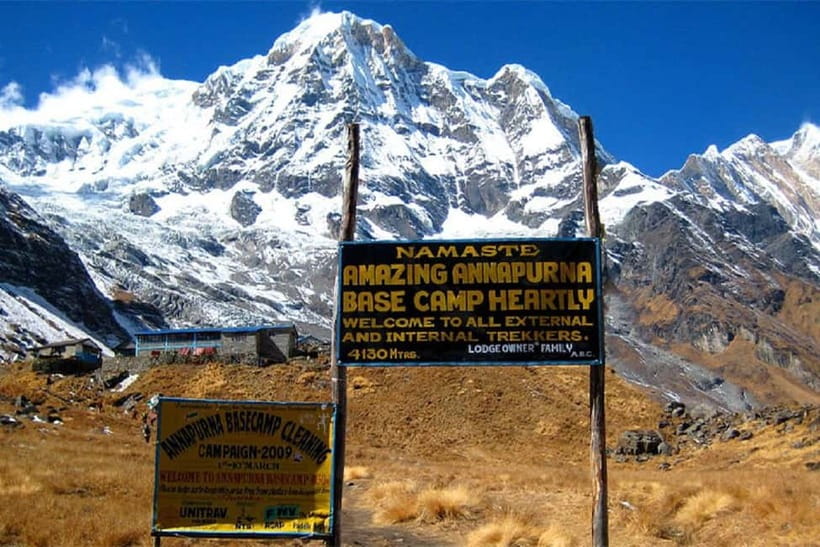
Your destination sits at 4,130 meters, or about 13,550 feet. That height matters. The walk is not technically described as a climbing expedition, but the long days and thinner air make it a serious trek. You need to be in good health and have a reasonable fitness level before you book.
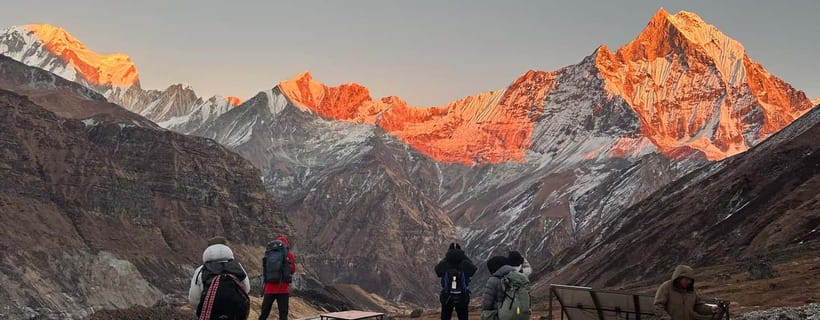
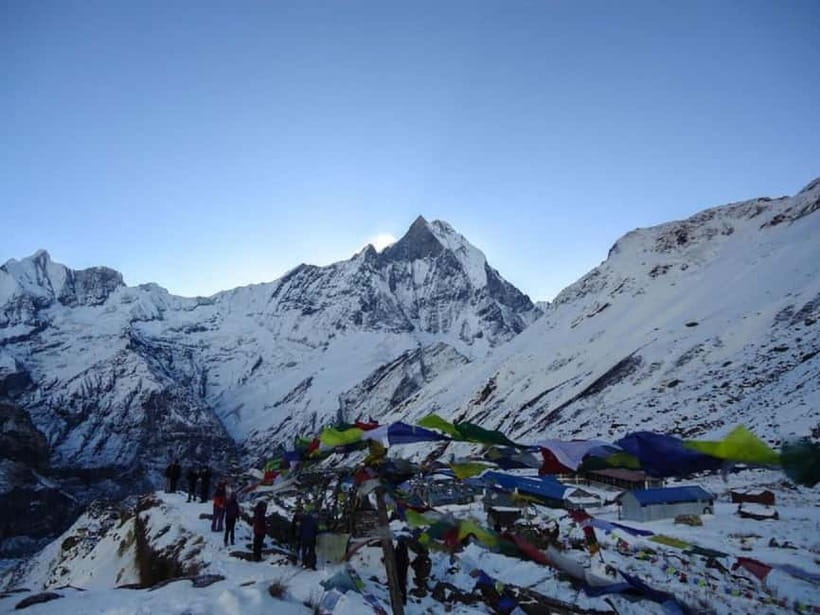
The setting becomes increasingly dramatic as you leave the lower villages. Machhapuchhre, also called Fishtail, is one of the familiar mountain shapes along the route. At base camp, Annapurna I and the surrounding peaks fill your view. Sunrise and sunset are especially important here, so keep your camera ready and your warm layers close.
More Natural Hot Springs in the world:
- Bali: Mount Batur Sunrise Guided Hike and Natural Hot Spring
★ 4.8 · 9,284 reviews - Mount Batur Sunrise Hike and Natural Hot Spring Option
★ 5.0 · 1,927 reviews - Mt Batur Sunrise, Breakfast & Natural Hot Springs
★ 5.0 · 458 reviews
Day 1: Pokhara to Ghandruk through village country
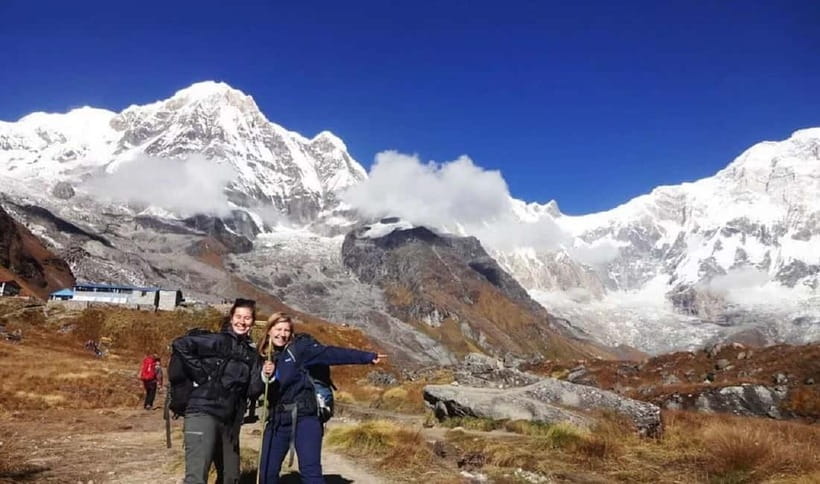
The first day begins with about an hour of driving from Pokhara toward Nayapool, followed by roughly five to six hours of walking to Ghandruk. Pickup is available from Pokhara International Airport or hotels in the Lakeside area, which makes the start simple if you have just arrived in town.
Ghandruk, at 1,940 meters, is a good opening stop because it feels like a real mountain village rather than a staging area. The path follows the Modi Khola through settlements and forest, giving you an early look at rural life before the route becomes more demanding.
Do not treat Day 1 as a casual warm-up. Five or six hours on foot, often with uneven ground and uphill sections, can feel long if you have arrived in Nepal without much walking practice. Your guide will help set the pace, and the private format gives you more room to discuss breaks.
One practical point deserves attention. The route information describes walking after the Nayapool drive, while one piece of feedback specifically preferred a car or jeep for road sections on the first and final days because of dust. Ask the operator what road transfer is planned for your dates.
Day 2: Ghandruk to Chomrong and the stone-step test
From Ghandruk, you walk for about five to six hours to Chomrong at 2,170 meters. This day brings stone steps, forest trails, and broad views toward the Annapurna range and Machhapuchhre.
Chomrong is an important point on the route. You are gaining altitude, but not yet sleeping at extreme height. The village gives you a chance to settle into the daily rhythm: breakfast, walking, breaks, tea house dinner, and an early night.
The stone steps can be tiring, especially if your legs are still adjusting to the first day. Use trekking poles if you have them. A trekking stick is included when needed, and you can also bring your own. Keep your daypack light, since a porter is not included unless you add one at about $20 per day.
This is also one of the better days for taking in local culture. The route passes through villages rather than cutting straight through empty mountain country. Your guide can add context in English, Hindi, or Nepali, and several guides connected with this trek have been praised for explaining local customs and mountain life.
Day 3: Chomrong to Himalaya through bamboo forest
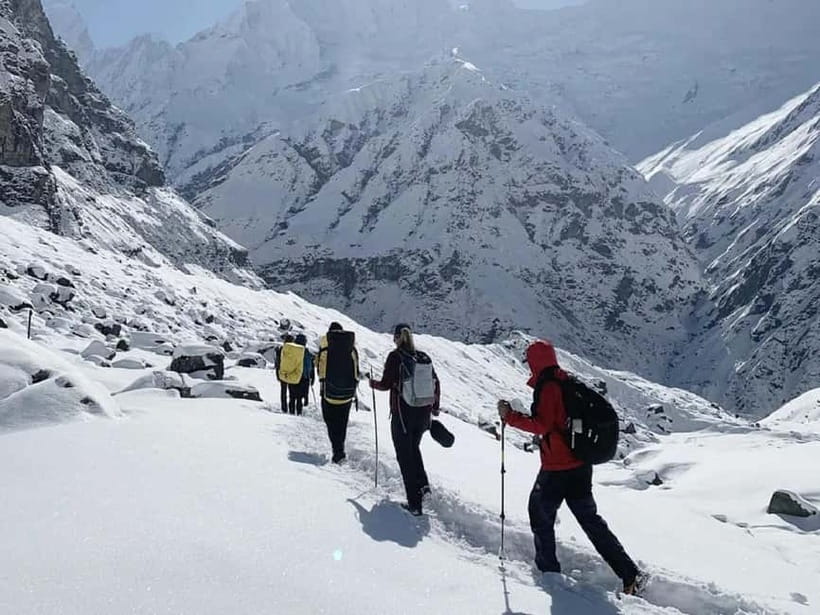
Day 3 takes about six to seven hours and ends at Himalaya, 2,920 meters. You first descend toward the river, then climb again through bamboo and rhododendron forest.
That up-and-down pattern is typical of Himalayan trekking. A descent is not always a rest, since every lost meter must later be regained. The forest provides shade and a cooler walking environment, but the route still asks for steady effort.
Himalaya is a practical overnight stop before the high section. By now, you should be paying attention to how your body handles altitude. Headaches, unusual tiredness, or feeling unwell should be discussed with your guide rather than hidden so you can keep to the schedule.
The guides are one of the strongest parts of this experience. Chandra has been praised for clear English, mountain information, flexibility, and attention to safety. Bishnu Giri has more than 20 years of experience and is noted for helping with high-altitude pacing and sharing stories about Nepali culture. Other named guides include Anil, Sun, Laxman, and Jeet Bahadur.
More Hot Spring Hikes in the world:
- Private Tour Mount Batur Sunrise Trekking and Natural Hot Spring
★ 5.0 · 431 reviews - Mount Batur Sunrise Hike, Breakfast & Hot Spring
★ 5.0 · 316 reviews - National Park Hike & Finnish Smoke Sauna Experience with Campfire Lunch
★ 5.0 · 182 reviews - Bali: Mount Batur Sunrise Hike with Breakfast & Hot Spring
★ 4.7 · 146 reviews
Day 4: Himalaya to Machhapuchhre Base Camp and Annapurna Base Camp
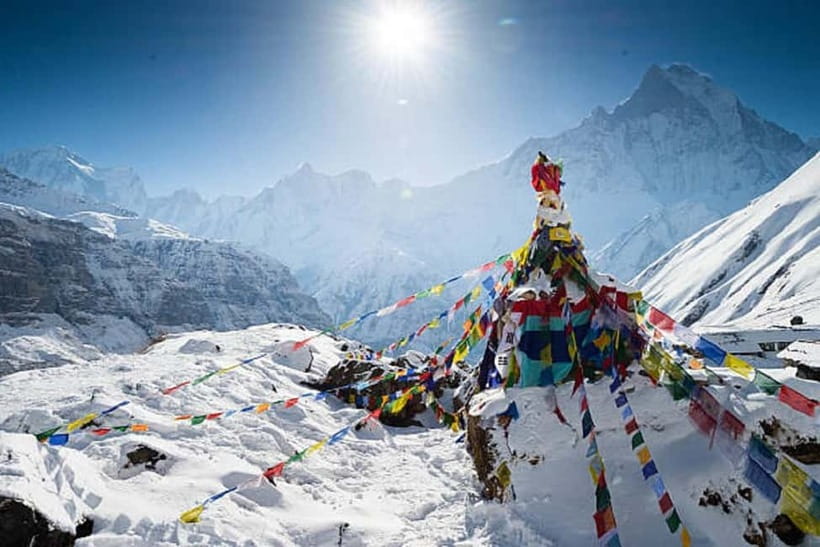
This is the trek’s big day. You walk about six to seven hours from Himalaya through the alpine zone to Machhapuchhre Base Camp, then continue to Annapurna Base Camp at 4,130 meters.
The forest gives way to an open glacier valley and a much larger sense of scale. The mountains are no longer distant shapes over village roofs. You are walking beneath them, inside the Annapurna Sanctuary, with peaks rising around the route.
Reaching base camp is a real physical achievement. The altitude can make a normal pace feel slow, so do not compare your speed with anyone else. A guide who watches your breathing, water intake, and general condition is valuable here. The supplied trip details require travel insurance and note that emergency rescue is available if needed, but rescue costs themselves are not included.
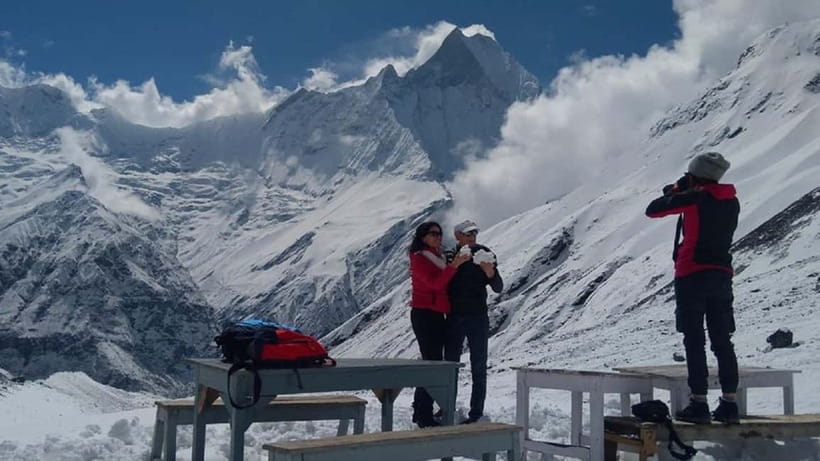
The overnight stay at base camp is part of the appeal and part of the challenge. Tea house accommodation is simple, and conditions at 4,130 meters can be cold. Pack a warm jacket, gloves, a sleeping bag, a hat, and a flashlight. A sleeping bag can be supplied if needed, but confirm the arrangement before leaving Pokhara.
Try to be outside for the changing light around the peaks. The view is the reason for all those stone steps and long hours, and base camp gives you a full mountain setting rather than a quick photo stop.
Day 5: The long descent from base camp to Bamboo
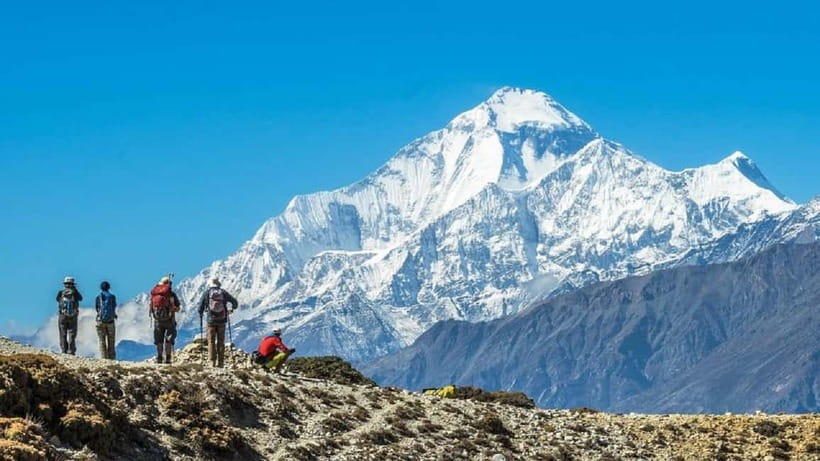
After the high point comes a six to seven-hour descent to Bamboo at 2,335 meters. This is easier on your lungs, but it can be demanding on your knees and feet.
The reward is a new view of country you saw while climbing. Waterfalls, forest, and the Annapurna range appear from different angles, and the backward views can be excellent. Descending also lets you sleep at a much lower altitude, which many people find welcome after the base camp night.
Take care on the downhill sections. Trekking poles help with balance, and shoes with good support matter more than fancy equipment. Waterproof shoes or rain gear are useful because mountain weather can change and some sections may be wet.
Bamboo is a straightforward overnight stop. The accommodation remains basic tea house lodging, but you are not paying for luxury. You are paying for a guided route, permits, local transport, lodging, and a well-planned path into the Sanctuary.
Day 6: Bamboo to Jhinu Danda and the natural hot springs
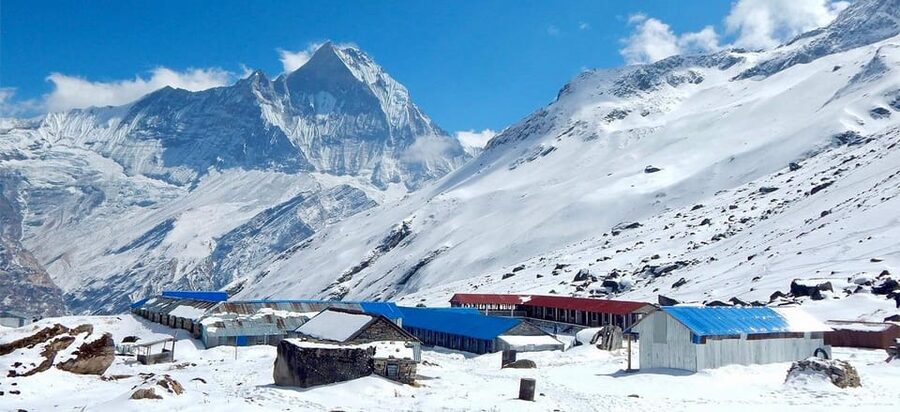
Day 6 covers about five to six hours from Bamboo to Jhinu Danda at 1,610 meters. You continue downhill toward the river, with the altitude dropping sharply from the high point only two days earlier.
Jhinu Danda is the trip’s clever final reward. After days of climbing and descending, you can visit the natural hot springs and soak your tired legs. Bring a towel and a change of clothes, both listed among the useful items to pack.
The hot springs do not erase the effort of the trek, but they change the mood. This is a quieter, more physical kind of luxury: warm water, mountain air, and the knowledge that the hardest section is behind you.
You should still be ready for a full walking day before the soak. Jhinu is not simply a roadside spa reached without effort. The descent to the river and the return to the tea house require energy, so save enough strength for both.
Day 7: Returning to Nayapool and Pokhara
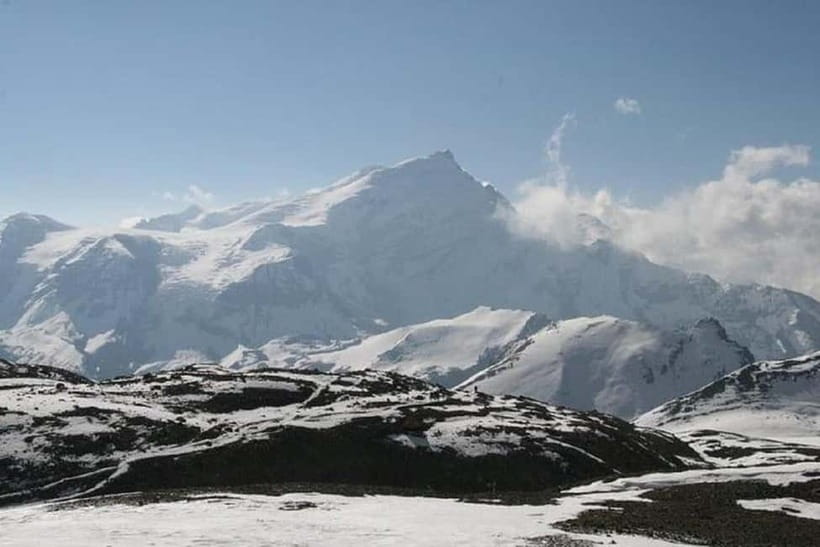
The last day includes about four to five hours of walking to Nayapool and roughly an hour of driving back to Pokhara. Drop-off is available at several Pokhara locations, including Lakeside hotels, Hotel Temple Tree, Hotel Barahi, Middle Path Spa and Beauty Salon, Sarangkot, and Pokhara International Airport.
The final road section may be dusty, according to one specific account, so ask ahead if a vehicle transfer can replace any road walking. This is a small but useful planning detail, especially if you have a flight or a late connection.
The operator also provides luggage storage in Pokhara. That means you can leave nonessential bags behind and walk with a more manageable load. It is one of the less glamorous inclusions, but it makes a real difference on a seven-day trek.
Tea houses, meals, permits, and what $181 covers
At $181 per person, this is an unusually accessible price for a private, guided Annapurna Base Camp trek, provided your selected option includes the meals you want. The package includes required trekking permits, TIMS fees, paperwork, tea house lodging, a government-certified English-speaking guide, guide insurance and expenses, local and government taxes, first aid, and some trekking gear.
Meals are listed as depending on the option selected, so check this carefully before paying. Snacks and drinks are not included, and you should carry cash for personal purchases. A porter is optional at about $20 per day and is not part of the base price.
Simple tea houses are exactly that: practical mountain lodges rather than hotels. You should expect basic rooms and shared facilities, with comfort shaped by altitude, weather, and the remoteness of the route. The upside is that you stay close to the walking route and local communities.
The price does not include travel insurance or emergency rescue services. Insurance is mandatory, and it should cover trekking at the planned altitude. Do not treat that requirement as paperwork alone. At 4,130 meters, proper cover is part of responsible planning.
Choosing a guide and preparing for the altitude
The guide can shape the whole week. The named guides associated with this experience include Chandra, Bishnu Giri, Anil, Sun, Laxman, and Jeet Bahadur. Specific praise has focused on kindness, patience, safety, English ability, mountain information, cultural stories, and encouragement on difficult climbs.
If you have a guide preference, ask for that person when booking, but do not assume availability. Bishnu Giri is especially noted for high-altitude experience and cultural storytelling. Chandra has received strong praise for flexibility and communication. Jeet Bahadur is remembered for a lively manner and excellent photographs.
Start preparing with regular walking before the trek. The supplied itinerary includes five to seven hours of walking on most days, and the altitude rises quickly. Bring comfortable walking shoes, hiking shoes, warm clothes, rain gear, gloves, sun protection, a headlamp or flashlight, a power bank, and a passport copy.
You also need to send a passport copy at least one day before the trek so the permits can be arranged. Keep some cash with you, since personal snacks and drinks are not included.
Who should book this seven-day trek?
This trek suits you if you want a major Himalayan goal but have limited time in Nepal. It combines village walking, forest trails, high mountain scenery, tea house stays, and a hot spring finish without requiring a much longer expedition.
It is best for people who can handle several consecutive days of walking and who accept basic lodging. It is not a good choice if you want a relaxed sightseeing holiday, private hotel rooms each night, or a schedule with little physical strain.
January can be a particularly appealing month if you prefer quieter trails and tea houses. Clear skies are possible, and one January account described peaceful conditions and excellent views. You still need to prepare for cold, especially at Annapurna Base Camp.
Should you book the Annapurna Base Camp trek?
Book it if you want a short, demanding mountain adventure with strong practical support and a very attractive price. The route gives you the Annapurna Sanctuary, traditional villages, high-altitude views, and Jhinu Danda’s hot springs in one compact week.
Before booking, confirm what meals are included, ask about road transfers on Days 1 and 7, and decide if you need a porter. Make sure your insurance covers trekking and possible rescue at 4,130 meters.
If you are fit, properly equipped, and ready for simple tea houses and long walking days, this is an excellent way to reach Annapurna Base Camp from Pokhara without wasting time. The guides are a major strength, and the private format gives you useful flexibility when the trail gets tough.
FAQ
How long is the Annapurna Base Camp trek?
The trek lasts seven days, including transport from Pokhara, the walk to Annapurna Base Camp, the return route, and the drive back to Pokhara.
How high is Annapurna Base Camp?
Annapurna Base Camp is at 4,130 meters, or about 13,550 feet.
Is transportation from Pokhara included?
Round-trip transportation between your Pokhara hotel or Pokhara International Airport and the trek starting point is included. Pickup is available from the Lakeside area and the airport.
Are trekking permits and TIMS fees included?
Yes. The required trekking permits, paperwork, and TIMS fees are included.
Is accommodation included?
Yes. Accommodation is provided in simple tea houses or lodges along the trekking route.
Are meals included?
Meals are included depending on the option selected. Snacks and beverages for personal use are not included.
Is a porter included?
No. A porter can be arranged if needed for about $20 per day.
What languages does the guide speak?
Guiding is available in English, Hindi, and Nepali.
Freshly added soaks in the world
- Arctic Tent Sauna Experience with Ice Swimming★ 5.0 · 7 reviews
- Arequipa: 1-Day Colca Canyon + Thermal Baths Tour★ 5.0 · 2 reviews
- Antalya: Turkish Bath with Separate Areas for Men and Women★ 4.3 · 12 reviews
- Side: Turkish Bath & Wellness Complex Entry & Treatments★ 5.0 · 2 reviews
- Antalya: Turkish Bath with Sauna, Scrub, Foam & Oil Massage★ 4.2 · 3 reviews
- Antalya: Turkish Bath with Peeling Foam and Oil Massage★ 4.6 · 36 reviews
- Antalya: Old City Boutique Small-Group Turkish Bath★ 5.0 · 2 reviews
- Antalya: Ladies Turkish Bath Hamam – Wellness Spa Center★ 4.2 · 40 reviews
Natural Hot Spring Tours, compared.
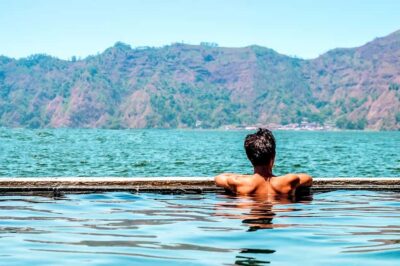
Mount Batur Sunrise Guided Hike and Natural Hot Spring
Read our review →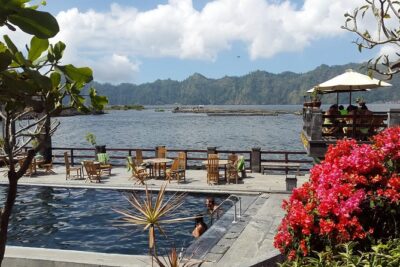
Mt Batur Sunrise, Breakfast & Natural Hot Springs
Read our review →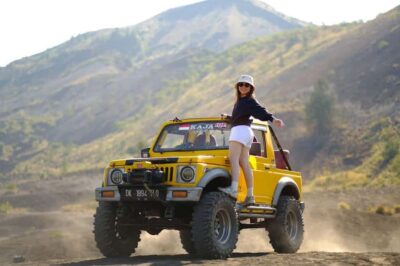
Day/Sunset Mount Batur 4WD Jeep and Natural Hot Spring
Read our review →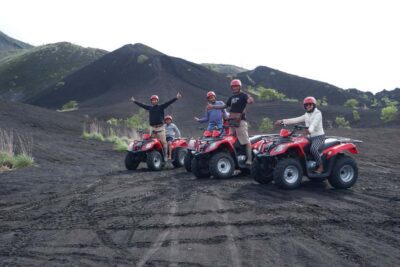
Mount Batur Quad Bike Tour and Natural Hot Springs
Read our review →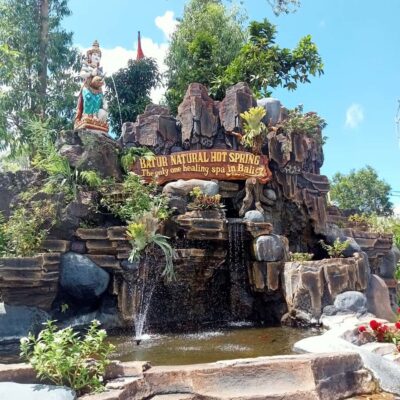
Cajon del Maipo Region – Hot Springs Termas de Colina
Read our review →
Mount Batur Sunrise Trekking & Natural Hot Spring – All Inclusive
Read our review →More soaks worth the detour