
REVIEW · JAPANESE ONSEN TOURS
Become a local! A Walking Tour of Arts, Crafts & Onsen Culture
The most interesting part of this Beppu walk is what it leaves out. You will not visit the famous Hells or follow the usual sightseeing circuit. Instead, you will slip into downtown lanes, meet artists, watch Oita bamboo become useful objects, and finish in a century-old Japanese house filled with art and old photographs.
I like the small group, limited to eight people, and the chance to speak with working craftspeople rather than only look at finished goods in a shop. I also like the guides, including Masahiro Ide, known as Masa, and Lou, who bring local history and humor to an easy-paced walk.
The main thing to consider is that this is not an onsen bathing experience. You will hear about Beppu’s bath culture and see the city’s less polished side, but you will not be shown inside an onsen building. Some workshop visits may also change if a business is closed or an instructor is unavailable.
Key points to know before booking
- Bamboo craftsmanship since 1908: Visit Nagai Seicho and watch artisans work with bamboo from Oita Prefecture.
- A maximum of eight people: The small group makes conversations and studio visits more personal.
- Local streets, not the Hells: This is a downtown culture walk, not Beppu’s standard hot-spring sightseeing route.
- Artist contact is central: Kiyoshima Apartment offers a look at creator residences and working studios.
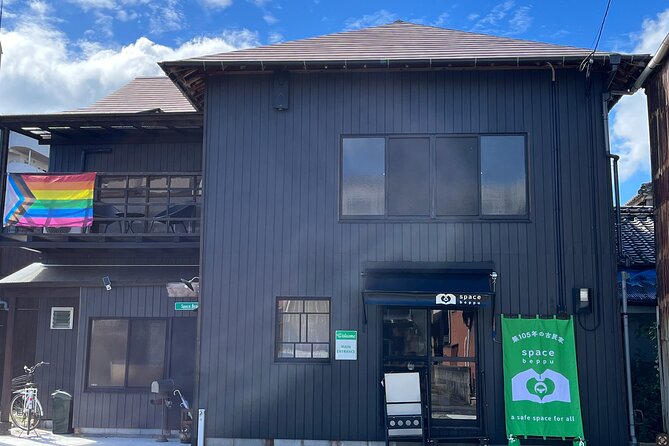
- A memorable final stop: Space Beppu combines a contemporary gallery, gift shop, community space, and old photographs of the city.
- Plan for a little flexibility: The route can change, and the irregular workshop at 別府風流人 depends on the instructor’s availability.
Why this Beppu walk feels different
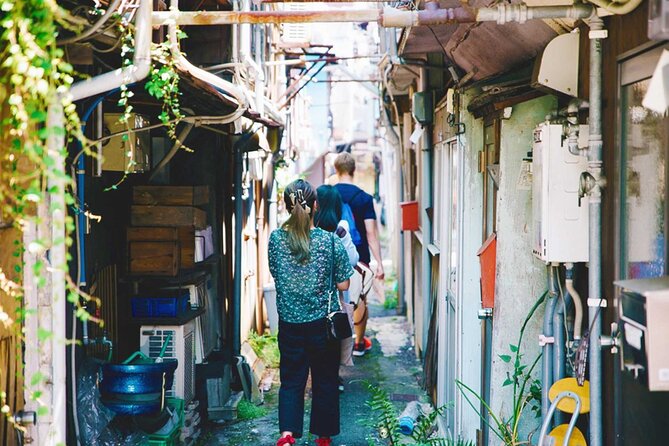
Beppu is best known for hot springs, steam, and the colorful Hells. Those sights have their place, but they show only one side of the city. This tour points you toward the working downtown, where markets, small workshops, old houses, artists, and everyday bath culture share the same streets.
I like that the experience is built around people and places you would have trouble finding on your own. The guide does not simply point out a building and move on. You get context about Beppu’s past, see how local crafts are made, and have a chance to ask questions.
The walk lasts about two to two and a half hours. That is long enough to give the city some shape without taking up an entire day. Since the group can be no larger than eight, the format suits you if you prefer conversation over a large crowd with a flag and a microphone.
The tone is cultural rather than strenuous. You should still be comfortable walking city streets for the duration, and the operator recommends a moderate level of physical fitness. Rain does not necessarily spoil the experience. One guide described a rainy walk through downtown as especially atmospheric, though you should bring suitable clothing and shoes.
More Onsen Tours in Japan:
- From Osaka: Himeji Castle, Arima Onsen & Mt. Rokko Day Tour
★ 4.6 · 339 reviews - From Tokyo: Private Tour to Fuji/Hakone – Onsen, Art, Nature
★ 5.0 · 116 reviews - Mt. Fuji, Hakone Private Tour from Tokyo – Onsen, Arts and Nature
★ 5.0 · 79 reviews
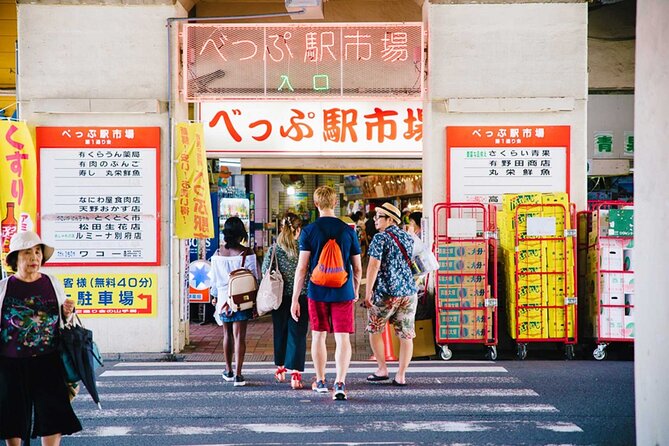
Starting at Beppu Station Market
The meeting point is WANDER COMPASS BEPPU, inside the えきマチ1丁目 Beppu BIS South Building near Beppu Station. From there, the first stop is Beppu Station Market, where you can see fresh fish and vegetables being sold for daily use.
This short visit lasts about 10 minutes. It is not a grand food hall or a tasting stop, and food and drinks are not included. Its value is more basic and useful: the market gives you an early look at how local residents shop and helps you see Beppu as a lived-in city rather than only a hot-spring destination.
You may have a chance to interact with local Japanese residents here. Your guide can explain what you are seeing and help bridge the gap when the market labels or conversations are not in English.
Because the market stop is brief, do not expect a full food tour. I see it as a quick orientation point. If you want to buy something, bring your own spending money, since food, beverages, and souvenirs are extra.
Inside a bamboo workshop with a 1908 story
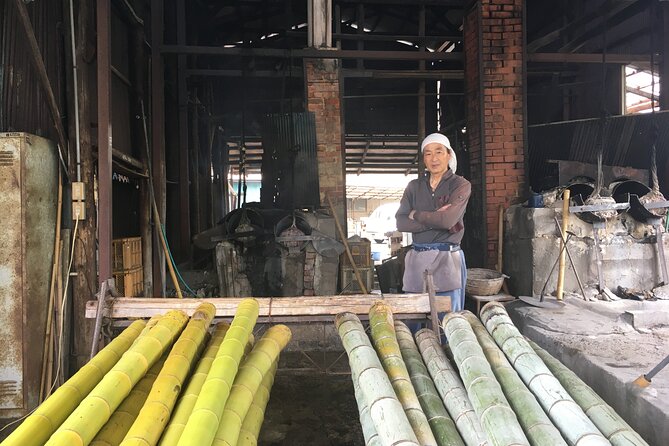
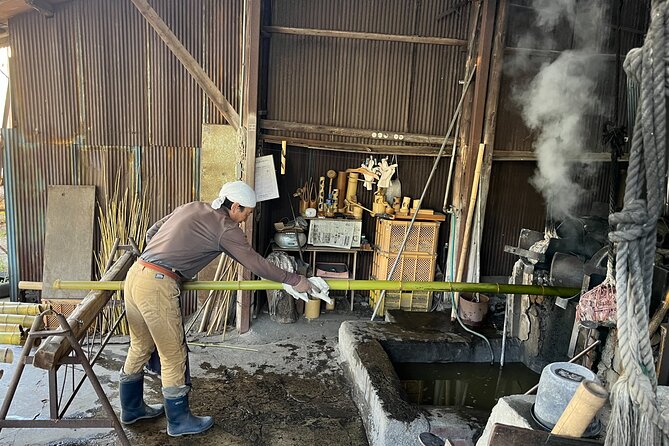
The bamboo factory is one of the strongest parts of the tour. At Nagai Seicho, you can watch artisans make bamboo products using bamboo from Oita Prefecture. The company dates to 1908, giving the visit a direct link to the area’s long craft tradition.
This is more satisfying than simply seeing bamboo souvenirs on a shelf. You get to observe the work behind them, including the care and precision needed to turn a natural material into a finished object. The visit lasts about 30 minutes, and admission is included.
Several people have singled out this stop as a highlight, and I understand why. Craft becomes much easier to appreciate when you see the hands, tools, and patience involved. You might also find products that are tempting to buy, but remember that purchases are not part of the tour price.
The factory visit also gives the guide a chance to explain why local materials matter. You are not just looking at an object labeled made in Japan. You are seeing a connection between regional resources, skilled work, and a business that has been operating for more than a century.
The flexible workshop at 別府風流人
The third stop is 別府風流人, an irregular workshop that lasts about an hour when available. This is the least predictable part of the route, so you should treat it as a possible feature rather than a guaranteed stop.
The instructor’s schedule determines whether this visit can take place. If the workshop is running, it adds a more hands-on and personal layer to the tour. The exact activity is not fixed in the supplied details, so you should not book expecting one specific craft lesson.
That uncertainty is worth accepting if you like small local experiences. A fixed itinerary can feel tidy, but it can also keep you from seeing the real rhythm of small businesses. Here, opening times and instructor availability may shape the day.
The tradeoff is simple: you gain the possibility of a rare workshop visit, but you give up complete certainty. If a particular activity matters most to you, ask about availability before booking.
More Hot Springs and Thermal Baths in Japan:
- Osaka: Nara and Uji Day Trip with Deer Park and Hot Spring
★ 4.4 · 302 reviews - Kyoto: Traditional Concert at Townhouse or Bathhouse
★ 4.9 · 224 reviews - Tokyo: Mount Fuji 5th Station & Onsen Day Trip
★ 4.3 · 75 reviews - Private Nagano 1-Day Tour:Snow Monkeys,Zenko-ji,Obuse,Sake,Onsen
★ 5.0 · 71 reviews
Art and old photographs at Space Beppu
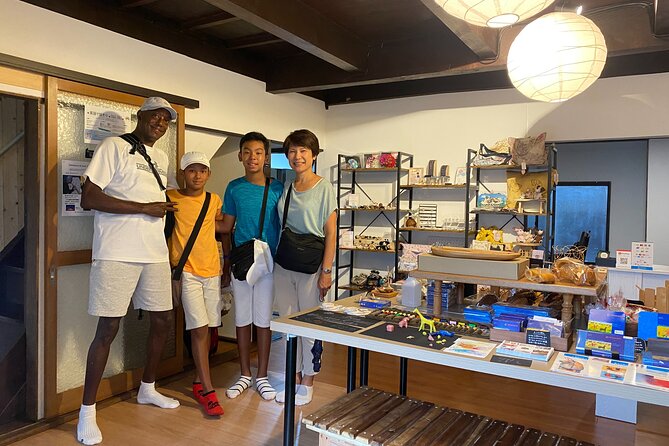
Space Beppu is housed in a renovated, century-old Japanese home. It serves as a contemporary art gallery, gift shop, community space, and history room. The visit lasts about 20 minutes, though you may want more time if a display catches your eye.
The history room contains old photographs of Beppu. This is a useful counterpoint to the modern art. You can look at the city as it was, then consider how its streets, buildings, and culture have changed.
I like this stop because it brings several themes together: old homes, present-day artists, local memory, and small-scale community life. It also makes a good final destination because you can browse at your own pace and ask the guide about what you have seen.
Space Beppu is the ending point listed for the walk. It is about a 12-minute walk from JR Beppu Station, and the tour staff will explain how to return to the station or continue to your next destination.
Meeting creators at Kiyoshima Apartment
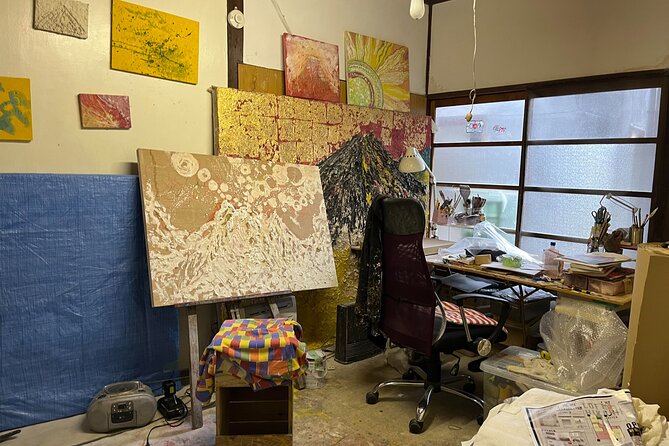
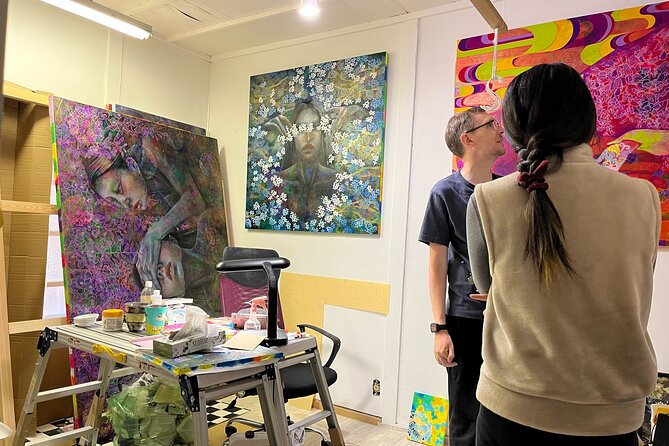
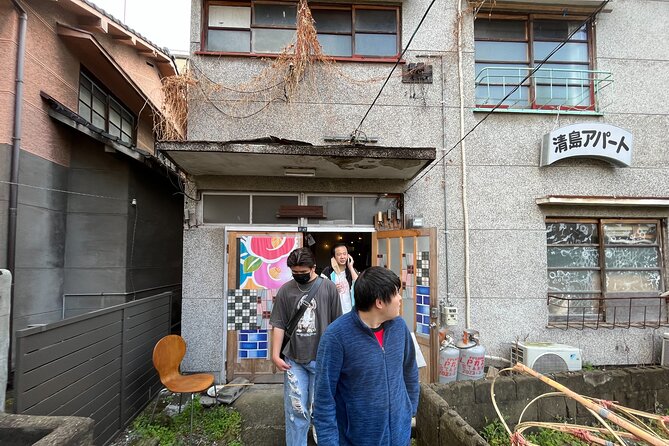
Kiyoshima Apartment is a creator residence and studio in downtown Beppu. The building gives you a chance to meet artists and see where they work, rather than viewing art only in a formal museum.
The visit lasts about 20 minutes. That is enough for an introduction, but it is not a long studio seminar. The availability of residents and artists can affect what you see, so keep your expectations open.
This stop is especially well suited to you if you enjoy the working side of art. You may learn how people live and create in Beppu, and you can ask questions that a museum label cannot answer. The casual setting is part of the appeal.
The tour has an art focus that reaches beyond Kiyoshima Apartment. One private-style experience included tea, origami, and playing a harp with a local resident. That detail should not be treated as a guaranteed part of every departure, but it shows the kind of personal cultural exchange that can sometimes happen on this walk.
What the guides add to the experience
A walk like this depends heavily on its guide. Names associated with the experience include Masahiro Ide, usually called Masa, and Lou. Masa is praised for excellent English, local knowledge, humor, and a warm manner.
You can expect the guide to explain Beppu’s past, point out buildings and bathhouses, and help you understand areas that might otherwise look like ordinary streets. The guide may also suggest places to eat or recommend an onsen for later.
That last point matters because the tour itself does not include entry into an onsen. A guide may recommend a bathing facility, such as Suginoi Hotel, but that is separate from the experience and costs extra.
A good guide also helps with the social side of the tour. Meeting artists or watching craftspeople work can feel awkward if you do not speak Japanese. Your guide provides the introduction and translation support needed to make those encounters comfortable.
What the $59.30 price gets you
At $59.30 per person, this is not the cheapest way to spend two hours in Beppu. You are paying for a small group, an English-language guide, access to several cultural facilities, and a route designed around places you are unlikely to locate on your own.
Admission fees for each facility are included. Food, drinks, bottled water, and souvenirs are not. The cost makes the most sense if you value access and explanation more than simply covering distance.
A private guide would usually cost more, while a large group tour might offer a lower price but less room for questions. With a maximum of eight people, this experience sits between a private outing and a standard group walk.
Group discounts are available, which may improve the value if you are traveling with family or friends. The tour is also booked an average of 51 days ahead, suggesting that you should not leave it until the last moment if your Beppu dates are fixed.
The strongest value comes from the mix of stops. You are not paying for one museum ticket. You are paying for a connected look at markets, manufacturing, artists, old buildings, and city history.
Who should book this walk
I would choose this tour if you have already seen Beppu’s main hot-spring sights or if you prefer daily life to headline attractions. It is a good match for art lovers, craft fans, photographers, and anyone who enjoys talking with local people.
It also suits first-time visitors who want a guide to explain the city before exploring more on their own. After the walk, you should have a clearer sense of where the downtown area sits, how its old buildings fit together, and where to look for food, bathing, and small shops.
You may want another experience if the Hells are your top priority, if you want to enter an onsen during the tour, or if you dislike route changes. This walk is not designed as a complete introduction to every major Beppu attraction.
The moderate walking requirement is worth noting. The tour is not described as difficult, but you will be outside and on your feet for two to two and a half hours. Wear comfortable shoes, and bring water since bottled water is not included.
Practical details that matter
The tour begins at WANDER COMPASS BEPPU near JR Beppu Station and ends at Space Beppu. Staff can explain how to get back to the station or reach your next stop.
Mobile tickets are accepted, and confirmation is provided when you book. Service animals are allowed, and the meeting area is near public transportation.
The experience carries a 4.9 rating from 36 ratings, with 97 percent recommending it. That fits the tour’s strongest features: the guides, the bamboo factory, the artist studios, and the chance to see streets outside the normal sightseeing path.
You can cancel for a full refund up to 24 hours before the start time. Changes or cancellations made within 24 hours are not accepted for a refund, and the cut-off follows Beppu’s local time.
Should you book the Beppu arts and crafts walk?
Book it if you want the city’s human side: working artisans, small studios, old photographs, local markets, and a guide who can explain what you are seeing. The bamboo factory and Kiyoshima Apartment are the most reliable reasons to choose it, while the flexible workshop adds a welcome possibility.
Skip it if you want the Hells, a full food tour, or an actual soak in an onsen. For everyone else, this is a smart two-hour addition to a Beppu stay, especially for a first or final day when you want a friendly local guide and a different view of the city.
FAQ
How long does the walking tour last?
The tour lasts approximately two hours to two hours and 30 minutes.
Where does the tour begin?
It begins at WANDER COMPASS BEPPU inside えきマチ1丁目 Beppu BIS South Building near JR Beppu Station.
Where does the tour end?
The tour ends at Space Beppu in Chiyomachi. It is about a 12-minute walk from JR Beppu Station.
Does the tour visit the Beppu Hells?
No. The walk avoids popular tourist spots such as the Hells and focuses on downtown cultural streets and alleys.
Does the tour enter an onsen building?
No. You will not be shown inside an onsen building. The guide may provide onsen suggestions, but bathing is not included.
Is the bamboo factory visit included?
Yes. Admission fees for the facilities visited are included, including the bamboo workshop when it is part of the route.
Is the workshop at 別府風流人 guaranteed?
No. This workshop is irregular and depends on the instructor’s availability. The route and places visited may change because businesses can have different opening times.
How many people can join the tour?
The tour has a maximum of eight travelers.
Are food and drinks included?
No. Food, beverages, bottled water, and souvenirs are not included.
Can I cancel for a refund?
Yes. You can cancel at least 24 hours before the experience start time for a full refund. Cancellations or changes made less than 24 hours before the start time are not accepted for a refund.
Freshly added soaks in Japan
- Mount Fuji – Hakone & Onsen Full Day Private Tour★ 3.8 · 6 reviews
- Mt. Fuji, Hakone Private Tour from Tokyo – Onsen, Arts and Nature★ 5.0 · 79 reviews
- Himeji Castle, Arima Onsen & Mt. Rokko: 1-Day Bus Tour from Osaka★ 4.0 · 28 reviews
- Osaka: Tennen Onsen Naniwa-no-Yu, the famous hot spring spa★ 4.7 · 19 reviews
- Osaka: Solaniwa Onsen Hot Spring Visit★ 4.6 · 51 reviews
- 1-Day Winter Tour From Nozawa Onsen: Snow Monkeys, Zenko-ji Temple & Sake★ 5.0 · 32 reviews
- Snow Monkey Park, Soba Lunch and Shibu Onsen Tour★ 5.0 · 12 reviews
- Snow Monkey & Shibu Onsen Afternoon Tour (Depart: Iiyama & Nozwa)★ 5.0 · 54 reviews
Japanese Onsen Tours, compared.
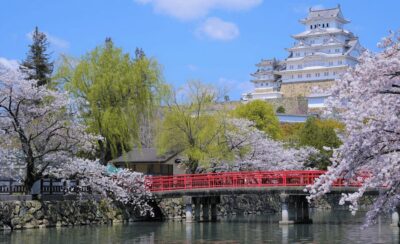
Himeji Castle, Arima Onsen & Mt. Rokko Day Tour
Read our review →
Private Tour to Fuji/Hakone – Onsen, Art, Nature
Read our review →
All-Day Pass to Yunomori Sathorn Onsen Bath and Spa
Read our review →
Mt. Fuji, Hakone Private Tour from Tokyo – Onsen, Arts and Nature
Read our review →
Private Nagano 1-Day Tour:Snow Monkeys,Zenko-ji,Obuse,Sake,Onsen
Read our review →
More soaks worth the detour