
REVIEW · 7-DAY EXPERIENCES
Pokhara: 7-Day Annapurna Base Camp Via PoonHill & Hot Spring
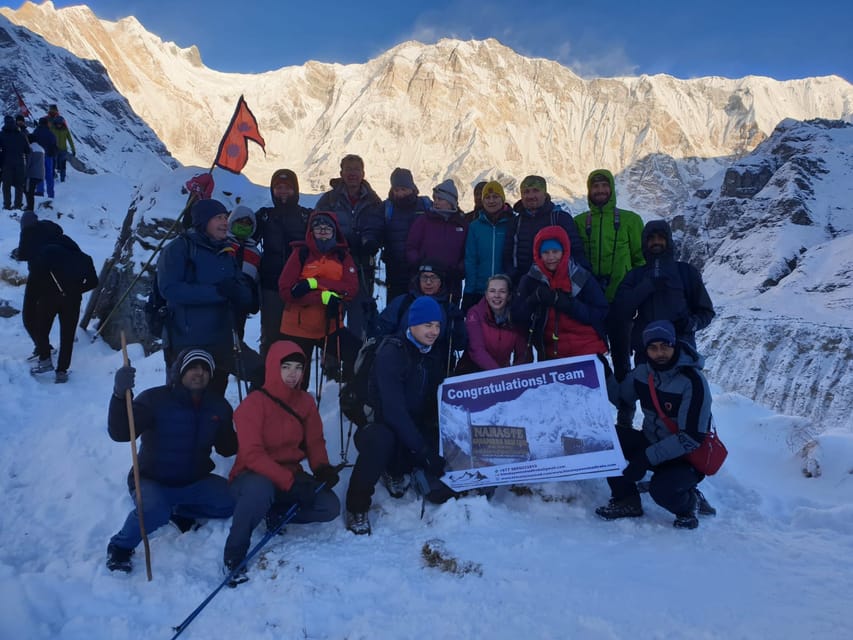
Annapurna Base Camp via Poon Hill packs a lot into seven days: sunrise over the mountains, rhododendron forest, high-altitude trekking, and a hot spring finish. The route reaches 4,130 meters at base camp, with Poon Hill adding its own early-morning reward at 3,210 meters.
I like the smart route design and the strong guide support. You get the sunrise viewpoint before heading deeper into the Annapurna region, and the final soak at Jhinu Dada is a welcome bit of comfort after several long days. The main caution is simple: this is a demanding trek, not a gentle sightseeing walk. Several days run for five or six hours, and altitude adds another layer of effort.
Key points to know before booking
- Poon Hill comes early: You climb to 3,210 meters for sunrise on the second morning.
- Annapurna Base Camp reaches 4,130 meters: Expect cold, thinner air, and a serious high point on Day 5.
- You sleep in tea houses and local hotels: Accommodation is available during the trek, but this is not a luxury trip.
- The route finishes with a hot spring: Jhinu Dada gives you about two hours to rest tired muscles.
- The price covers the main trekking costs: At $267 per person, permits, guide expenses, meals on the full package, transport, and accommodation are included.
- Guide care is a major strength: Prakash and Mahesh are named by recent participants, with praise for route adjustments, communication, and personal care.
What the seven-day route really gives you
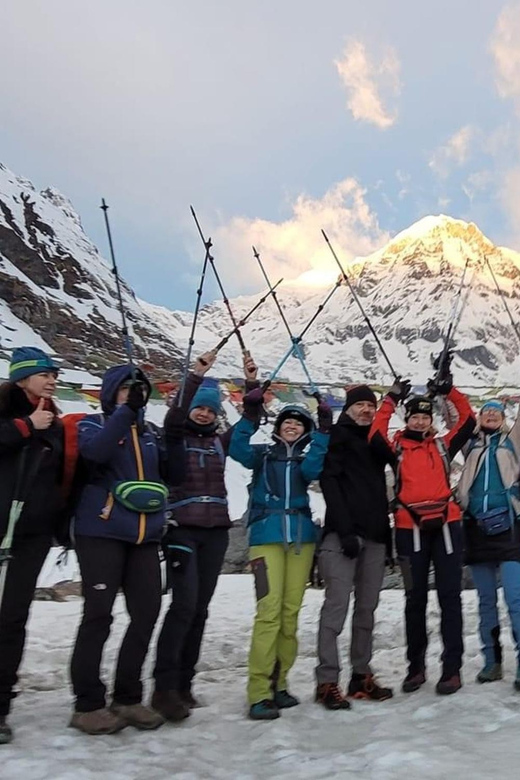
This trek combines two popular Annapurna experiences that are often done separately: Poon Hill and Annapurna Base Camp. That makes the schedule efficient for you if time is limited, but it also means the pace is brisk.
You begin around Pokhara, then climb through villages and forest before reaching Ghorepani. Poon Hill provides an early mountain view, while the following days take you beside the Modi River and into the high basin below Annapurna. The return route follows the trail down to Bamboo and Jhinu Dada.
The price is $267 per person. For a full-package booking, that includes an authorized English-speaking or local guide, permits, required paperwork, the Trekkers’ Information Management System fee, accommodation, meals, government taxes, and four-wheel-drive transport according to the schedule. Guide costs such as food, lodging, salary, equipment, insurance, and transport are also covered.
That is a solid bundle for a seven-day trek. You still need to budget for drinks, bottled or boiled water, hot showers, battery charging, laundry, personal expenses, insurance, a porter, and possible extra nights in Pokhara. The price looks best when you use the included meals and transport, rather than treating the tour as a bare guiding service.
More Week-Long Trips in Nepal:
- Pokhara: 7-Day Annapurna Base Camp Trek & Natural Hot Spring
★ 5.0 · 11 reviews - Pokhara: Amazing 7-Day ABC Trek with Natural Hot Spring
★ 5.0 · 5 reviews - Pokhara: 7-Day Annapurna Base Camp Trek & Hot Spring
★ 4.0 · 3 reviews
Day 1: Pokhara to Ghorepani by road and trail
The first day begins with pickup in Pokhara and a drive to Nayapul. From there, the route continues by jeep toward Ulleri, passing streams, small villages, and rhododendron forest.
The transport matters here. A four-wheel-drive jeep removes a large amount of road walking and gets you higher into the hills, leaving about four hours of trekking to Ghorepani. You still need to be ready for an active first day, since the combination of a three-hour drive and a steady climb can feel tiring before you have settled into the trek.
Ghorepani sits at 2,840 meters and serves as the first night’s base. You stay in a tea house, a simple mountain lodging style that keeps you close to the route and local villages. Accommodation is practical rather than fancy, so bring realistic expectations. You are there for a bed, meals, warmth, and a place to recover for the next morning.
The first night also sets the rhythm of the trip. Days begin early, walking time is measured in hours, and the high point of the trek is still ahead.
Day 2: Poon Hill sunrise and the forest trail to Chuile
Day 2 is one of the most memorable and most demanding sections because it begins with an early climb to Poon Hill. At 3,210 meters, the viewpoint gives you a chance to see the Annapurna range and nearby peaks in the first light.
The sunrise timing is the point. You trade sleep for mountain views, so keep warm clothes and a headlamp or other suitable light close at hand. The air can be cold before sunrise, and the viewpoint may feel exposed compared with the tea house below.
After returning to Ghorepani for breakfast, you descend toward Tadapani and continue to Chuile, at about 2,400 meters. The route passes through forest, with rhododendrons and other trees shaping much of the walking. This is a good contrast to the open mountain views at Poon Hill.
The day takes about six hours. You gain altitude early, then lose it as you head toward Chuile. That up-and-down pattern can be harder on your knees than a steady climb, so trekking poles may be useful if you normally rely on them.
Day 3: Chuile to Sinuwa beside the rivers
From Chuile, you continue toward Sinuwa at 2,170 meters. This section brings the trail closer to the meeting point of the Kumrung and Modi Rivers.
The river is not just scenery here. It gives the route a clear sense of direction as you walk beside the water and continue through the middle hills. The day takes around five hours, making it shorter than some of the longer sections, though the terrain still requires steady footing.
Sinuwa is an important transition point. You have left the Poon Hill area behind and are now moving toward the Annapurna Base Camp route. The lower elevation at the end of the day gives you a useful recovery period before the trail rises again.
If you are walking with a private group, this is also a good day to tell your guide how your body is responding. The included guide is there to help manage the route, and Mahesh was specifically praised for adjusting the trek to match ability and expectations. That kind of communication matters more than a fast pace.
More Hot Springs and Thermal Baths in Nepal:
- Pokhara: 5 Day Annapurna Base Camp Trek & Natural Hot Spring
★ 4.9 · 44 reviews - 6 Hours Spa Package in Kathmandu (Massage, Sauna, Steam, Jacuzzi)
★ 5.0 · 43 reviews - From Pokhara: 5-Day Annapurna Basecamp Trek with Hot Springs
★ 4.9 · 26 reviews - Pkr/Kathmandu: 5-Day Annapurna Base Camp & Hot spring Trek
★ 5.0 · 6 reviews
Day 4: Sinuwa to Deurali through bamboo and rhododendron
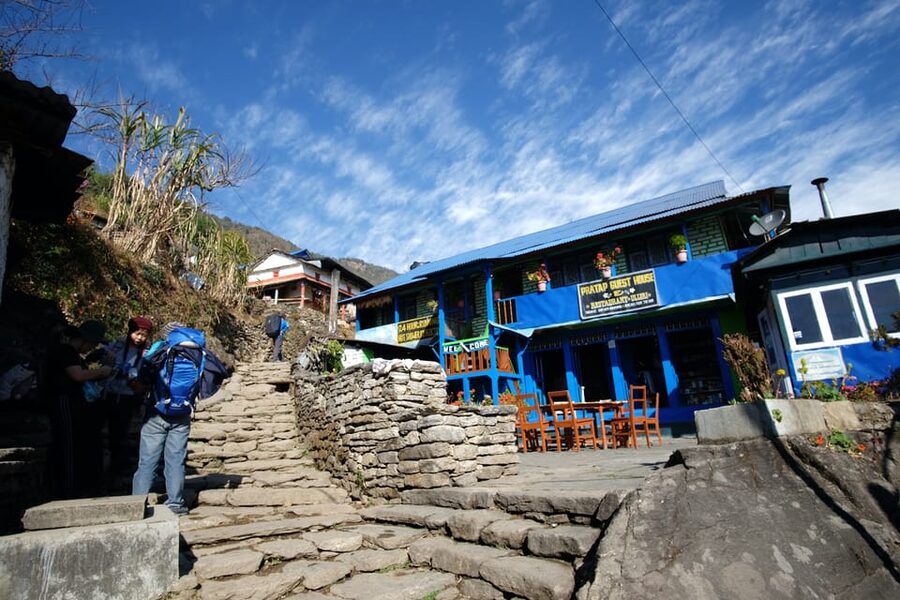
Day 4 takes about six hours from Sinuwa to Deurali at 3,200 meters. You pass through lush forest, including bamboo and rhododendron, while the mountains begin to feel closer and more dramatic.
The trail goes through Dovan before continuing to Deurali. Along the way, you get views toward Annapurna and Machhapuchhre, the distinctive mountain also called Fishtail. The scenery changes as you gain height, and the forest begins to feel like a corridor leading toward the high mountains.
This is one of the days when the schedule earns its demanding reputation. You are climbing again after the lower finish at Sinuwa, and the air is getting thinner. A six-hour walking day can feel longer than the distance suggests.
Your best strategy is to keep your pace steady and avoid racing the group. Drink regularly, eat even if your appetite is reduced, and tell the guide about unusual symptoms rather than trying to hide them. The itinerary is fixed, but the people guiding the trek can help you judge how to handle the day.
Day 5: Deurali to Annapurna Base Camp at 4,130 meters
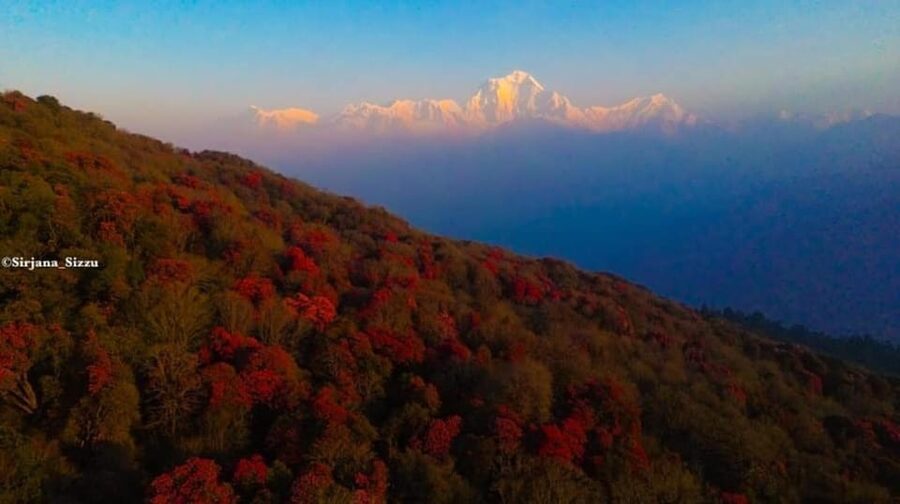
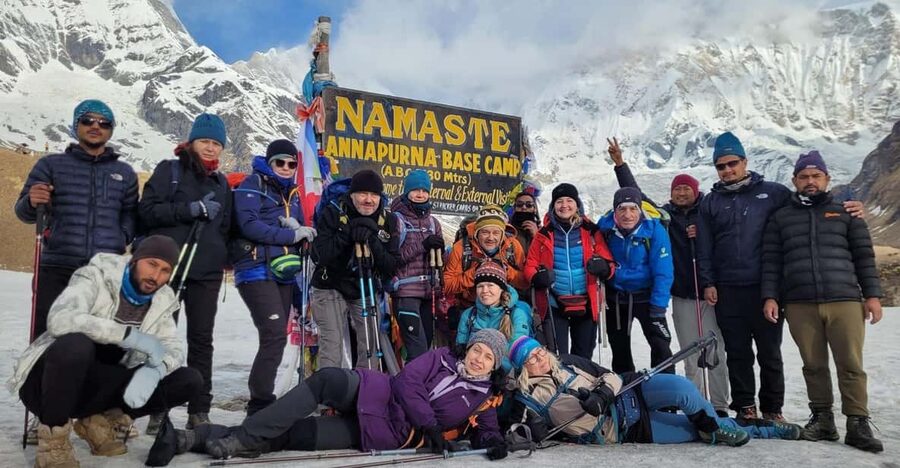
Day 5 is the central goal: Deurali to Annapurna Base Camp, about six hours of trekking. The route reaches 4,130 meters, making this the highest point and the day when altitude deserves your full attention.
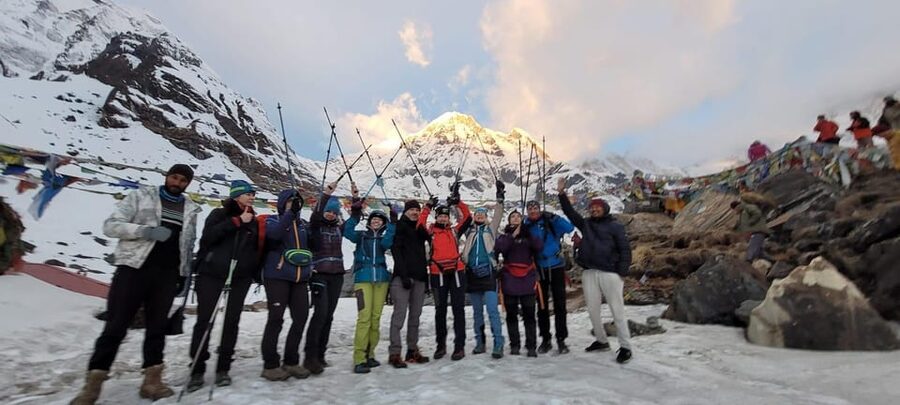
At base camp, you enter a wide mountain amphitheater surrounded by snow-covered peaks and steep glacial terrain. This is the big visual payoff of the trek. Poon Hill offers the sunrise view, but Annapurna Base Camp gives you the stronger sense of being enclosed by high mountains.
You should treat the final approach as a serious mountain day. The height can slow you down even if you are fit at home. Take short rests, keep your clothing adaptable, and do not expect the same walking speed you had on the lower trail.
The overnight at base camp also makes this section special. You do not simply visit and turn around. You have time to take in the setting, rest, and experience the high basin before descending the next day.
Day 6: The long descent from base camp to Bamboo
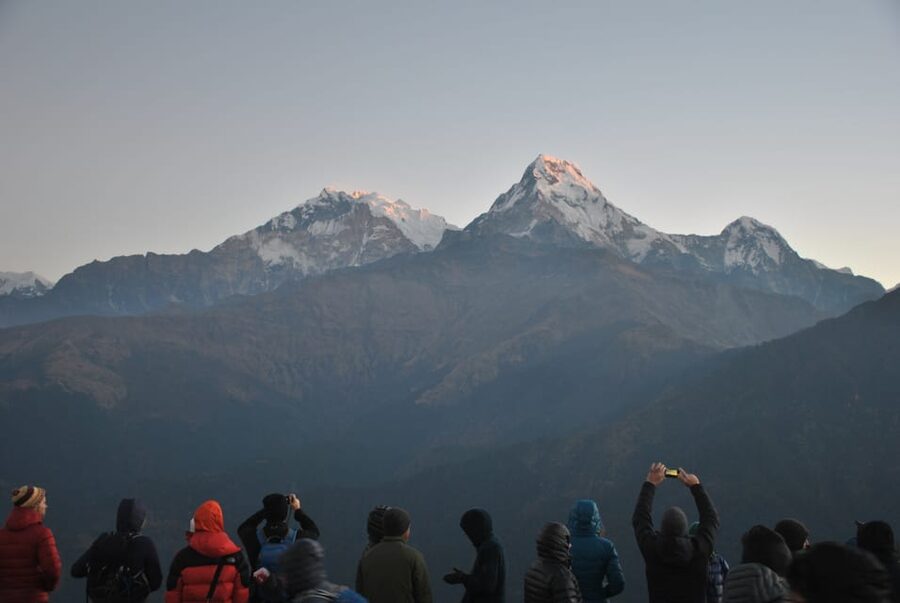
After the high point, you retrace the route from Annapurna Base Camp to Bamboo, at about 2,300 meters. The walk takes around six hours.
Descending sounds easy, but it can be tough on your knees and feet. The same trail that felt like a climb the day before now requires controlled steps on uneven ground. Good shoes are essential, and comfortable socks are more useful than fashionable trekking clothes.
The reward is a rapid return to thicker air and a lower elevation. Bamboo provides a calmer overnight stop after the cold and effort of base camp. You also get another look at the forest and river sections, now from a different direction.
This is where a porter can make a real difference if you do not want to carry your own pack. Porters are not included in the listed price, but they are available to purchase. If you carry everything yourself, pack with restraint. A lighter load will make both the climbs and descents more manageable.
Day 7: Bamboo, Jhinu Dada Hot Spring, and Pokhara
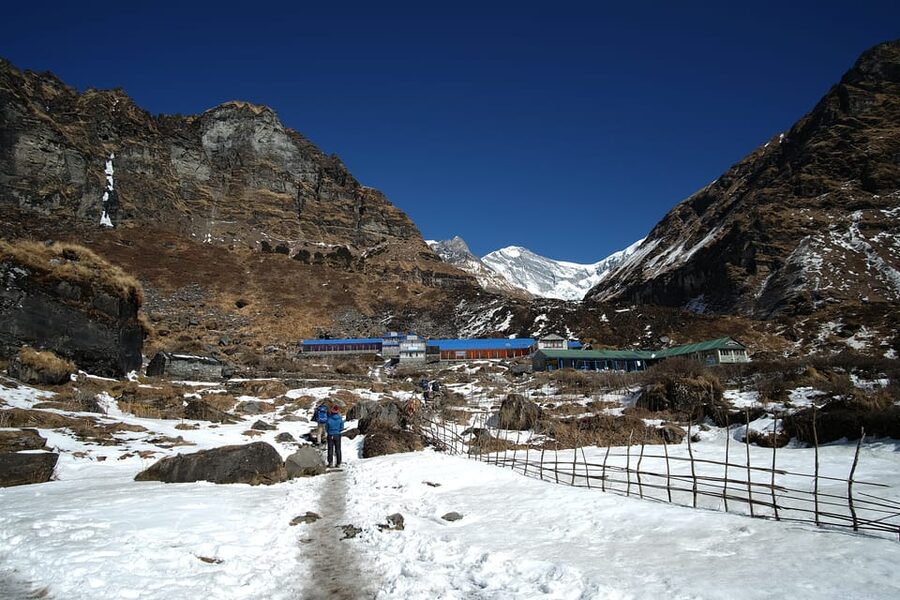
The final day combines a five-hour trek, a hot spring stop, and a roughly two-and-a-half-hour drive back to Lakeside Pokhara. You descend from Bamboo to Jhinu Dada, then continue trekking for about 30 minutes to Samrung before boarding a jeep.
The hot spring is the right ending for this route. You have spent several days climbing and descending, and about two hours in the natural hot water gives your legs a chance to relax before the road journey. Pack swimwear or suitable clothing where you can reach it, rather than burying it in the bottom of your bag.
The return drive completes the loop back to Pokhara. You finish with a long day, but the final descent and road transfer mean you do not need to spend another night on the trail. The experience closes with a direct connection between the mountain route and Lakeside Pokhara.
Guides, private groups, and the level of support
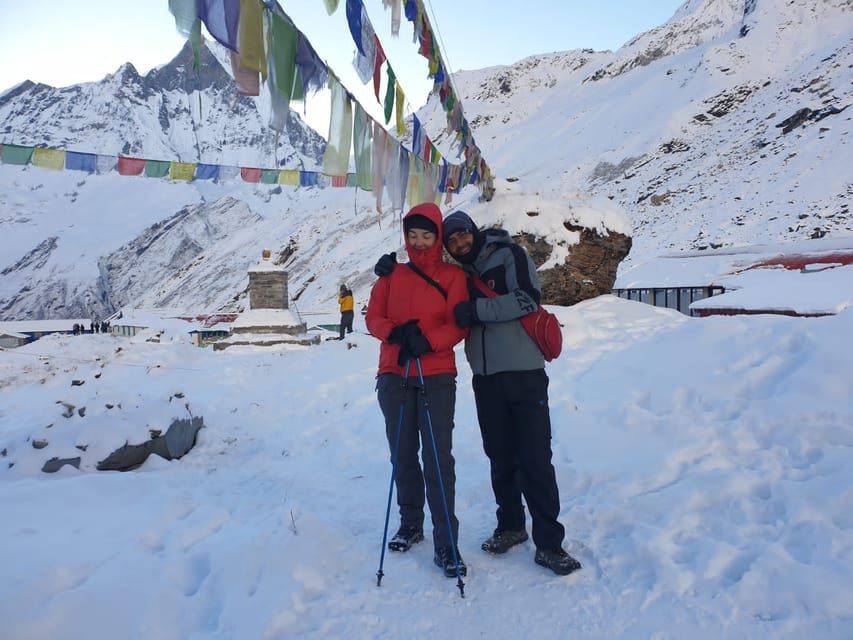
The activity uses a private group, with live guidance available in English, Hindi, or Nepali. An authorized English-speaking or local expert guide is included, and guide costs are covered within the package.
Guide quality is especially important on this route because the itinerary includes both an early sunrise climb and a high-altitude overnight. Prakash is named as a guide who helped make the trek enjoyable and well managed. Mahesh is praised for answering questions, caring for the group, and adjusting the route to match ability and expectations.
Porter support is separate. Some people prefer carrying their own gear, while others will appreciate paying for help on the longer uphill and downhill days. The tour also covers the guide’s equipment and insurance, but your own travel and rescue insurance is not included. You should arrange that before leaving.
Meals, lodging, and what the $267 price covers
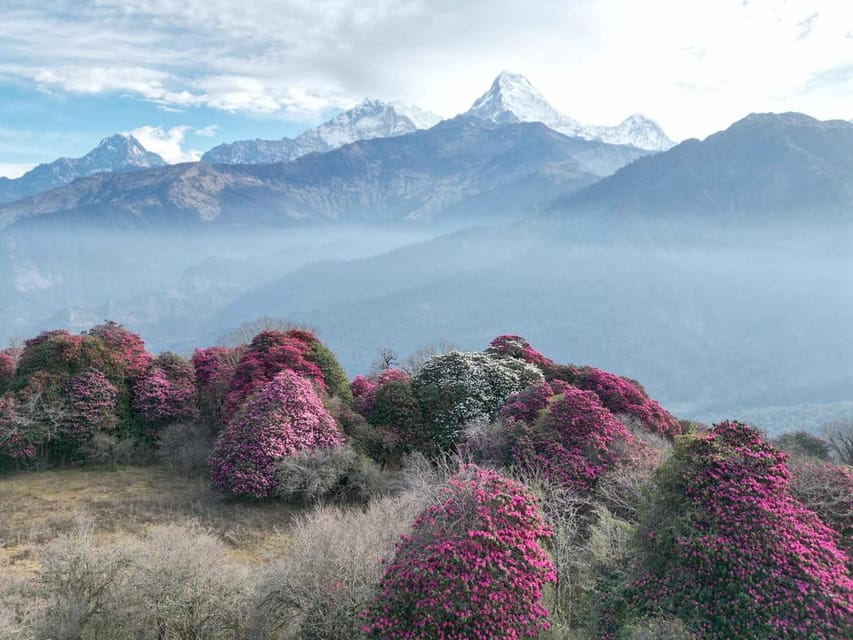
Accommodation is available throughout the trek, with tea houses and hotels used along the route. These are functional mountain stops, not resorts. You should expect simple rooms and practical dining rather than hotel comforts.
For the full-package option, breakfast, lunch, and dinner are included during the trek. The food helps keep the price reasonable, since buying three meals a day in the mountains can add up quickly. Drinks, bottled or boiled water, showers, phone calls, laundry, charging, bar bills, and personal purchases cost extra.
The listed price also includes trekking permits, government tax, required paperwork, and transport in a four-wheel-drive jeep as set out in the schedule. That makes the package easier to budget than a low headline price that later adds permits, transport, and guide expenses.
Still, you should keep a cash buffer for personal needs. The information provided does not specify how much electricity, hot water, or other optional services cost at each stop, so plan for those as separate expenses.
Who should choose this trek
I would recommend this route to you if you have limited time but want both a famous sunrise viewpoint and Annapurna Base Camp. It gives you a strong mix of forest, villages, rivers, high mountain views, and a hot spring without stretching the trip into a longer itinerary.
You should be comfortable with five- to six-hour trekking days and a maximum altitude of 4,130 meters. The activity is not suitable for pregnant women, and anyone with medical concerns should seek professional advice before booking.
Bring a passport or ID card, comfortable shoes, sunglasses, sunscreen, a jacket, comfortable clothes, a sleeping bag, and trekking gear. The packing list is short, but the key is layering. You need protection for cold mornings at Poon Hill and base camp, along with clothing that works during warmer lower-elevation walks.
The six available ratings are all five-star, with particular praise for guide care, communication, route management, food, and the overall organization. That does not remove the physical challenge, but it does point to the value of having a reliable guide on a tight schedule.
Should you book the Annapurna Base Camp via Poon Hill trek?
Book it if you want a high-value, tightly planned mountain trek from Pokhara and you are prepared for long walking days. The route gives you Poon Hill sunrise, Annapurna Base Camp, local lodging, included meals, permits, transport, and a hot spring finish for $267 per person.
Think twice if you want slow mornings, private rooms, luxury lodging, or an easy walk. The altitude, early start, repeated climbs, and six-hour days are real demands.
For the best fit, choose this trip with a private group, use the guide actively, pack light, and arrange insurance before you go. If you can accept simple accommodation and hard walking, this is an efficient way to see a great deal of the Annapurna region in one week.
FAQ
How long is the Annapurna Base Camp via Poon Hill trek?
The trek lasts seven days, beginning and ending in Pokhara.
What is the highest altitude reached?
The route reaches Annapurna Base Camp at 4,130 meters. Poon Hill reaches 3,210 meters.
Is the trek suitable for pregnant women?
No. The activity is listed as unsuitable for pregnant women.
What languages can the guide speak?
Live guidance is available in English, Hindi, and Nepali.
Is this a private group experience?
Yes. The activity is arranged as a private group.
Are meals included?
Breakfast, lunch, and dinner during the trek are included for the full-package option.
Is a porter included?
No. Porter service is available for an additional purchase.
What is included in the $267 price?
The price includes the guide, permits, required paperwork, government taxes, available trek accommodation, meals for the full package, scheduled four-wheel-drive transport, and the guide’s meals, accommodation, salary, equipment, insurance, and transportation.
Freshly added soaks in Nepal
- 7 Days Annapurna Base Camp Trek from Pokhara with Hot Spring★ 5.0 · 2 reviews
- Unlimited Sauna Steam and Jacuzzi★ 5.0 · 2 reviews
- POON HILL HOT SPRING – 10 Days Trek★ 5.0 · 3 reviews
- Lower Mustang Jomsom Muktinath Hot Spring Tour in 4 WD Jeep★ 4.5 · 2 reviews
- 5-Day Annapurna Base Camp Trek with Natural Hot Springs★ 5.0 · 3 reviews
- Pokhara: 7-Day Annapurna Base Camp Trek & Hot Spring★ 4.0 · 3 reviews
- Pokhara: Amazing 7-Day ABC Trek with Natural Hot Spring★ 5.0 · 5 reviews
- Pokhara: 5-Day Annapurna Base Camp Trek with Hot Spring★ 5.0 · 3 reviews
7-Day Experiences, compared.
7-Day Annapurna Base Camp Trek & Natural Hot Spring
Read our review →
7 Day Iceland with Reykjavik Northern Light | Blue Lagoon | Golden Circle ……
Read our review →
7Day Serengeti Migration (Ndutu), Crater, Hot Springs & City Tour
Read our review →
7 Day Iceland with Reykjavik Blue Lagoon Snæfellsnes | Golden Circle | South….
Read our review →More soaks worth the detour