
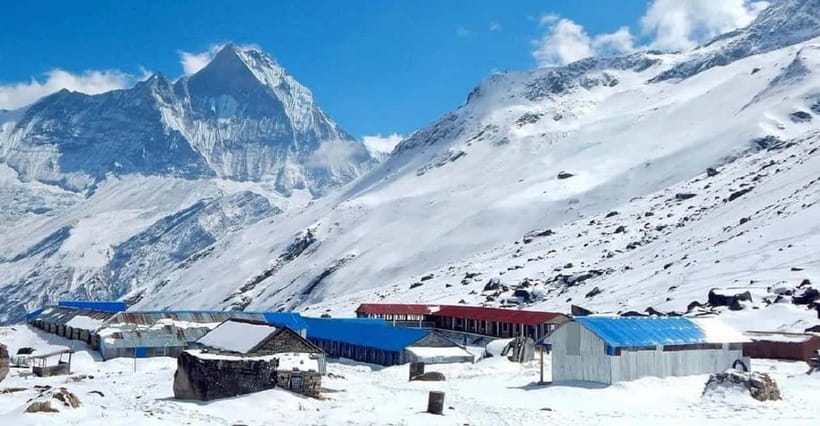
REVIEW · HOT SPRING HIKING TOURS
Pokhara: 7-Day Annapurna Base Camp Trek & Hot Spring
The best part of this trek is the changing scenery. You begin near Pokhara, walk through traditional villages and rhododendron forests, reach Annapurna Base Camp at 4,130 meters, then finish with a soak in Jhinu Danda’s natural hot springs. That gives you both the hard mountain day and a welcome bit of comfort.
I like the clear sense of progress, from Ghandruk and Chomrong to the high mountain basin below Annapurna and Machapuchare. I also like the sunrise stop at base camp, which gives you a strong reason to spend the night there rather than simply hiking up and turning around. The main concern is logistics: confirm exactly what transport, meals, water, Wi-Fi, and return arrangements are covered before you pay.
Key points to know before booking
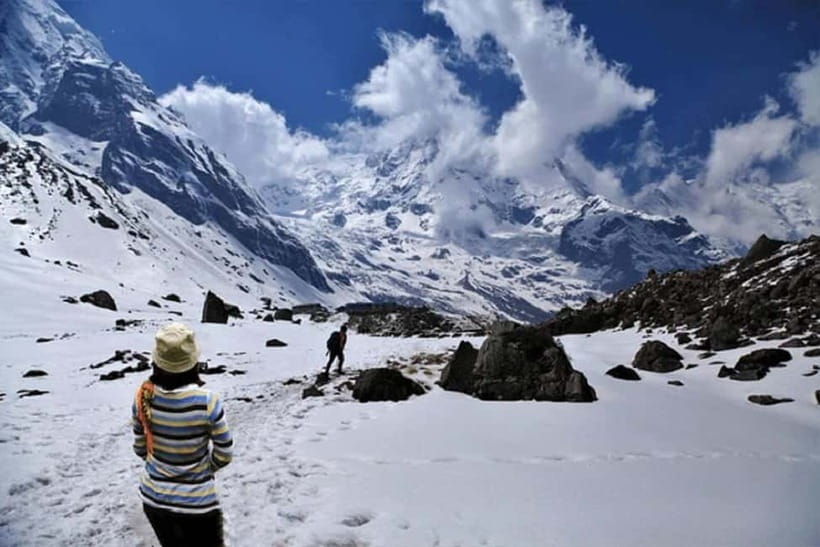
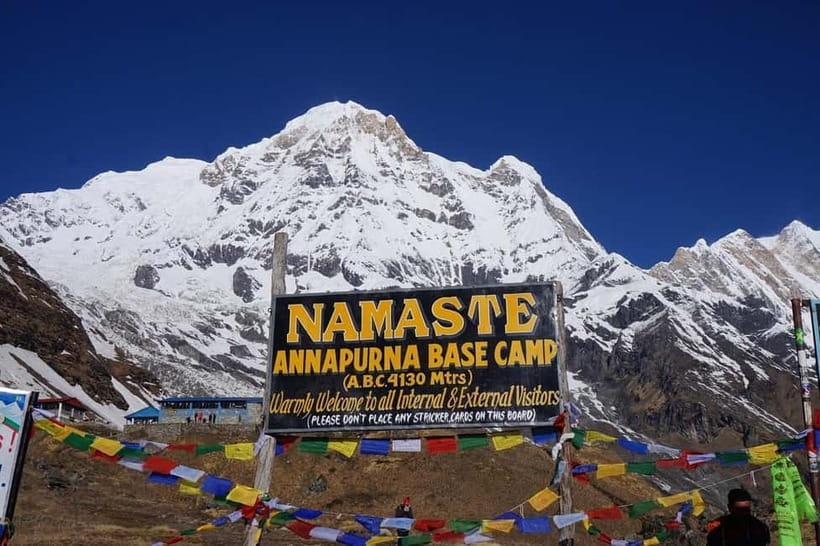
- Annapurna Base Camp reaches 4,130 meters: The altitude makes the fourth day the physical high point, not just the scenic one.
- The route passes through Ghandruk and Chomrong: These villages add local character to what could otherwise be a mountain-only walk.
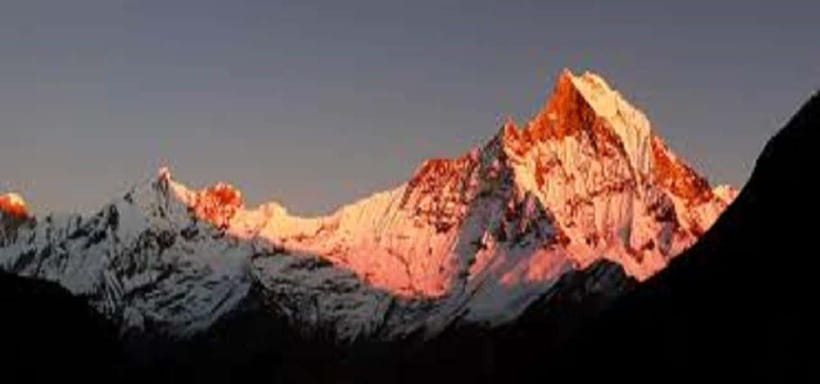
- The sunrise at base camp is a major reward: You stay overnight at ABC so you can see the Annapurna range in early light.
- Jhinu Danda provides a natural hot spring stop: The soak comes on day six, after several demanding hiking days.
- The group is private: You travel with your own group and a government-registered guide speaking English, Hindi, or Nepali.
- The price is $190 per person: That can be good value if your chosen option includes meals, private transport, and the listed equipment.
What the seven days really involve
This is not a casual sightseeing outing from Pokhara. You spend seven days on foot, with one major climb to 4,130 meters and several days of long walking. The published schedule gives hiking times of roughly five to six hours on the first day, while the exact walking time on later days is not stated.
I would treat the itinerary as a route outline rather than a minute-by-minute plan. Mountain conditions, trail pace, and the strength of your group can affect how long each section takes. Ask the operator to explain the daily walking hours, elevation gain, and meal arrangement for your selected package.
Accommodation is in basic tea houses or lodges. That is the normal style for this kind of trek: simple rather than polished, with the practical advantage of keeping you close to the trail. Bring warm clothing, a jacket, a change of clothes, a flashlight, cash, and proper hiking shoes. A sleeping bag and trekking stick may be provided as needed, but confirm this before departure.
More Hot Spring Hikes in Nepal:
- Pokhara: 5 Day Annapurna Base Camp Trek & Natural Hot Spring
★ 4.9 · 44 reviews - From Pokhara: 5-Day Annapurna Basecamp Trek with Hot Springs
★ 4.9 · 26 reviews - Pokhara: 7-Day Annapurna Base Camp Trek & Natural Hot Spring
★ 5.0 · 11 reviews
Day 1: Pokhara to Ghandruk at 1,940 meters
After breakfast, you ride from Pokhara to Nayapool with your guide. The walking begins there, following the Modi Khola and passing through ethnic villages and forest.
The stated hiking time is about five to six hours. Ghandruk, at 1,940 meters, is a useful first overnight stop because it gives you a taste of village life before the route grows more remote and mountainous. The day is not simply a transfer followed by a short stroll. You should arrive ready for a proper first day on the trail.
I like this opening because it eases you into the Annapurna region through settlements and forest instead of dropping you straight into a high-altitude setting. Still, the vehicle ride to Nayapool and the first long walk make comfortable footwear essential. If you have just arrived in Nepal, avoid filling the morning with extra activities in Pokhara.
Day 2: Ghandruk to Chomrong at 2,170 meters
The second day takes you from Ghandruk to Chomrong through hill settlements and rhododendron forests. The Annapurna range remains part of the view, giving you a strong mountain backdrop while you adjust to the rhythm of walking.
Chomrong sits at 2,170 meters, high enough to make the climb feel real but still well below base camp. This is one of the days when the villages matter. You are not only moving between lodges. You are passing through inhabited mountain country, with local homes, forest paths, and changing views of the peaks.
I would use this day to settle into a sensible pace. Keep your water accessible, carry only what you need during the day, and do not race ahead simply because the first hours feel easy. The route gets more demanding as you approach Himalaya and the base camp.
Day 3: Chomrong to Himalaya at 2,920 meters
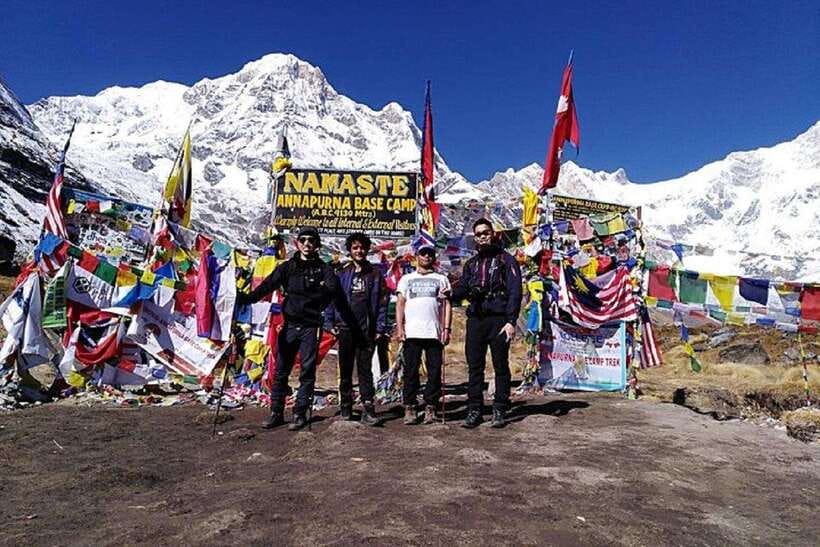
From Chomrong, the trail continues toward Himalaya, reaching 2,920 meters. The route again includes rhododendron forest, villages, and views of the surrounding mountains.
This day is important because the altitude begins to have a greater effect. The itinerary describes the scenery, but it does not provide a detailed elevation profile or a stated walking time. I would ask your guide how much ascent and descent is planned for your group on this section.
The forest is part of the appeal. Rhododendron trees give the trail a different feel from the open mountain views at base camp, and natural springs and waterfalls appear along the broader route. You should still expect a physical day. Comfortable shoes, hiking pants, a warm layer, and a jacket are more useful here than casual sightseeing clothes.
More Week-Long Trips in Nepal:
- Pokhara: 7-Day Annapurna Base Camp Via PoonHill & Hot Spring
★ 5.0 · 6 reviews - Pokhara: Amazing 7-Day ABC Trek with Natural Hot Spring
★ 5.0 · 5 reviews - 7 Days Annapurna Base Camp Trek from Pokhara with Hot Spring
★ 5.0 · 2 reviews - 7 Day Iceland with Reykjavik Northern Light | Blue Lagoon | Golden Circle ……
★ 5.0 · 5 reviews
Day 4: Himalaya to Annapurna Base Camp at 4,130 meters
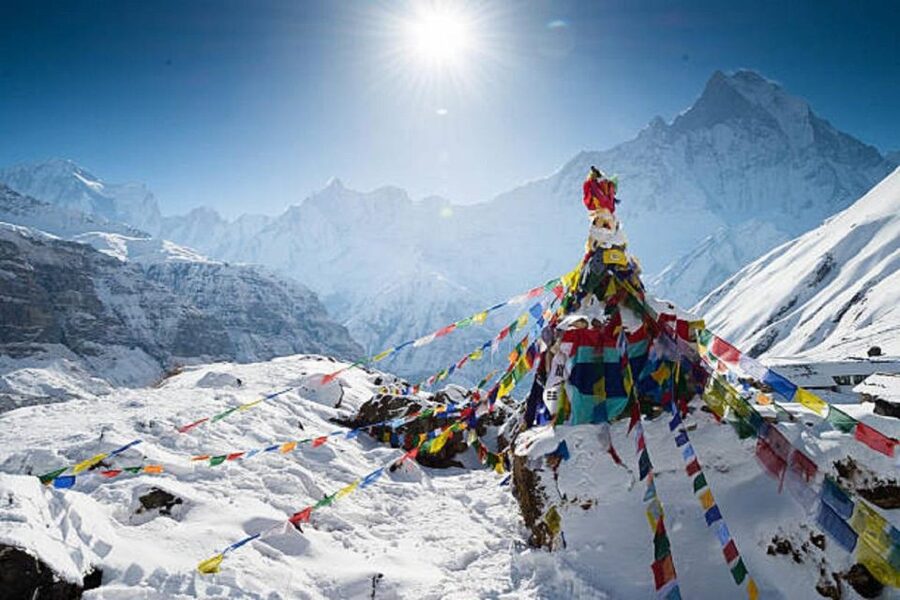
Day four is the high point of the trek, both literally and in terms of anticipation. You hike from Himalaya to Annapurna Base Camp, where you spend the night at 4,130 meters.
The reward is the close view of the Annapurna range and Machapuchare. The early sunrise is one of the strongest reasons to stay overnight at ABC. Mountain light changes quickly, so having the viewpoint right outside your accommodation is far better than trying to arrive from lower down at dawn.
This is also the day to take altitude seriously. The supplied information does not state a medical policy beyond a first-aid kit, and travel insurance with emergency rescue cover is your responsibility. Ask about the procedure for illness or evacuation before setting off. Walk slowly, tell your guide if you feel unwell, and do not treat reaching base camp as more important than your health.
Basic tea-house accommodation at 4,130 meters may feel very different from a hotel in Pokhara. Warm clothing, a sleeping bag if needed, and a flashlight are practical items, not extras. The cold and limited services can make the overnight stay demanding, but they are also part of what makes the sunrise feel earned.
Day 5: Annapurna Base Camp to Bamboo at 2,335 meters
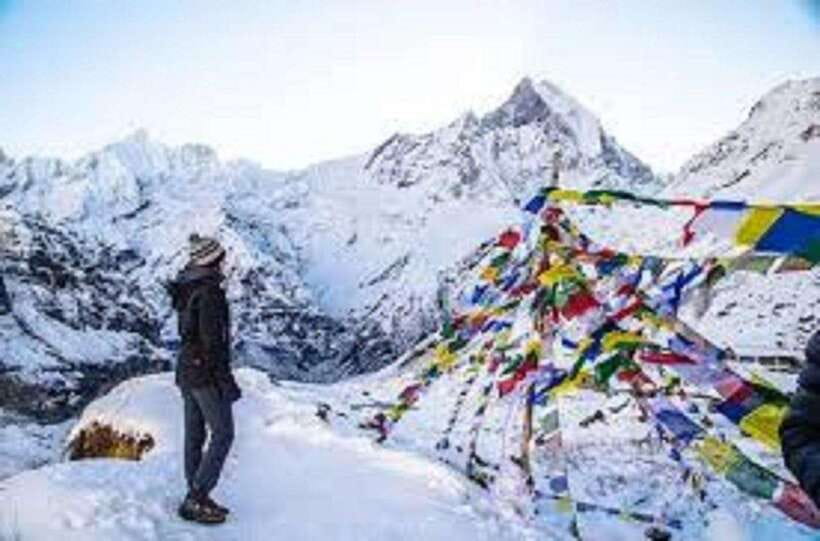
After the high overnight stop, you descend to Bamboo at 2,335 meters. The route returns through rhododendron forest, springs, waterfalls, and settlements.
The descent may sound easier than the climb, but tired knees can make downhill walking hard. Use trekking poles if available. A trekking stick is listed among the gear that may be supplied, so confirm whether one is reserved for you or whether you should bring your own.
I like this part of the plan because it gives you time to see familiar scenery from a different angle. The return route is not simply a transport back to Pokhara. You continue walking through the forests and villages, with the high-point experience behind you and the hot springs still ahead.
Day 6: Bamboo to Jhinu Danda at 1,610 meters
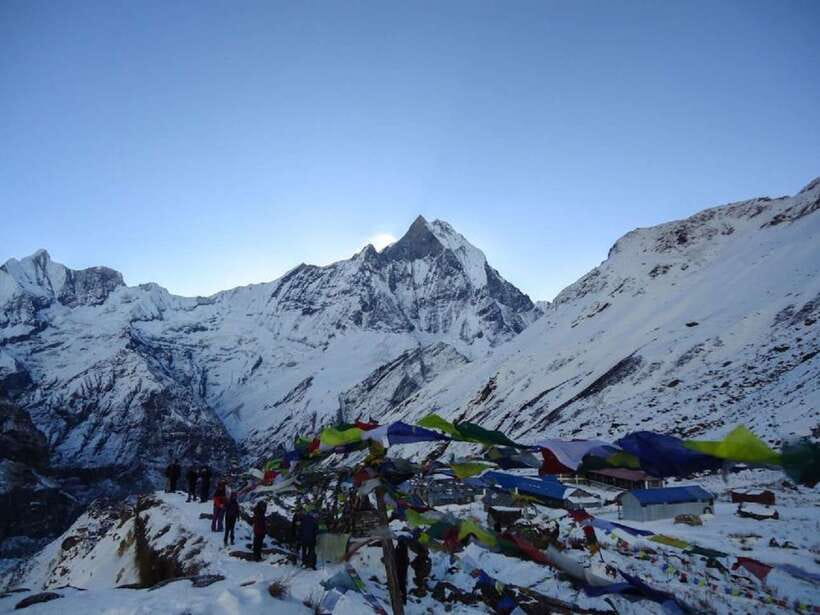
Day six leads to Jhinu Danda, at 1,610 meters. This is where the trek shifts from mountain effort to recovery, with time at the natural hot springs.
The hot springs are a smart finish to the walking portion. After the climb to 4,130 meters and the descent through Bamboo, soaking your legs can be a welcome change from another evening in a tea house. Bring a change of clothes, and keep your towel and other personal items in an easy-to-reach part of your pack if you plan to use the springs.
The itinerary calls the stop Jhinudada or Jhinu Danda in different places. That is the same destination in practical terms, but I would check the exact overnight plan and spring access with the operator. The stop is not a luxury spa. Expect a natural bathing area rather than a polished resort facility.
Day 7: Jhinu Danda to Nayapool and back to Pokhara
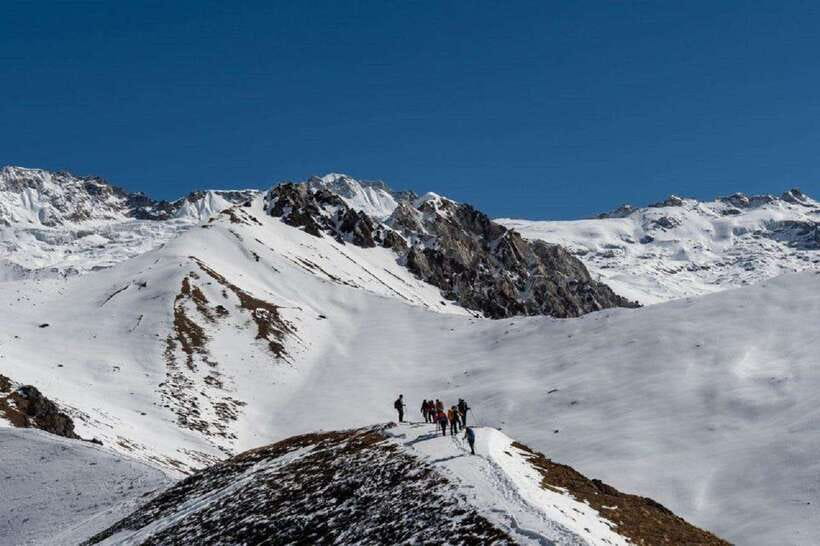
On the final day, you hike from Jhinu Danda to Nayapool and take transport back to Pokhara. The activity ends after you are dropped at a Pokhara hotel of your choice.
The return details deserve more attention than they usually get. The package information includes round-trip transportation connected with Pokhara, the airport, and the trek starting point, but it does not clearly spell out every vehicle used after the final hike. Ask whether a private vehicle is guaranteed for your option, what happens if you finish ahead of schedule, and where exactly you will be dropped.
This matters because the trek can finish earlier than the planned seven days if the walking pace is faster or the route is completed ahead of schedule. A clear return plan saves you from having to arrange a last-minute bus or Jeep after seven tiring days.
What the $190 price may cover
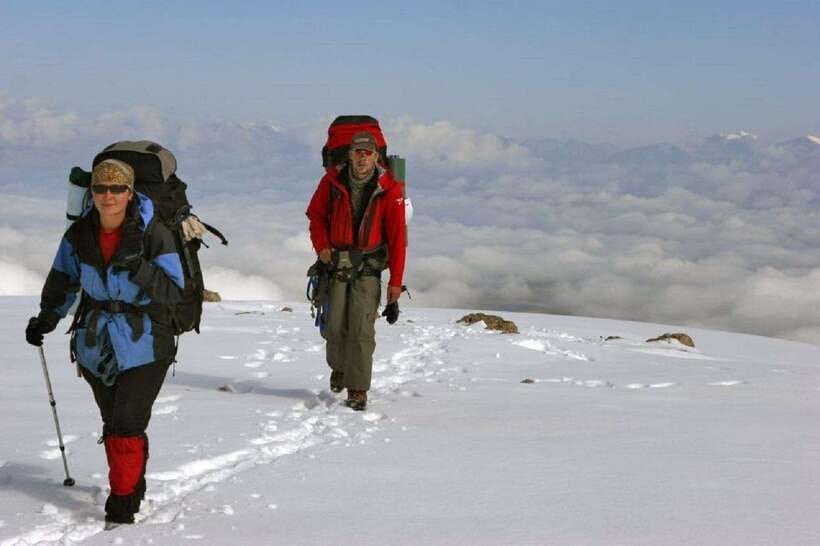
At $190 per person, this trek looks inexpensive for a seven-day guided route, but the value depends on the option selected. The listed inclusions can cover a lot: permits and fees, basic tea-house accommodation, an experienced government-registered guide, guide and porter costs, government and local taxes, first aid, and trekking equipment such as a sleeping bag or trekking stick when needed.
Meals are included only depending on the option chosen. Private vehicle use also depends on the option. Those two phrases are important. A low headline price may not include the same food or transport arrangement as a higher package.
Personal expenses are not included. You should carry cash for items such as drinks and other purchases along the trail. Wi-Fi and drinking water at tea houses may also cost extra, so budget for those rather than assuming every basic service is covered.
I would compare the $190 option by asking four direct questions:
- Are all breakfasts, lunches, and dinners included?
- Is the transport private, and does it cover the return to Pokhara?
- Are Wi-Fi and drinking water extra at the lodges?
- Is a porter included for the whole trek, and what baggage limit applies?
The price can be strong value if the answers match your expectations. It becomes less attractive if you pay extra for meals, water, transport, and lodge services without learning that in advance.
Guide, group size, and support
This is a private group experience, which gives you more control than a large shared departure. You can ask the guide to adjust the pace within reason and discuss how the group is feeling each day.
The guide is described as experienced, professional, and government registered. English, Hindi, and Nepali are available. No individual guide name is supplied, so ask for the name and contact details before departure if that matters to you.
Guide and porter costs, food, accommodation, insurance, salary, transportation, and equipment are listed as covered for the staff. That is useful because it reduces the chance of being asked to handle routine staff expenses yourself. Even so, clarify what luggage the porter carries and what you must carry during the day.
The main caution: confirm the return plan
The mountain route itself is attractive, but the ground arrangements need careful checking. The published plan describes different villages for overnight stops, so ask for the final lodge sequence and confirm that the trek is intended to take all seven days.
There has also been a serious account of a return journey being handled by a bus rather than the expected Jeep, with concerns about road safety and poor communication. I cannot verify the circumstances, but the practical lesson is clear: get the return vehicle, timing, and backup plan in writing.
Also ask how early completion is handled. If your group reaches Nayapool sooner than planned, you should know whether the operator will arrange transport immediately or expect you to find your own way back.
The operator offers free cancellation up to 24 hours before departure and a reserve-now, pay-later option. Those policies make booking more flexible, but they do not replace the need to check what your chosen price includes.
Who should book this Annapurna trek?
I would recommend this trek to you if you want a compact Himalayan route with a clear high point, village contact, forest walking, and a relaxing final stop. It suits people who are comfortable walking for several hours over uneven mountain paths and who understand that tea-house accommodation is basic.
It is less suitable if you want hotel comfort, fixed luxury transport, or a gentle schedule with little altitude change. The fourth day reaches 4,130 meters, and the itinerary does not provide a separate acclimatization day at that elevation.
Pack for changing conditions: hiking shoes, warm clothing, a jacket, hat, hiking pants, a flashlight, cash, hand sanitizer or tissues, and a camera. Carry your passport or ID, or a copy, and make sure your travel insurance includes emergency rescue. Pets, alcohol, drugs, and baby carriages are not allowed.
Should you book it?
Book this trek if the route, private guide, base-camp sunrise, and Jhinu Danda hot springs are your priorities, and if you confirm the meal and transport details first. The scenery and route design offer a lot for $190, especially when permits, guide support, accommodation, and some equipment are included.
I would not book until the operator clearly confirms the return vehicle, the exact inclusions in your price option, and how an early finish is handled. With those details settled, this is a rewarding seven-day introduction to the Annapurna region. Without them, the mountain walk may be excellent while the organization leaves you doing too much work at the end.
FAQ
How high does the trek reach?
The trek reaches Annapurna Base Camp at 4,130 meters, or 13,550 feet.
How long is the experience?
The trek lasts seven days. Starting times depend on availability.
Where does the trek begin and end?
The walking route begins at Nayapool after transport from Pokhara. It ends at Nayapool on day seven, followed by transport back to Pokhara and a drop-off at a hotel of your choice.
What languages does the guide speak?
Guiding is available in English, Hindi, and Nepali.
Is accommodation included?
Basic tea-house or lodge accommodation is included. Meals are included depending on the option selected.
Is travel insurance included?
No. Travel insurance is not included, and your policy should cover emergency rescue because those costs are your responsibility.
Freshly added soaks in Nepal
- 7 Days Annapurna Base Camp Trek from Pokhara with Hot Spring★ 5.0 · 2 reviews
- Unlimited Sauna Steam and Jacuzzi★ 5.0 · 2 reviews
- POON HILL HOT SPRING – 10 Days Trek★ 5.0 · 3 reviews
- Lower Mustang Jomsom Muktinath Hot Spring Tour in 4 WD Jeep★ 4.5 · 2 reviews
- 5-Day Annapurna Base Camp Trek with Natural Hot Springs★ 5.0 · 3 reviews
- Pokhara: Amazing 7-Day ABC Trek with Natural Hot Spring★ 5.0 · 5 reviews
- Pokhara: 7-Day Annapurna Base Camp Via PoonHill & Hot Spring★ 5.0 · 6 reviews
- Pokhara: 5-Day Annapurna Base Camp Trek with Hot Spring★ 5.0 · 3 reviews
Hot Spring Hiking Tours, compared.
Mount Batur Sunrise Guided Hike and Natural Hot Spring
Read our review →
National Park Hike & Finnish Smoke Sauna Experience with Campfire Lunch
Read our review →
Montanejos Hiking Tour & Thermal Pools from Valencia
Read our review →
Landmannalaugar Hike and Hot Springs from Reykjavik & Hella
Read our review →
3D/2N Rinjani trekking summit,lake and hot springs.
Read our review →
Full-day Rila Mountains, Seven Lakes Hike, and Hot Springs Tour from Sofia
Read our review →More soaks worth the detour