
REVIEW · JAPAN HOT SPRINGS
Osaka: Wakayama Cat Train, Seafood market, Hot Springs Tour
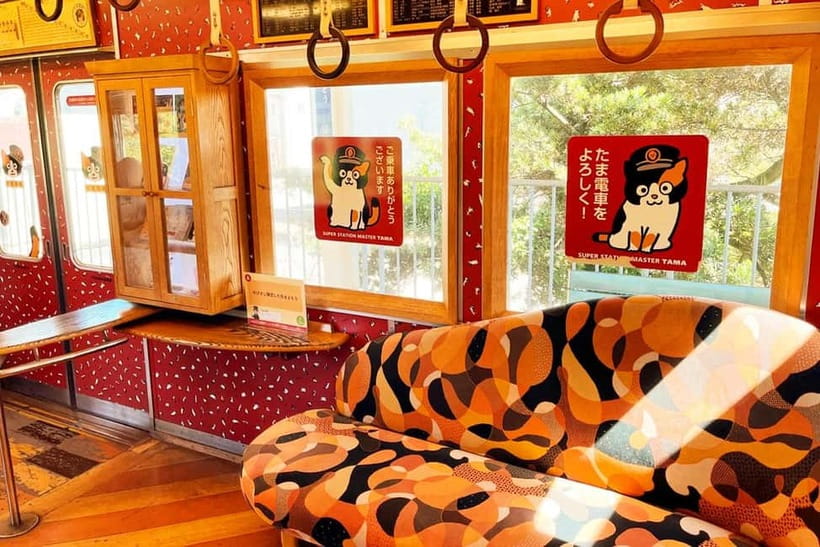
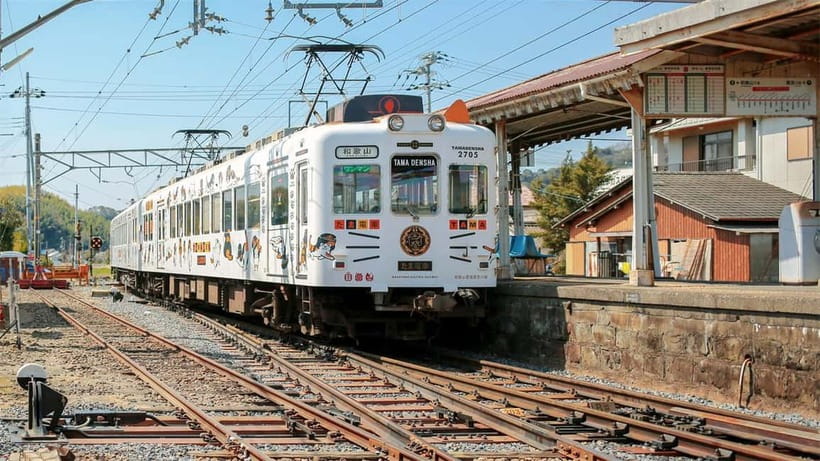
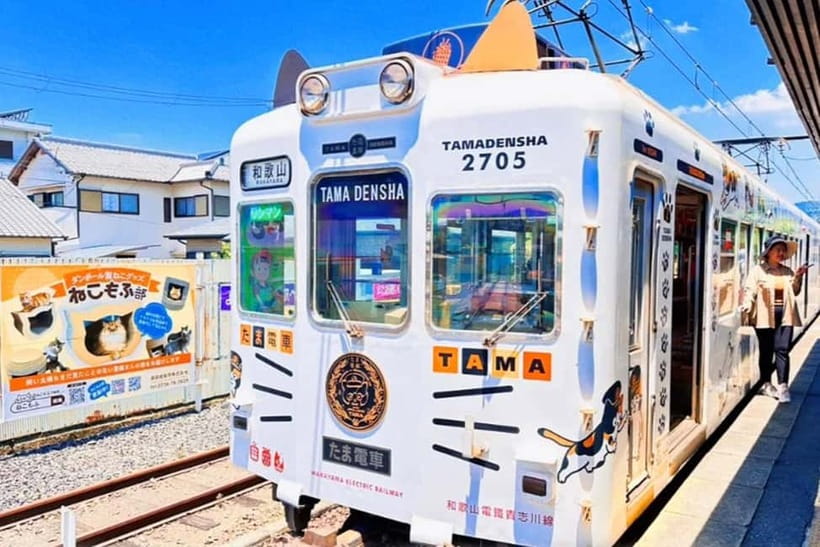
A calico cat once helped save a tiny rural station from closure. At Kishi Station, that story comes alive in the station shaped like a cat’s face, where Tama’s successor Nitama still greets visitors. You then board one of three cat-themed trains, depending on the day: the Tama Train, Strawberry Train, or Toy Train.
I like the mix of local Japanese character and coastal scenery. You get a small, unusual railway story, a live tuna cutting show, fresh seafood, and Pacific views in one day. I also like the practical coach transport, especially because Wakayama’s sights are spread out. The main drawback is time: you spend several hours on the road, and the cat-train ride itself may last only about 15 minutes.
Key points to know before booking
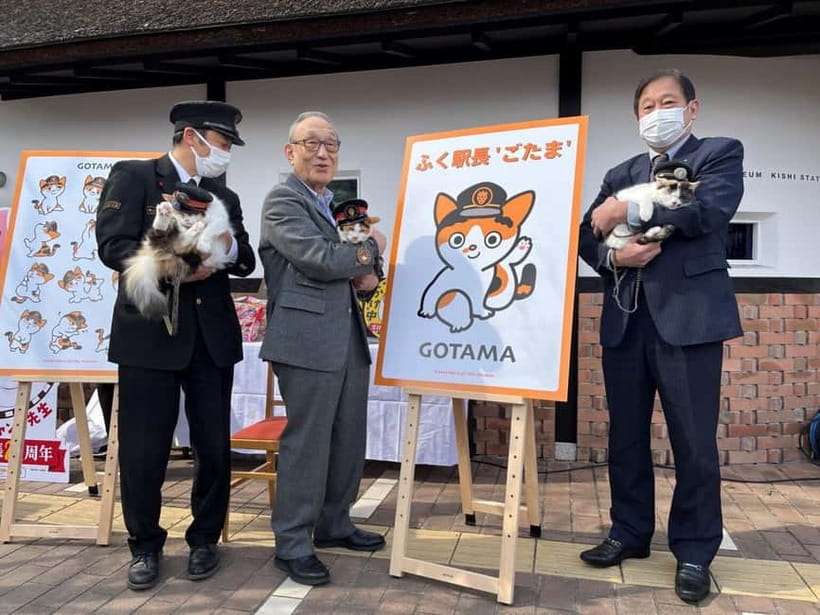
- Tama’s station story: Kishi Station celebrates the calico cat who became an honorary stationmaster and helped bring attention back to the local railway.
- Three possible cat trains: The train design changes by schedule, so you cannot count on a particular one.
- Tuna cutting at ToreTore Market: The show runs two or three times a day, but the timing is random and cancellation is possible.
- Shirahama’s ocean cliffs: Senjojiki and Sandanbeki offer two different views of the Pacific, one from broad rock slabs and one from sea-level caves.
- Optional hot spring stop: Toretore Onsen costs extra and may restrict entry for people with tattoos.
- A long but efficient day: The tour lasts about 10 hours, with return to Osaka planned around 6:40 p.m., traffic permitting.
From Osaka to Kishi Station and the Tama story
Meet at 8:30 a.m. outside Nipponbashi Station Exit 2, at 1-chōme-3-6 Nipponbashi. This is in the Namba and Shinsaibashi area, but give yourself extra time. Several groups may gather nearby, and late arrivals are not refunded. The operator sends the final guide, driver, vehicle, and meeting details by email the evening before.
The first coach ride takes about 90 minutes. This is not a quick hop between Osaka sights. You are trading a full day of independent train connections for a direct ride into Wakayama, with a guide handling the roads, tolls, parking, and changes in the day’s order.
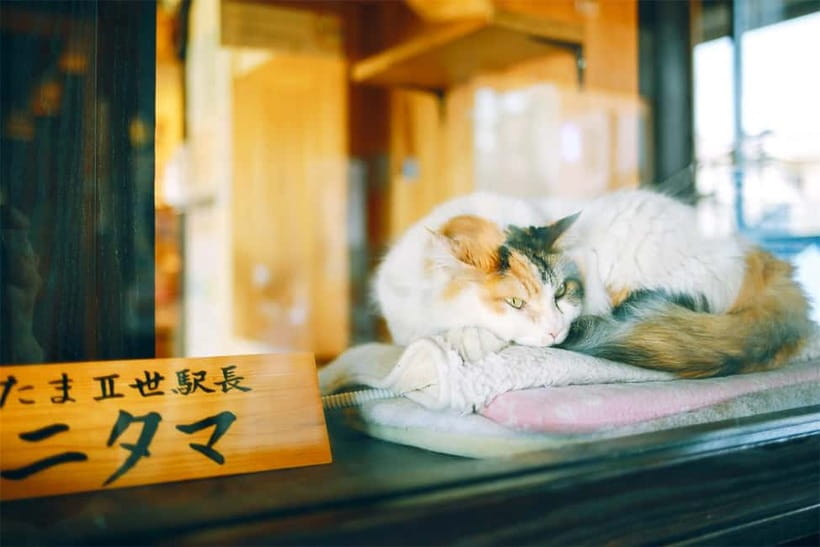
Kishi Station is the emotional heart of the morning. The building’s cat-shaped design sets the tone, but the real appeal is the story behind it. Tama, a calico cat, became a familiar presence at the station and was treated as a working stationmaster. Her daily greetings drew attention to a small rural line that had been close to shutting down.
Today, Nitama, known as Second Tama, carries on that role. The station area includes a cat-themed cafe, Tama Shop, cat stamps, and souvenirs. This is a compact stop, not a large museum, so set your expectations accordingly. You come for the charming setting, the railway tale, and a few photographs rather than a full morning of exhibits.
The story also gives you a glimpse of how a small Japanese community used affection and imagination to support local transport. It is a more personal introduction to Wakayama than simply arriving at a scenic viewpoint.
More Train Rides in Japan:
- Kusadasi Day Trips Magnesia, Train Museum Turkish Bath
★ 5.0 · 10 reviews
What to expect on the cat-themed train
The railway ride is the tour’s most playful part. Depending on the daily schedule, your train may be decorated as the Tama Train, Strawberry Train, or Toy Train. Each design has its own character, but the operator cannot promise a particular one in advance.
One detail matters here: the cat-themed portion is described as about 15 minutes, while the broader schedule allows more time for the rail transfer and surrounding station experience. Do not book this expecting a long scenic railway journey. Think of it as a short, memorable ride built into a larger day.
You may have time to look around the station, browse the shop, collect a stamp, or stop at the cafe. Bring your camera, but keep the stop moving at the pace set by the group. The train is a highlight for families, cat lovers, railway fans, and anyone who enjoys small oddities. It is less satisfying if you want a major railway excursion in its own right.
Lunch and the tuna show at ToreTore Market
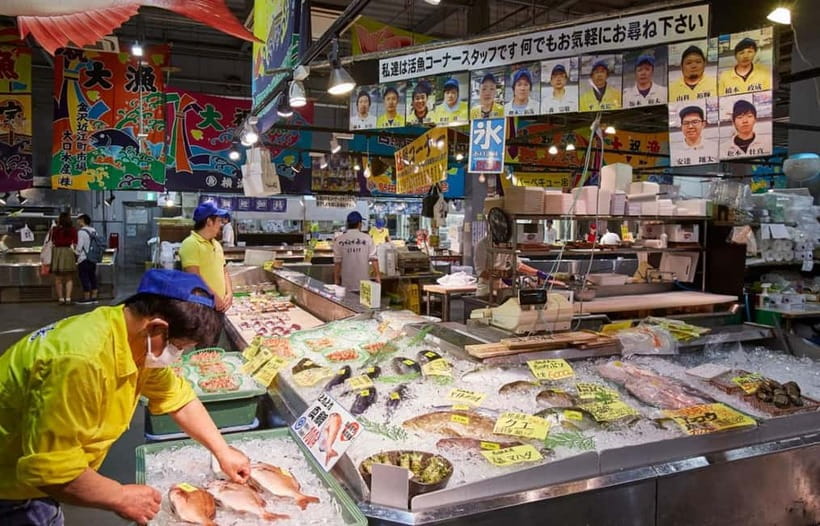
After Kishi Station, the coach continues toward ToreTore Ichiba, one of western Japan’s largest seafood markets. You have about two hours here, which makes this the most useful meal stop of the day as well as a sightseeing stop.
The market sells fresh seafood from the Nanki Shirahama area. You can spend your lunch money on tuna sashimi bowls, grilled fish, octopus rice, and other seafood dishes. Some food can be prepared at barbecue tables, according to the day’s setup, so you have more choice than you would at a fixed restaurant.
This flexibility is valuable. You can eat a proper seafood lunch, choose something quick, or spend more time looking through the stalls and buying food for later. Bring cash, since it is listed as an important item for the day.
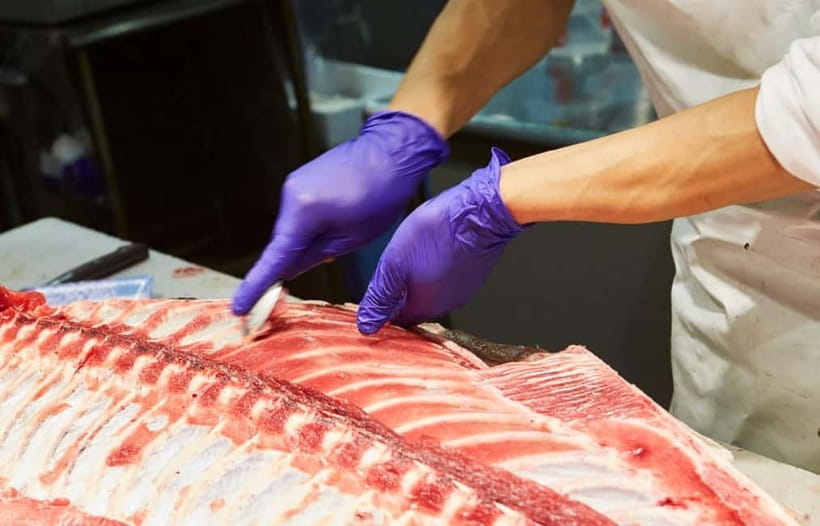
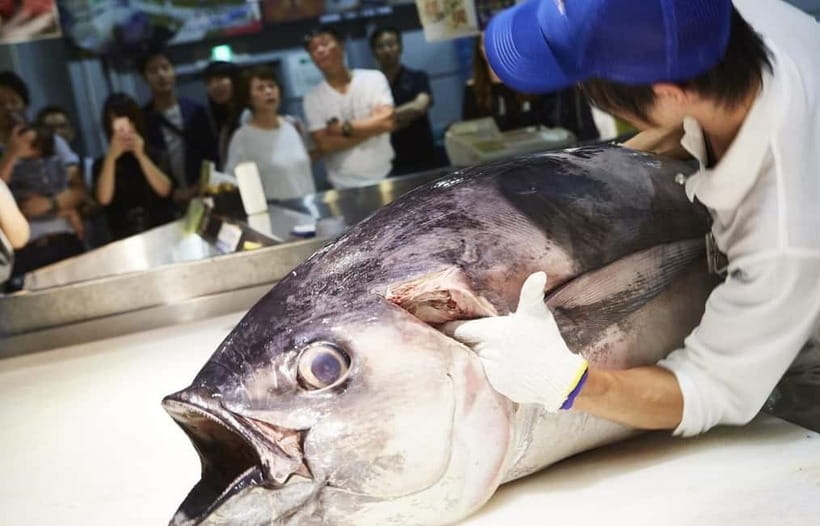
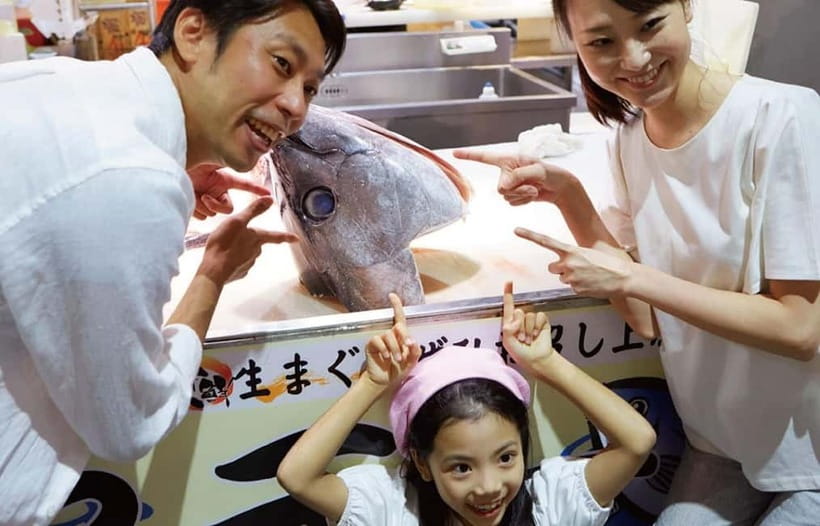
The tuna cutting show is the market’s main performance. A large tuna is broken down with fast, precise cuts while the presenter explains the fish’s anatomy. It is easy to understand, visually impressive, and more interesting than simply seeing prepared slices behind glass.
The timing is not fixed. The show takes place two or three times a day, but the exact time changes. Weather or other special circumstances can cancel it. If seeing the demonstration is your priority, tell the guide early and listen carefully for timing updates. Do not assume that arriving at the market guarantees a show.
The market also has a souvenir area with seasoned seafood, packaged foods, and local gifts. I would keep some time for this rather than rushing straight to lunch. The stop works best when you treat it as both a meal and a chance to see how seafood is sold and prepared in this part of Wakayama.
Toretore Onsen and the choice to soak
The tour includes a visit connected with Toretore Onsen, but entry is optional and costs extra. This gives you a choice that many day trips do not: you can pay for the bath if you want a traditional Japanese hot spring experience, or keep your time and money for the coast.
The spring is described as more than 1,300 years old and linked with old Japanese texts and imperial visits. Its water is a sodium bicarbonate spring, and the facility includes a salt-stone bedrock bath.
If you choose to enter, bring what you need for a bath and allow enough time to follow the guide’s instructions. Tattoo policies can restrict entry, so check before booking if that applies to you. If you skip the onsen, you should still have a sightseeing stop in the Shirahama area, but the exact balance of time can change with traffic and the group schedule.
The hot spring is best for someone who values the bathing tradition itself. It is not essential to the cat-train or coastal portions of the tour, and the added fee means you should decide based on your interests rather than feeling obliged to join.
More Market Tours in Japan:
- Active Volcano, Rice Field, Hot Spring, Fruit market, Tea Plantation with Lunch
★ 5.0 · 513 reviews - Seoul: Sokcho beach, market, hot spring and Seorak Cable Car
★ 4.8 · 5 reviews
Senjojiki: broad rock slabs above the Pacific
Senjojiki means a place associated with thousands of tatami mats, a reference to the broad layers of rock spread along the shore. Here, you stand on large slabs facing the Pacific, with waves breaking below and open sea ahead.
You have roughly 30 minutes for photographs and sightseeing. That is enough for a look around and a good set of pictures, but not enough for a long coastal walk. Wear comfortable shoes because the rock surface can be uneven.
The view changes with the hour and weather. If the timing lines up with sunset, the light can be particularly fine, but the schedule and traffic determine how long you stay. This is a place to slow down, take in the air, and enjoy the contrast with the crowded streets of Osaka.
Senjojiki is also a useful break after the market. The short walk gives you room to stretch your legs before the next stop and the long ride home.
Sandanbeki Cave and the pirate stories
Sandanbeki is a different kind of coastal stop. An elevator takes you 36 meters down to sea-level caves, where displays connect the site with pirates from the Heian period. Natural erosion has shaped the rock chambers, and the sound of the sea gives the visit a more enclosed, dramatic feel than Senjojiki.
Cave admission is not included. You should budget for it if you want to go below the cliffs. If you prefer to stay above ground, the area still works as a photo stop, though the cave is the distinctive part of the visit.
The available time is about 30 minutes, so do not expect an extended museum visit. The stop is short, atmospheric, and easy to pair with Senjojiki because the two locations show the coast in contrasting ways: one open and sunlit, the other below the cliffs.
The road time, guide, and coach
The return coach ride is listed at about two and a half hours, and the full day runs for roughly 10 hours. Traffic can be heavy on weekends, public holidays, and peak travel dates. The guide may change the order of stops, shorten visits, or reduce the number of stops to keep the group moving.
That flexibility matters. This is not a private car tour with unlimited time at each site. It is a shared day trip, with the vehicle type based on group size. The air-conditioned coach, professional driver, fuel, tolls, and parking are included, which makes the $83 price reasonable for a full day reaching several places that would take more planning by public transport.
Guide Tiger receives especially strong praise for clear updates, organization, and friendly communication in English and Chinese. One useful detail is that Tiger used WhatsApp updates and gave individual help at the market when language needs differed within the group. Guides may vary, but the advertised languages are English, Japanese, and Chinese.
The practical tradeoff is simple: you save the work of planning multiple train and bus connections, but you give up some freedom over timing. If you want to linger at the station, take a long bath, or explore the market slowly, an independent trip may suit you better.
Who will enjoy this Wakayama day trip?
I would recommend it to you if you want several distinct experiences in one day: a local railway story, an unusual train, a seafood market, a hot spring option, and ocean cliffs. It suits first-time visitors who are based in Osaka and want to see beyond the city without arranging a complicated route.
Families and cat lovers will enjoy Kishi Station. Food-focused visitors will get the most from ToreTore Market, especially if they like choosing their own lunch and watching the tuna demonstration. Photographers will appreciate the cliffs, though the short stop times require you to work quickly.
The tour is less suitable if your priority is a long onsen session, a serious railway journey, or relaxed independent exploration. It is also not suitable for wheelchair users. Comfortable shoes are important, and cash is useful for lunch, souvenirs, optional bathing, and cave admission.
The $83 cost covers the parts that can quietly add up on an independent day: transport, fuel, expressway tolls, parking, the cat train, and a guide. Lunch and optional admission fees are extra, but you can control those costs. The best value comes from treating the tour as a wide-ranging introduction to Wakayama rather than a deep visit to any single attraction.
Should you book it?
Book this tour if you want an easy, full day from Osaka and like variety more than long stays. The strongest combination is the Tama story, the fresh seafood market, and the two ocean stops. The cat train is cute but brief, so make sure the market and coast appeal to you too.
I would skip it if you dislike coach travel or want complete control over your schedule. For most visitors with one spare day in Osaka, though, this is a practical way to reach Wakayama’s rural railway and Shirahama coast without solving the transport puzzle yourself.
FAQ
Where does the tour meet in Osaka?
Meet at 8:30 a.m. at Nipponbashi Station Exit 2, near the Namba and Shinsaibashi area. The address is 1-chōme-3-6 Nipponbashi, Chuo Ward, Osaka, 542-0073.
How long does the tour last?
The experience lasts about 10 hours. The planned return to Osaka is around 6:40 p.m., but traffic and schedule changes can affect the arrival time.
Which cat-themed train will I ride?
The train design depends on the daily schedule. The available designs are the Tama Train, Strawberry Train, and Toy Train.
How long is the cat train ride?
The cat-themed train portion is described as approximately 15 minutes. The wider rail schedule includes additional time connected with the Kishi Station visit and train journey.
Is lunch included?
No. Lunch is at your own expense at ToreTore Market, where you can choose from seafood dishes such as sashimi bowls, grilled seafood, and octopus rice.
Is the tuna cutting show guaranteed?
No. The show normally takes place two or three times per day, but the timing is random. Weather or other special circumstances may cause cancellation.
Is the hot spring included?
Hot spring entry is optional and costs extra. Tattoo restrictions may apply at the hot spring.
Is Sandanbeki Cave admission included?
No. Admission to Sandanbeki Cave is optional and costs extra.
What languages are available on the tour?
Live guiding is available in English, Japanese, and Chinese. The final email sent the evening before includes information about the guide, driver, and vehicle.
More Shopping Tours in Japan
- Ephesus Private Tour with Shopping + Lunch – Opt Turkish Bath
★ 5.0 · 2 reviews
Freshly added soaks in Japan
- Japanese Head Onsen and Scalp Massage Retreat in Tokyo★ 4.5 · 2 reviews
- Tokyo Local Tattoo Friendly Public Bath Experience★ 5.0 · 4 reviews
- Mt. Fuji to Lake Kawaguchi, Lake Yamanaka and Onsen Day Tour★ 4.5 · 3 reviews
- Tattoo-friendly open-air Onsen & drink★ 5.0 · 25 reviews
- Mt. Fuji Tours to Lake Kawaguchi and Yamanaka Onsen English Guide★ 4.5 · 4 reviews
- Mt FUJI – Panoramic Tour w/ Hoto Lunch, JP Sake & Onsen tatto OK!★ 5.0 · 9 reviews
- Onsen Spa in Tokyo and Asakusa Bar Hopping with Local Guide★ 5.0 · 3 reviews
- Private Tour to Snow Monkey, Zenkoji Temple & Hot Springs Nagano★ 4.0 · 2 reviews
Japan Hot Springs, compared.
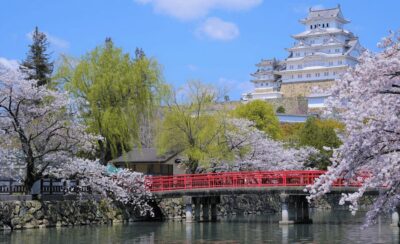
Himeji Castle, Arima Onsen & Mt. Rokko Day Tour
Read our review →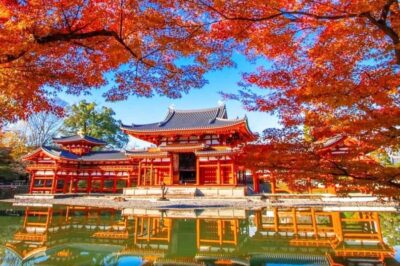
Nara and Uji Day Trip with Deer Park and Hot Spring
Read our review →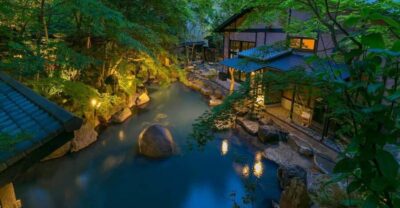
Private Tour to Fuji/Hakone – Onsen, Art, Nature
Read our review →
Mt. Fuji, Hakone Private Tour from Tokyo – Onsen, Arts and Nature
Read our review →
From Fukuoka: Mount Aso, Kurokawa Onsen, and Shrine Tour
Read our review →
Private Nagano 1-Day Tour:Snow Monkeys,Zenko-ji,Obuse,Sake,Onsen
Read our review →
Mt Takao Tour with Ramen and Tattoo-Okay Hot Spring
Read our review →More soaks worth the detour