
REVIEW · ROTORUA HOT SPRINGS
Rotorua: Hell’s Gate Geothermal Walk
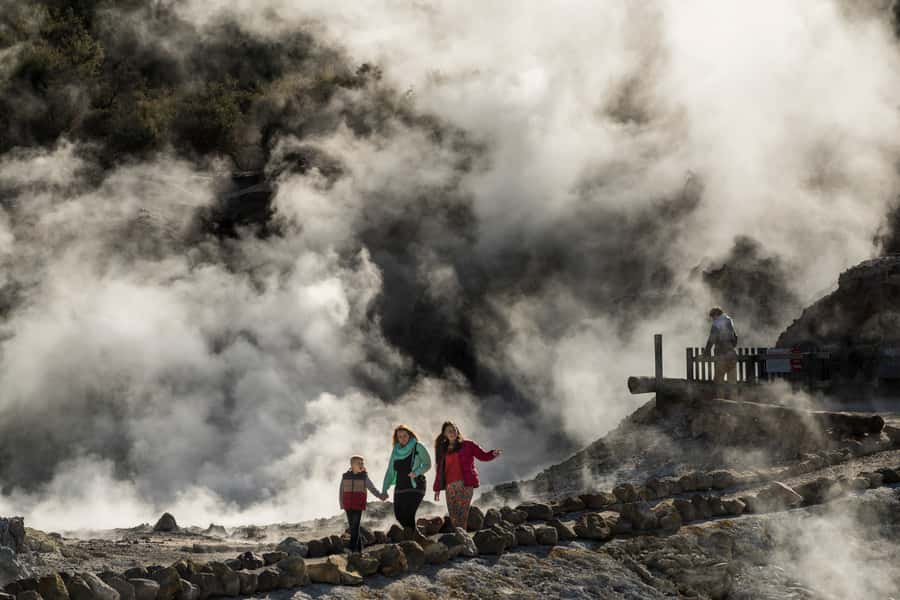
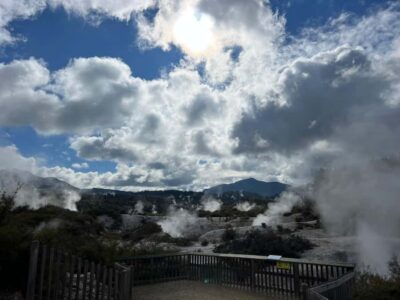
Hell’s Gate is the kind of place where the ground seems to be working overtime. Mud bubbles, fumaroles hiss, hot pools steam, and the largest active mud volcano in New Zealand gives the reserve a properly dramatic centerpiece. You can follow the map at your own pace or join a guide at 10:30 AM or 2:30 PM.
I like the contrast between the raw geothermal field and the green bush walk, and I like that the map makes the self-guided route easy to follow. Guides such as Liam, T, and Luke have been singled out for their humor and storytelling, but availability varies. The main drawbacks are the strong sulfur smell and the fact that this is not suitable for people with mobility impairments.
Hell’s Gate at a glance
- New Zealand’s largest active mud volcano: See thick, bubbling mud up close from the marked route.
- Southern Hemisphere hot waterfalls: One of the reserve’s most unusual sights, set beside steaming geothermal features.
- Two ways to explore: Walk independently with a map, or join an English guided tour at 10:30 AM or 2:30 PM.
- A striking bush section: The route moves beyond bare geothermal ground into a more vegetated part of the reserve.
- Māori carving and mud foot pool: These extras may be available, adding a hands-on element to the visit.
- A pungent sulfur smell: Rain can make the park especially atmospheric, but the odor is part of the deal.
A geothermal reserve with real heat
Hell’s Gate, also known as Tikitere, is about a 15-minute drive east of central Rotorua. From town, follow State Highway 30, pass the airport, turn toward Whakatane, and continue about 3 kilometers to the reserve.
The setting feels different from a standard scenic walk. This is not simply a collection of pretty pools. Water boils, mud churns, steam rises from cracks, and mineral deposits color the ground. Some water features reach temperatures above 100 degrees Celsius, so the fences and marked paths matter. Keep to the route and resist the urge to edge closer for a better photo.
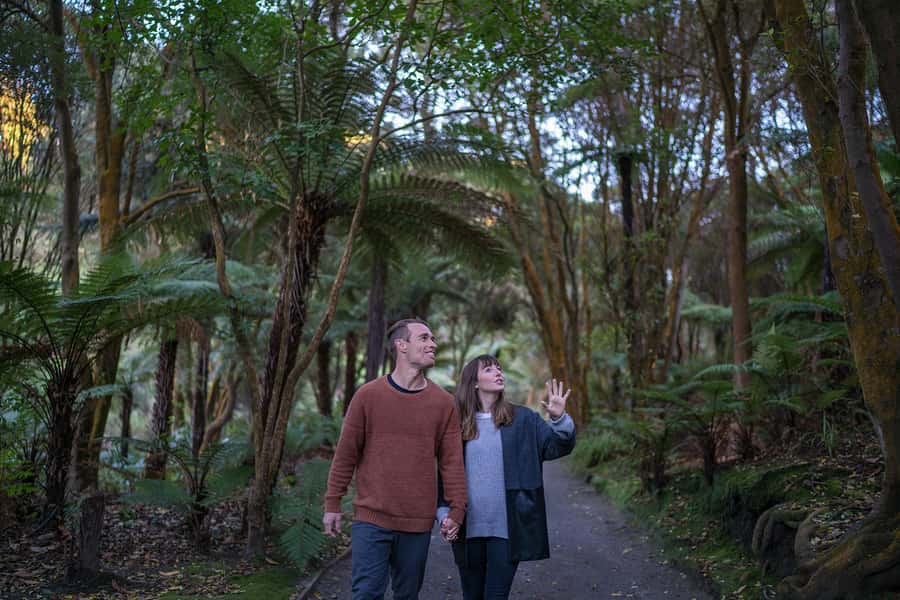
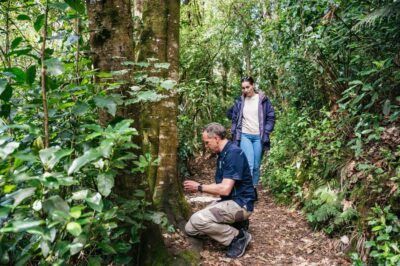
The name Hell’s Gate fits the hotter parts of the reserve, but the place is not all black mud and sulfur. The route also passes vegetation, bush, and a hot waterfall. That change of scene is one of the walk’s best features. You get a clearer sense of how plant life survives around intense geothermal activity, rather than seeing only a series of pools.
I would allow at least the stated one hour for the walk. The complete route is about 2 kilometers, and the easy pace gives you time to read the descriptions, take photographs, and stop at the more unusual features. A guided visit is listed as 1.5 hours, so schedule more time if you want the explanation and the extra activities.
More Hot Springs and Thermal Baths in New Zealand:
- Rotorua: Wai-O-Tapu Geothermal Park Entry Ticket
★ 4.6 · 2,601 reviews - Rotorua Rafting: Kaituna River White Water Rafting & Free Sauna
★ 5.0 · 1,952 reviews - Rotorua: Hell’s Gate Outdoor Mud Spa & Guided Walk
★ 4.7 · 1,140 reviews
Following the map through the geothermal field
The self-guided option is a sensible choice if your Rotorua schedule is tight. You receive a map with descriptions of the pools and geothermal features, then move through the reserve at your own speed. The route is straightforward, and the written information gives you enough context to understand what you are seeing.
I like this approach for independent visitors who prefer quiet stops and photographs. You can pause at the steaming fumaroles, spend longer at the mud volcano, or move along when a sulfur cloud becomes too strong. It also works well if the fixed guided tour times do not suit your day.
The tradeoff is depth. A map can identify a pool and explain its basic properties, but it cannot answer a question in the moment or connect the geology and Māori stories as naturally as a local guide. One visitor found the written guide could have offered more information, so do not expect a museum-level explanation at every stop.
The walk itself is the main event. Expect a mix of marked paths and viewing areas beside hot pools, boiling mud, steam vents, and sulfur crystals. The scenery changes as you proceed, which keeps the route from feeling repetitive. The reserve is compact enough to cover in an hour, yet unusual enough to hold your attention.
The guided walk at 10:30 AM or 2:30 PM
If you want the place to make sense rather than simply look strange, choose the guided walk when the timing works. English tours are offered at 10:30 AM and 2:30 PM, subject to availability. The guide adds detail about the geothermal features, the vegetation, and the cultural side of the site.
Several guides have made a strong impression over time. Liam has been described as friendly, funny, and informative, while T was praised for combining science, humor, and a good understanding of the vegetation. Luke has also been noted for clear explanations and an entertaining style. Guide rosters change, so treat those names as examples of the standard you may encounter, not a promise that one of them will lead your walk.
A guide is especially useful at the less obvious stops. A bubbling pool may look like simple mud until you learn what makes it different from a steaming vent or a hot water lake. You also gain a better sense of how the reserve’s geothermal activity affects nearby plants.
I would choose the guided option for a first visit if you have the time. A self-guided walk is perfectly workable, but the reserve gains meaning when someone explains the connection between geology, local culture, and the names given to these dramatic places.
Mud, steam, sulfur, and hot waterfalls
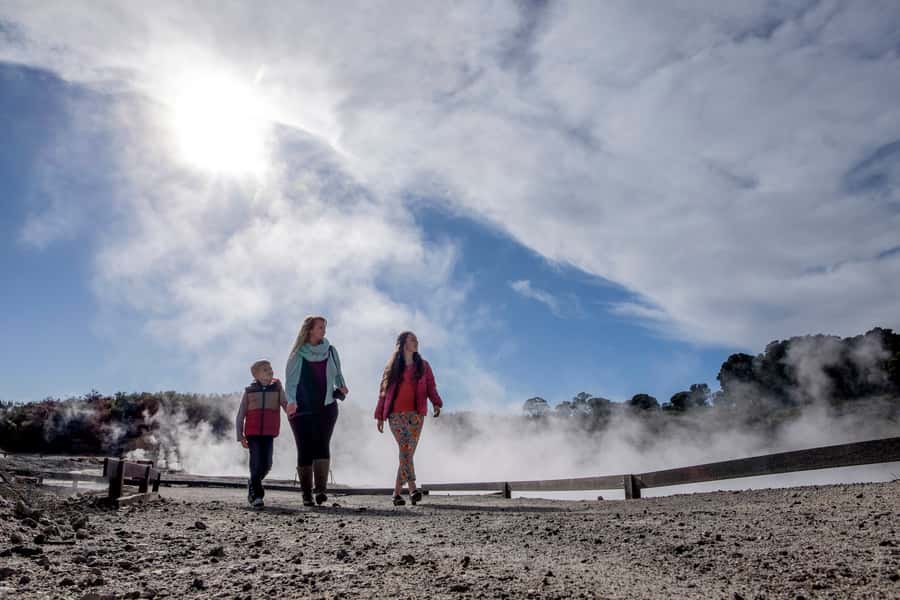
The most memorable feature for many people is the smell. Sulfur produces the familiar rotten-egg odor, and at Hell’s Gate it can be strong. Some areas may be easy to tolerate, while others catch you in a thicker cloud. If you have very young children, remember that the smell may bother them. The experience is not spoiled by it, but you should know what you are buying.
The smell also helps you understand the place. This is active ground, not a decorative park with a few warm pools. The sulfur deposits, steam, and bubbling mud are constant reminders that heat is close below your feet.
New Zealand’s largest active mud volcano is the headline sight. Mud volcanoes do not behave like the cone-shaped volcanoes most people picture. Here, the action is thick, wet, and restless. The bubbling surface makes a strong photograph, but the real value is seeing a living geothermal process from a safe viewing area.
The reserve also has the Southern Hemisphere’s largest hot waterfalls, another feature that separates it from more familiar geothermal stops. Water and heat combine in a way that feels both beautiful and slightly threatening. Nearby, you may see hot water lakes, fumaroles, sulfur crystals, and other mineral deposits.
There is no hot water geyser at this site, so do not arrive expecting the tall eruptions found at some other geothermal parks. Hell’s Gate has a different character. Its appeal comes from the broad mix of mud, steam, hot water, mineral deposits, and vegetation.
Another pool worth the trip:
- Rotorua Rafting: Kaituna River Rafting Experience-Free Sauna
★ 4.9 · 401 reviews - Polynesian Spa Rotorua: Deluxe Lake Spa Hot Spring Bathing
★ 4.5 · 358 reviews - Geothermal Mineral Baths Experience: Pavilion Pools for 12+
★ 4.5 · 296 reviews - Polynesian Spa Rotorua: Deluxe Lake Spa Hot Spring Bathing
★ 4.5 · 227 reviews
The bush walk and the greener side of Tikitere
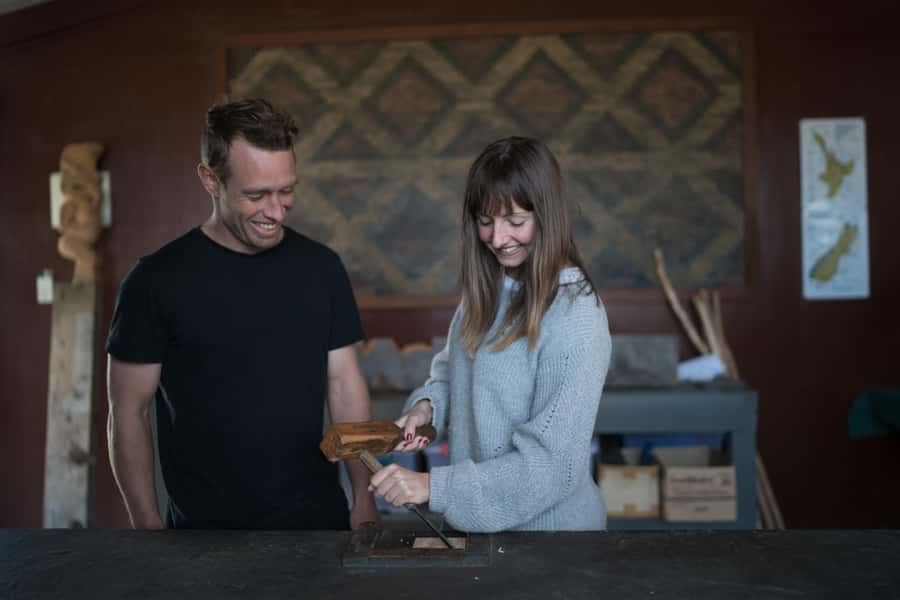
The vegetated part of the route is easy to underestimate. After the bare pools and sulfur-stained ground, the bush section provides a welcome change in color and texture. It also shows that the reserve is not one continuous field of steaming mud.
This part of the walk helps explain the comments about plant life. A guide can point out how vegetation exists beside hot ground and why different plants occupy different areas. Without a guide, the map still gives you a way to notice the contrast for yourself.
The route is generally described as an easy walk, but the reserve is not suitable for people with mobility impairments. You should wear comfortable shoes, and weather-appropriate clothing is important because the activity runs in all conditions. Bring water, sunscreen, and sunglasses, and take a rain cape if the forecast is unsettled. Rain capes can also be purchased onsite.
Rain is not necessarily a reason to cancel. Wet weather can make steam more visible and give the geothermal area a moodier feel. You will need to protect your phone and camera, but the park can be at its best when rain adds moisture to the hot ground.
Māori carving and the hands-on extras
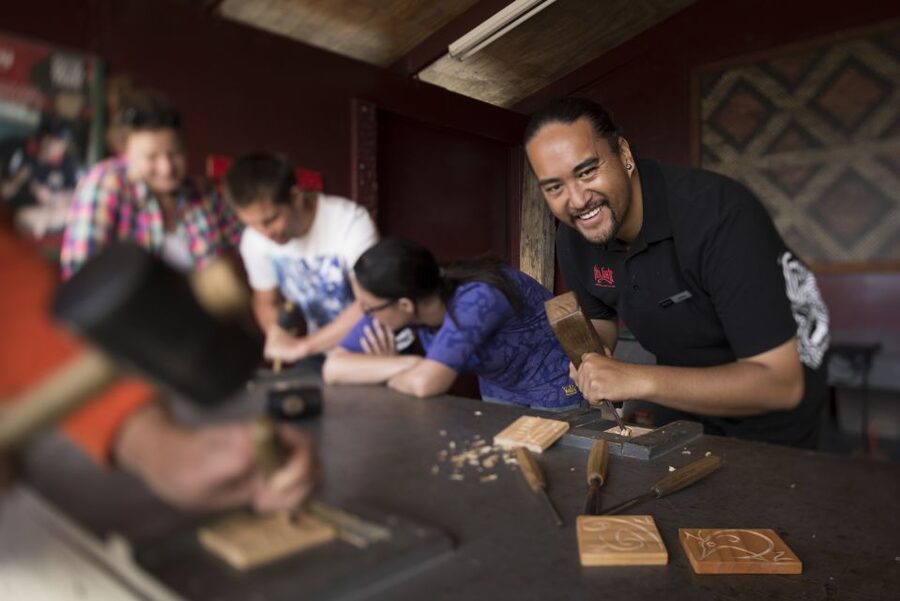
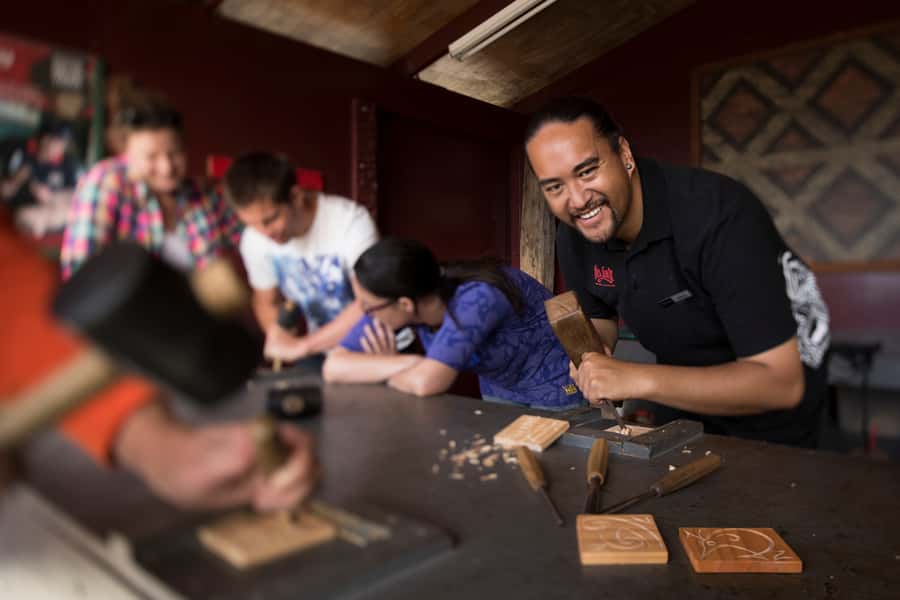
Māori carving is included as a complimentary activity when available. It gives the visit a cultural element that a purely geological walk would lack. You are not only looking at hot pools, but also taking part in a simple creative activity connected to Māori tradition.
Availability is not guaranteed, and children must be at least 12 years old to participate in the carving. Ask at arrival if it is important to you.
A mud foot pool may also be available. This is a small but enjoyable bonus after walking through the geothermal field, especially if you want something more hands-on than photographs and signs. Availability can change, so do not book the walk solely for this extra.
There is also a café onsite. A coffee at the end makes practical sense, especially in cool or wet weather. Food options are available, giving you a chance to pause before returning to Rotorua or continuing toward Whakatane.
One useful warning: sulfur residue can tarnish jewelry. Remove gold and silver items before entering the geothermal area, or at least consider leaving your favorite pieces at your accommodation. It is a minor detail, but an annoying surprise if you discover it later.
Is the $26 price good value?
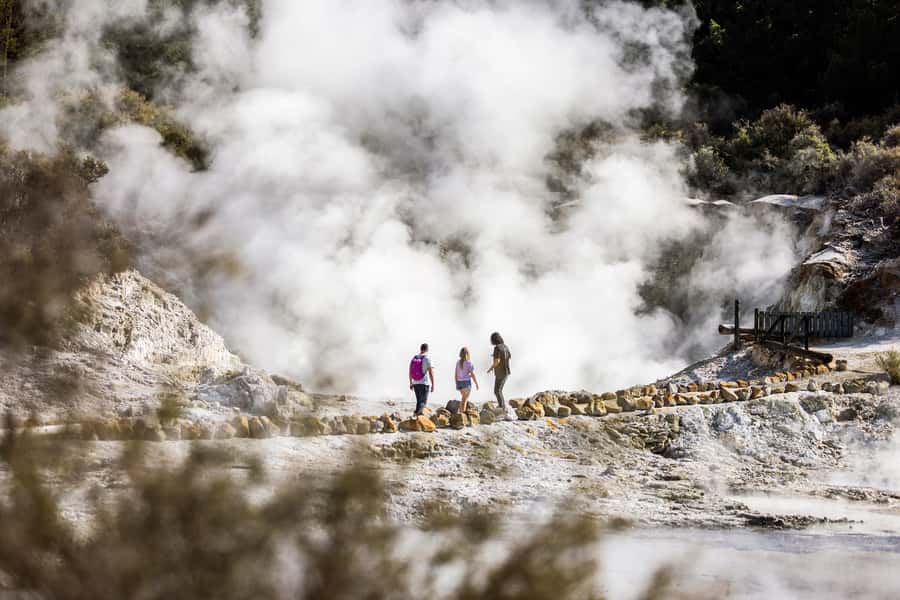
The listed price is $26 per person, and that is reasonable for a compact geothermal attraction with a marked route, map, and access to several unusual features. The mud volcano and hot waterfalls alone give the visit more character than a basic stroll beside one or two warm pools.
Check exactly what your booking includes before paying. The activity information lists the entry ticket separately from the map, guided walk, and complimentary Māori carving, which creates some ambiguity around the advertised price. The guided tour, carving, and mud foot pool are also subject to availability.
Value depends on how you use the visit. If you simply walk through quickly, the price may feel high compared with a free viewpoint or public walking track. If you take the full hour, read the explanations, join the guide, and add the carving or mud foot pool when available, the visit offers a fuller experience.
The attraction is also a good use of time on a Rotorua day. You are not committing to a half-day excursion. The drive is short, the walk takes about an hour, and the café gives you flexibility if you need a break.
Who should choose the guided option?
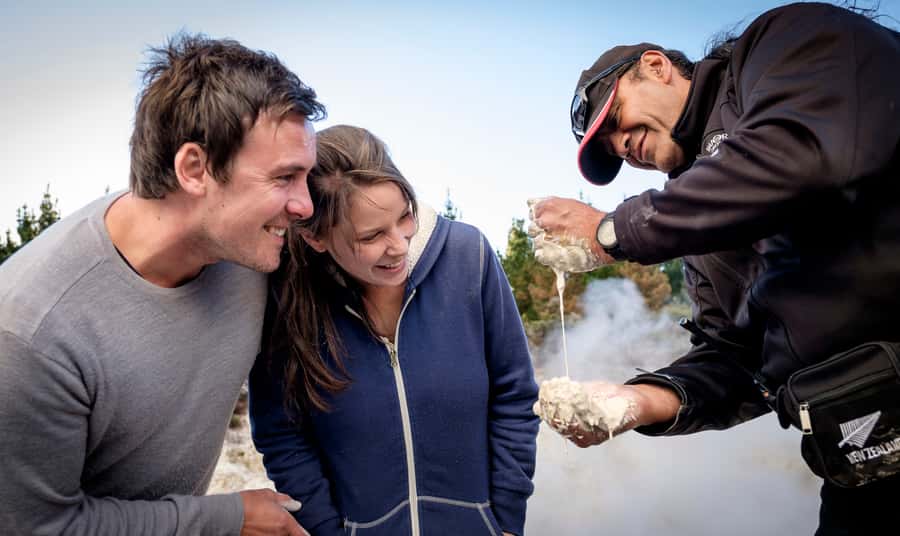
Pick the guide if you want:
- Clear explanations of the geothermal pools and deposits
- More detail about vegetation around the hot ground
- Cultural context alongside the geology
- Humor and storytelling during the walk
- Help making sense of features that can look similar at first
Choose the self-guided route if you need flexibility, prefer a slower pace, or plan to arrive outside the two tour times. The map is easy to follow, and you can still see the key features without a guide.
Families with older children can enjoy the walk, and the paths have been described as manageable for children and adults. Keep in mind that the carving activity is for children aged 12 and over, and the sulfur smell may be hard for very young children.
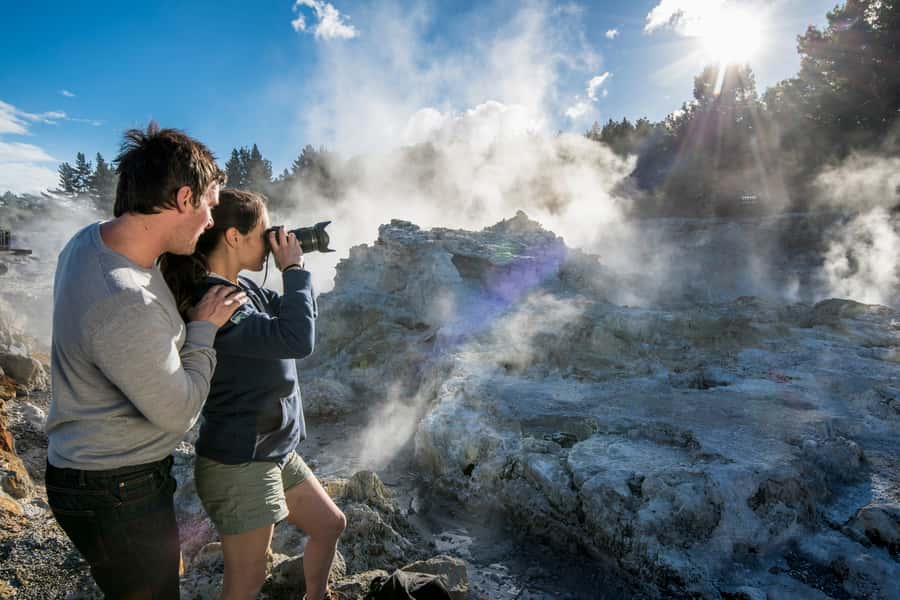
Photographers will find plenty to work with: bubbling mud, white or yellow sulfur deposits, steam, hot water, the waterfall, and the change from geothermal field to bush. Cloudy or wet weather can make the steam show up better in photographs, though you will need to protect your equipment.
Practical advice before you go
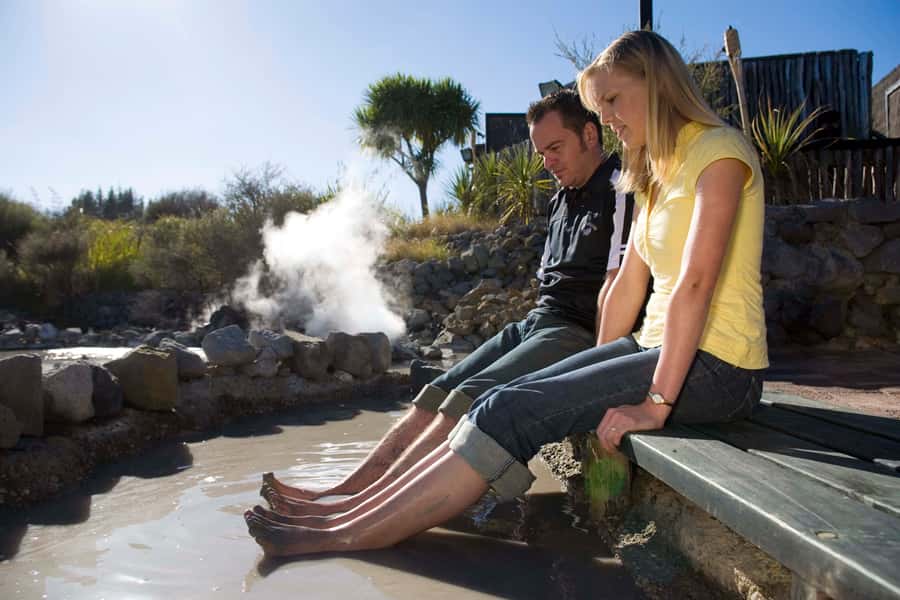
Wear shoes with a good grip and clothing suited to the forecast. The reserve is an all-weather activity, and rain can add atmosphere, but you still want a jacket or rain cape for comfort.
Bring water, sunscreen, and sunglasses. Do not smoke or fly a drone onsite. Keep jewelry to a minimum because sulfur residue may tarnish it.
The meeting point is Hell’s Gate, east of Rotorua. From the city, use SH30, travel about five minutes past the airport, turn right toward Whakatane, and continue 3 kilometers to the reserve.
The route takes roughly one hour. The guided format is listed as 1.5 hours, so do not book a tightly timed connection after the 10:30 AM or 2:30 PM tour. If you want the carving, mud foot pool, café, and a relaxed walk, give yourself extra time.
Free cancellation is available up to 24 hours before the activity, and you can reserve now and pay later. Those options help if Rotorua weather is uncertain, though the park is often especially atmospheric in rain.
Should you book Hell’s Gate?
Book Hell’s Gate if you want to see Rotorua’s geothermal activity in a compact visit with more variety than a single geyser stop. The active mud volcano, hot waterfalls, fumaroles, hot lakes, sulfur deposits, and bush section give you a good range of sights in about an hour.
I would choose the guided tour for a first visit, provided 10:30 AM or 2:30 PM fits your schedule. Choose self-guided if you value freedom and want to move at your own pace. Skip it only if you cannot manage the walking route, strongly dislike sulfur smells, or expect a geyser show.
For most visitors, the price is fair when the walk is treated as a complete experience rather than a quick photo stop. Bring sensible shoes, remove jewelry, accept the smell, and let the bubbling ground do the talking.
FAQ
How long does the Hell’s Gate geothermal walk take?
The geothermal walking route takes about one hour. The guided tour is listed as 1.5 hours.
How far is Hell’s Gate from Rotorua city center?
Hell’s Gate is about a 15-minute drive from central Rotorua. From the city, travel east on SH30, turn toward Whakatane about five minutes past the airport, then continue 3 kilometers.
Are guided tours available?
Yes. English guided tours are available at 10:30 AM and 2:30 PM, subject to availability.
Can I explore Hell’s Gate without a guide?
Yes. You receive a map for a self-guided walk, with descriptions of the geothermal pools and features.
What can I see at Hell’s Gate?
You can see New Zealand’s largest active mud volcano, hot waterfalls, steaming fumaroles, hot water lakes, sulfur crystals and deposits, boiling pools, erupting water, and a vegetated bush section.
Does Hell’s Gate have a geyser?
The information for this activity states that there is no hot water geyser at this site. Its main features are bubbling mud, steaming pools, hot waterfalls, fumaroles, and mineral deposits.
Is Māori carving included?
A complimentary Māori carving activity is included when available. Children must be aged 12 or over to take part.
What should I bring?
Bring comfortable shoes, sunglasses, sunscreen, water, and clothing suited to the weather. Rain capes are available to purchase onsite.
Is Hell’s Gate suitable for people with mobility impairments?
No. The activity is listed as unsuitable for people with mobility impairments.
Freshly added soaks in New Zealand
- Boutique tour , Mt Maunganui, NZ farm, Rotorua lakes/geothermal★ 4.5 · 50 reviews
- Half-Day Tour – Ex Rotorua: WAI-O-TAPU Thermal Wonderland★ 4.0 · 8 reviews
- Rotorua: ‘Thermal Path Tour’ Geothermal half day Tour★ 4.9 · 15 reviews
- From Rotorua: WAI-O-TAPU Geothermal Wonderland Half-Day Tour★ 4.6 · 76 reviews
- ROTORUA – Hell’s Gate Geothermal Park & Mud Spa Day Trip★ 4.5 · 41 reviews
- Rotorua Cultural & Geothermal Small Group Tour From Auckland★ 5.0 · 22 reviews
- Ex Auckland: Rotorua Māori Village with Haka and Hot Springs★ 5.0 · 55 reviews
- From Auckland: Rotorua Māori Village & Hot Springs with Haka★ 4.8 · 58 reviews
Rotorua Hot Springs, compared.
Rotorua Rafting: Kaituna River White Water Rafting & Free Sauna
Read our review →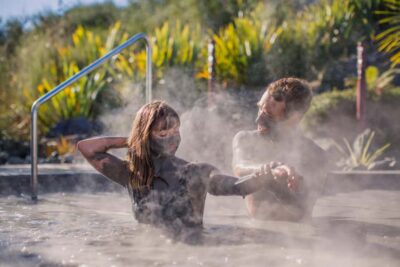
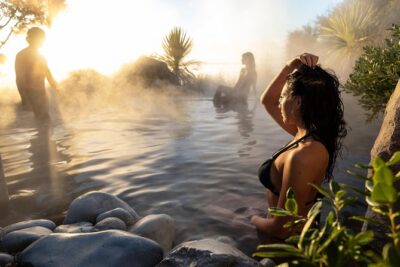
Polynesian Spa Rotorua: Deluxe Lake Spa Hot Spring Bathing
Read our review →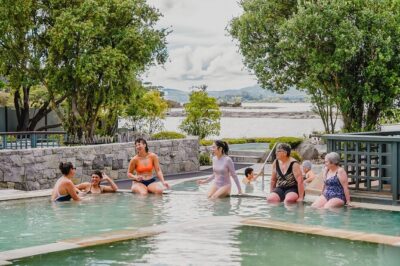
Polynesian Spa Rotorua: Pavilion (12+ yrs) Hot Pool Bathing
Read our review →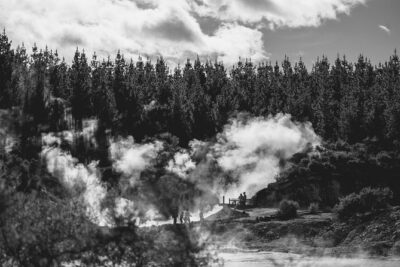
More soaks worth the detour