
REVIEW · JAPANESE ONSEN TOURS
Guide tour of Japanese bathing culture at Funaoka Onsen
Funaoka Onsen is not a staged cultural show. It is a working Kyoto public bath where you learn the rules, remove your clothes, and bathe as local people do. The experience begins at Sarasa Nishijin, a cafe converted from an old bathhouse, then moves to the historic Funaoka Onsen for about an hour in the baths.
I like the practical teaching from local guide Atsuki, especially for a first Japanese bath. I also like the small maximum of five participants, which gives you room to ask questions and get help with the bathing steps.
The main thing to consider is the format: bathing is nude and separated by gender, so couples will not bathe together. Atsuki speaks English, but his English is limited, which may make some explanations slower.
Key points
- A former bathhouse begins the lesson: Sarasa Nishijin provides a fitting setting for learning about Japanese bathing customs.
- Atsuki teaches the bathing steps: You receive guidance on etiquette, procedure, and ways to relax before entering the baths.
- Funaoka Onsen is a real local bathhouse: This is not a private tourist facility or a swimsuit spa.
- Nude bathing is required: Men and women use separate bathing areas, and couples are separated.
- The group is capped at five: The small size suits anyone who wants personal guidance.
- The experience costs $45.72: For a 90-minute cultural lesson plus bath admission, the price is fair if you need help overcoming first-time nerves.
Why Funaoka Onsen Makes a Strong First Bath
Japanese bathing culture can feel mysterious from the outside. You may know that you should wash before entering a communal bath, but that leaves plenty of questions. How long should you soak? Where do you put the small towel? What should you do when you move between baths? This experience gives you clear answers before you have to work them out alone.
That preparation matters because a public bath is a place for quiet routine, not trial and error. The aim is not simply to get clean. You wash first, then sit and soak for relaxation. The bath is shared, but the experience is personal.
Funaoka Onsen is a particularly good place to learn because it is a well-known Kyoto bathhouse with a long local connection. One part of the teaching covers how its founders competed with traditional geothermal hot springs. That background helps explain why Japanese public baths became important even in places without natural hot springs.
You are not just being shown a set of rules. You are learning why the rules exist and how the bath fits into daily Japanese life.
More Onsen Tours in Japan:
- From Osaka: Himeji Castle, Arima Onsen & Mt. Rokko Day Tour
★ 4.6 · 339 reviews - From Tokyo: Private Tour to Fuji/Hakone – Onsen, Art, Nature
★ 5.0 · 116 reviews - Mt. Fuji, Hakone Private Tour from Tokyo – Onsen, Arts and Nature
★ 5.0 · 79 reviews
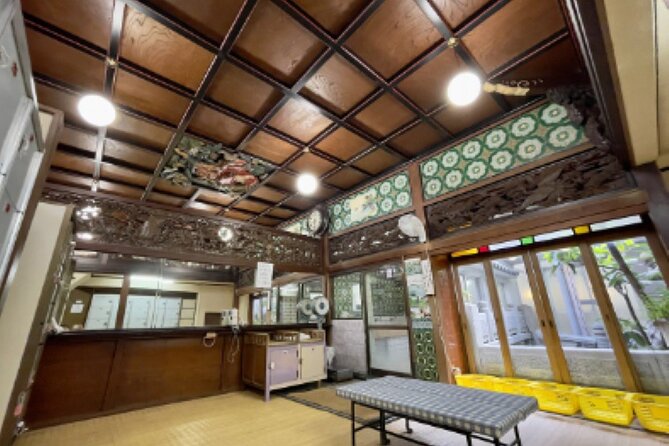
Starting at Sarasa Nishijin, a Cafe With a Bathhouse Past
The first stop is Sarasa Nishijin, a cafe created from a former public bathhouse. That setting does useful work before anyone changes for the bath. Instead of hearing about bathing culture in a generic meeting room, you are sitting in a space shaped by the same tradition you are about to study.
The stop lasts about 15 minutes. While you have a drink, Atsuki explains the history and meaning of Japanese public baths. You also receive guidance on proper bathing methods, including the basic order of what you will do at Funaoka Onsen.
This short introduction is valuable for two reasons. First, it gives you cultural context. Second, it lets you ask questions while you are still fully dressed and relaxed. If you are uneasy about nude bathing or worried about making a mistake, this is the time to say so.
You should not expect a long academic lecture at Sarasa Nishijin. The experience is compact, and the main lesson continues at the bathhouse. Still, beginning in a former bathhouse gives the opening stop a sense of place that a standard cafe could not provide.
Learning the Rules Before You Enter
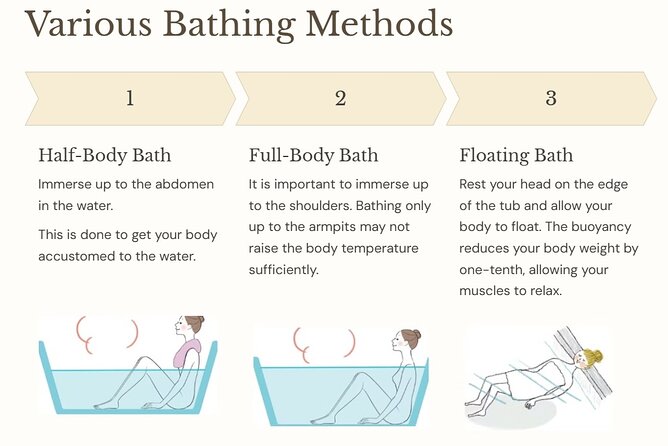
At Funaoka Onsen, the guide uses materials to explain the bathing method before you enter the baths. This is the practical heart of the experience. You learn what to do before soaking, how to behave around other bathers, and how to use the bathing process in a calm way.
The emphasis is on proper technique and relaxation. Several participants have found this especially helpful when visiting an onsen or sento for the first time. The value is simple: you can focus on enjoying the bath instead of worrying about the next step.
Atsuki also explains that the same basic bathing steps apply at other Japanese hot springs and public baths. That makes the lesson useful beyond this one visit. If you plan to visit more baths during your time in Japan, you can carry the instruction with you.
The guide’s English is limited, so you should allow for a slower exchange and pay close attention to demonstrations and printed materials. That is not necessarily a problem for a hands-on activity, but it matters if you want a detailed conversation about Japanese history or health practices. The teaching works best for someone who is comfortable with simple spoken English and visual instruction.
What the Funaoka Onsen Visit Feels Like
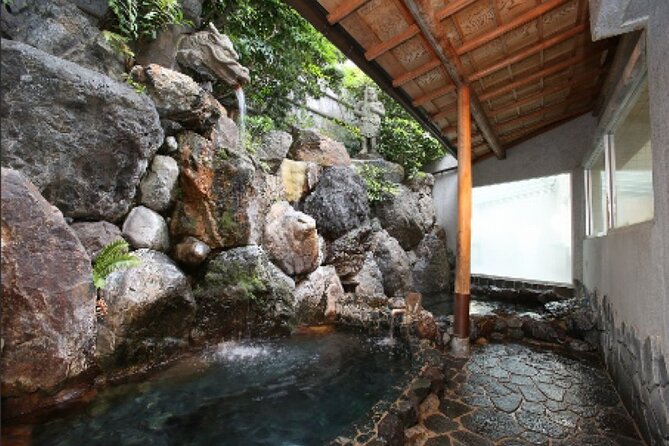
After the explanation, you try the bathing method yourself. The bath portion lasts about one hour, giving you enough time to follow the process without racing through it.
The bath is gender-separated and requires nude bathing. You will not wear a swimsuit, and couples will use different bathing areas. This is a central part of the experience, not a minor detail hidden in the fine print.
For some people, this is the most authentic part of the visit. For others, it is a firm reason not to book. You should make that decision before reserving, especially if you are traveling with a partner and hoped to share the bath together.
The setting is a public bath used by local residents, rather than a private room arranged only for the tour. That means you should approach it with respect and a willingness to follow the house routine. The guide is there to explain and support you, but this remains a functioning bathhouse.
The experience is also not designed as a medical treatment. People with severe heart or lung disease, recent gastrointestinal bleeding, advanced malignant tumors, severe anemia, or another medical reason to avoid hot springs should not participate. You should also skip the activity if you have a fever, feel unwell, have consumed alcohol, or have been told by a doctor not to use hot springs.
More Guided Tours in Japan:
- Samurai Guide Sho’s Mt. Takao Hike, Temple & Onsen from Shinjuku
★ 5.0 · 9 reviews - Kobe Guided Tour Including Port Area and Arima Onsen Town
★ 4.5 · 5 reviews - Mt. Fuji Tours to Lake Kawaguchi and Yamanaka Onsen English Guide
★ 4.5 · 4 reviews - Onsen Spa in Tokyo and Asakusa Bar Hopping with Local Guide
★ 5.0 · 3 reviews
Why a Small Group Helps
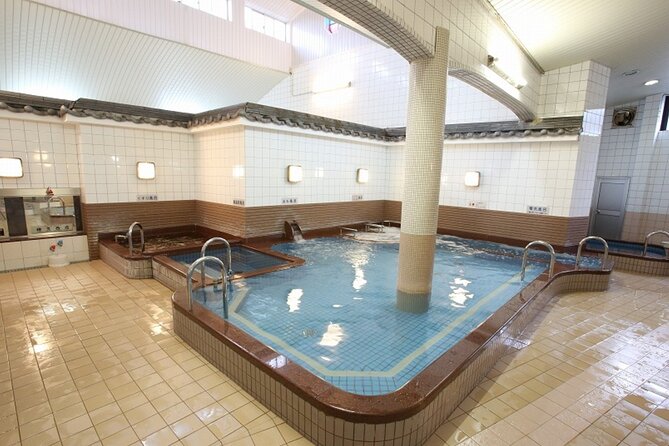
The maximum group size is five people. That is a useful limit for an activity involving personal questions, changing clothes, and unfamiliar customs.
A small group gives Atsuki a better chance to notice confusion and explain a step again. It also makes the initial discussion more relaxed than a large tour. First-time bathers often need reassurance about small details, and a group of five leaves more room for that.
The small size does not mean you receive a private bath. Funaoka Onsen remains a public bathhouse, and the bathing areas are separated by gender. The benefit is personal instruction, not exclusive use of the facility.
If you value a quiet, guided introduction over a large cultural group, this format fits well. If you prefer complete privacy, a public bath experience of any kind may not suit you.
The Value of $45.72
At $45.72 per person, this is more expensive than simply paying to enter a public bath on your own. The difference is the instruction, the cultural background, the guide’s help, and the chance to try the process with someone who can explain what is happening.
For a confident bath user, the extra cost may not be worthwhile. You could visit a bathhouse independently and pay only the admission price. But that approach requires you to understand the etiquette, find the right place, and manage the first visit without help.
For a first-time visitor to Japan, the price is easier to justify. You receive a 15-minute introduction at Sarasa Nishijin, a lesson before entering Funaoka Onsen, and about an hour to put the guidance into practice. The take-home bathing guide also gives you something to refer to later.
The value is strongest if you are curious but nervous. Paying for confidence can make sense when the alternative is avoiding public baths altogether.
Who Will Get the Most From This Experience
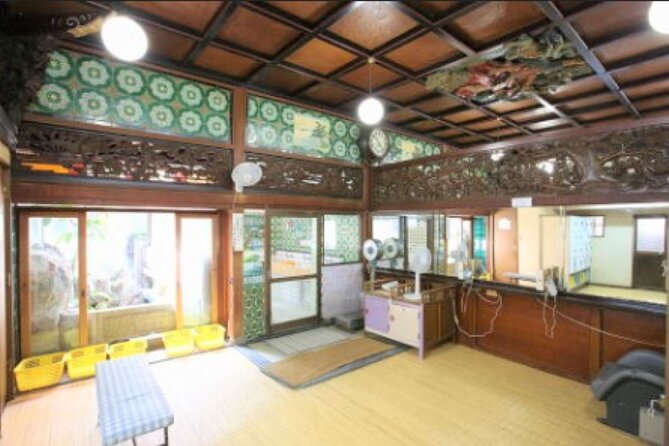
I would recommend this experience to someone who wants a cultural activity with a practical result. You are not only hearing about a Japanese custom. You are learning how to take part in it.
It suits:
- First-time onsen or sento users
- Solo visitors who want clear guidance
- People interested in wellness and quiet routines
- Anyone who wants local cultural context beyond temples and shrines
- Visitors planning to use other Japanese public baths later
- People comfortable with nude, gender-separated bathing
It may not suit you if you want to bathe with your partner, wear a swimsuit, or receive a long explanation in fluent English. It is also not suitable if you have a medical reason to avoid hot springs or if you have been drinking.
The experience works particularly well after a busy day of sightseeing. One of the strongest points is the contrast with shrine visits and city walking. You finish the day with a slow, restorative activity instead of another crowded attraction.
Timing, Meeting Point, and Planning Ahead
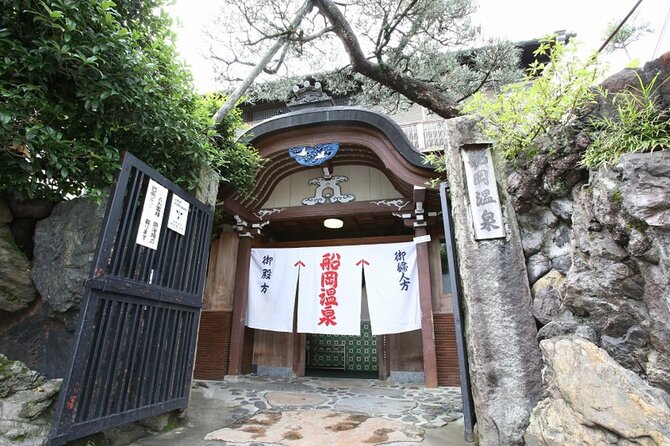
The activity lasts about 90 minutes in total. You meet at Funaoka Onsen, at 82-1 Murasakino Minamifunaokacho in Kyoto’s Kita Ward. Although the first lesson takes place at Sarasa Nishijin, the experience begins and ends at the Funaoka Onsen meeting point.
The area is near public transportation, which makes it practical to reach without arranging a private car. You should still allow enough time to find the meeting point, since arriving late could make the introductory explanation harder to follow.
The experience is often booked about 34 days ahead. That does not mean you must reserve a month in advance, but the small group limit can make early planning sensible, especially if you have only a few days in Kyoto.
A mobile ticket is provided, and confirmation arrives at booking. Changes or cancellations are accepted for a full refund up to 24 hours before the start time. Within 24 hours, the payment is not refunded and changes are not accepted.
A Note About the Guide and Communication
Atsuki is a local Japanese guide who has made this bathing lesson his specialty. His role is not limited to getting you into the bath. He explains the customs, gives you a sense of Funaoka Onsen’s place in Kyoto, and stays involved as you work through the process.
His English is not strong, so you should not book this expecting polished, detailed English commentary. The experience is more practical than language-heavy. Simple explanations, visual materials, and direct demonstration carry much of the lesson.
That can be a fair trade if your main goal is to learn the steps and enjoy the bath. If you want a detailed lecture on Japanese social history, you may find the communication limits frustrating.
My Take on the Experience
I like this activity because it handles the hardest part of a first public bath visit: uncertainty. The rules are not difficult, but they are unfamiliar. A guide who explains them beforehand can turn embarrassment into calm.
I also like the choice of locations. Sarasa Nishijin provides an atmospheric introduction, while Funaoka Onsen gives you a real setting in which to practice. The two stops make sense together.
The main caution is that authenticity comes with boundaries. Nude bathing, gender separation, limited English, and a public setting are all part of the deal. You should not book this hoping for a private spa treatment or a couples activity.
The current rating is 5 out of 5 from 15 ratings, with full recommendation from participants. That matches the experience’s strongest qualities: clear preparation, a friendly local guide, and an activity that feels different from standard sightseeing.
Should You Book Funaoka Onsen?
Book it if you want to understand Japanese bathing by actually following the custom, not just watching from the sidelines. It is especially useful for a first visit, solo visitors, and anyone who expects to use other onsens or sentos during a Japan trip.
Skip it if nude bathing is uncomfortable, if you need to bathe with your partner, or if you require extended English explanations. For everyone else, $45.72 buys more than admission. It buys a calmer first step into one of Japan’s most distinctive everyday traditions.
FAQ
How long does the Funaoka Onsen experience last?
The experience lasts approximately 1 hour and 30 minutes. About 15 minutes takes place at Sarasa Nishijin, followed by about one hour at Funaoka Onsen.
Where does the activity begin and end?
You meet at Funaoka Onsen, located at 82-1 Murasakino Minamifunaokacho, Kita Ward, Kyoto. The activity ends back at the meeting point.
Is bathing nude?
Yes. Nude bathing is required, and the bathing areas are separated by gender. Couples will not bathe together.
Who leads the experience?
The guide is Atsuki, a local Japanese guide. His English is limited, so some explanations may be slower or simpler than you expect.
How many people can join?
The activity has a maximum of five participants.
Can anyone use the baths?
People with severe heart or lung diseases, recent gastrointestinal bleeding, advanced malignant tumors, severe anemia, or another medical reason to avoid hot springs should not join. You should also avoid participation if you feel unwell, have a fever, have consumed alcohol, or have been advised by a doctor not to use hot springs.
Can I cancel for a full refund?
Yes, if you cancel at least 24 hours before the local start time. Cancellations made less than 24 hours in advance are not refunded, and changes are not accepted within that period.
Freshly added soaks in Japan
- Japanese Head Onsen and Scalp Massage Retreat in Tokyo★ 4.5 · 2 reviews
- Tokyo Local Tattoo Friendly Public Bath Experience★ 5.0 · 4 reviews
- Mt. Fuji to Lake Kawaguchi, Lake Yamanaka and Onsen Day Tour★ 4.5 · 3 reviews
- Tattoo-friendly open-air Onsen & drink★ 5.0 · 25 reviews
- Mt. Fuji Tours to Lake Kawaguchi and Yamanaka Onsen English Guide★ 4.5 · 4 reviews
- Mt FUJI – Panoramic Tour w/ Hoto Lunch, JP Sake & Onsen tatto OK!★ 5.0 · 9 reviews
- Onsen Spa in Tokyo and Asakusa Bar Hopping with Local Guide★ 5.0 · 3 reviews
- Private Tour to Snow Monkey, Zenkoji Temple & Hot Springs Nagano★ 4.0 · 2 reviews
Japanese Onsen Tours, compared.
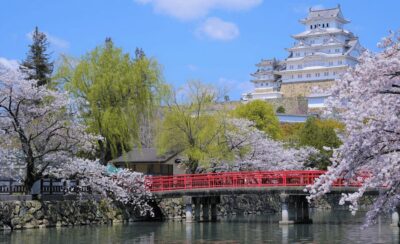
Himeji Castle, Arima Onsen & Mt. Rokko Day Tour
Read our review →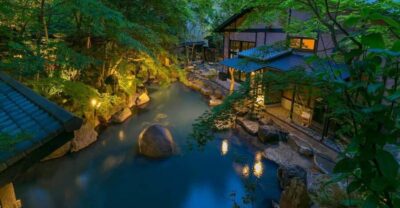
Private Tour to Fuji/Hakone – Onsen, Art, Nature
Read our review →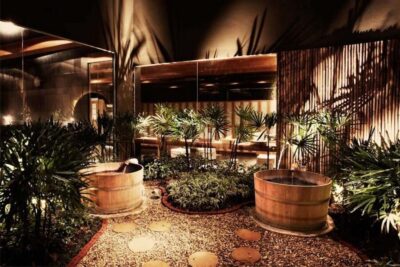
All-Day Pass to Yunomori Sathorn Onsen Bath and Spa
Read our review →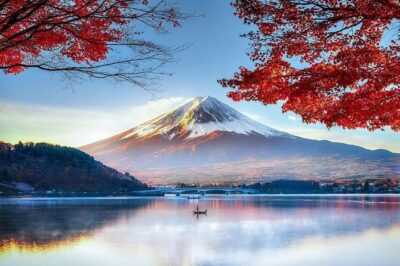
Mt. Fuji, Hakone Private Tour from Tokyo – Onsen, Arts and Nature
Read our review →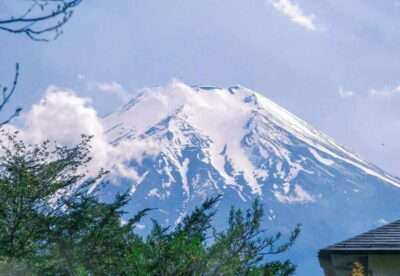
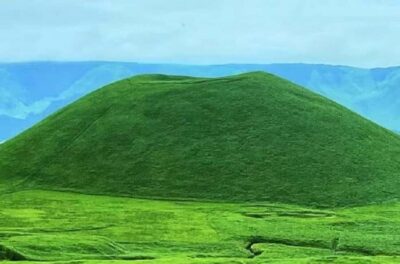
From Fukuoka: Mount Aso, Kurokawa Onsen, and Shrine Tour
Read our review →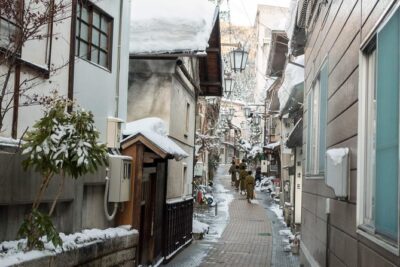
Private Nagano 1-Day Tour:Snow Monkeys,Zenko-ji,Obuse,Sake,Onsen
Read our review →More soaks worth the detour