
REVIEW · HOT SPRING DAY TRIPS
Rotorua: ‘Thermal Path Tour’ Geothermal half day Tour
Rotorua’s geothermal sights are easy to visit badly: you can spend half a day moving between famous stops without understanding what makes them special. This tour takes a better route, pairing quiet geothermal places with a local guide who can explain the hot water, gases, mud, and plants beneath your feet. You visit Rotorua’s largest hot-water lake, Rainbow Mountain, a giant mud pool, and Te Manaroa Spring.
I like the small group, limited to eight people, and the fact that the tour uses comfortable air-conditioned transport between walks. I also like the ending at Waikite Valley Thermal Pools, where the day shifts from looking at hot water to soaking in it. The main caution is that geothermal conditions or local arrangements can change the plan, and one past booking did not include the Waikite pools, which was a major disappointment for that guest.
Key points at a glance
- Rotorua’s largest hot-water lake: A strong first stop that helps you understand the region’s active geothermal ground.
- Rainbow Mountain crater lake: Walk through native forest and unusual geothermal plant life before reaching a beautifully colored lake.
- Rotorua’s biggest active mud pool: Watch steam and gases push bubbles through thick mud, with no need for a staged show.
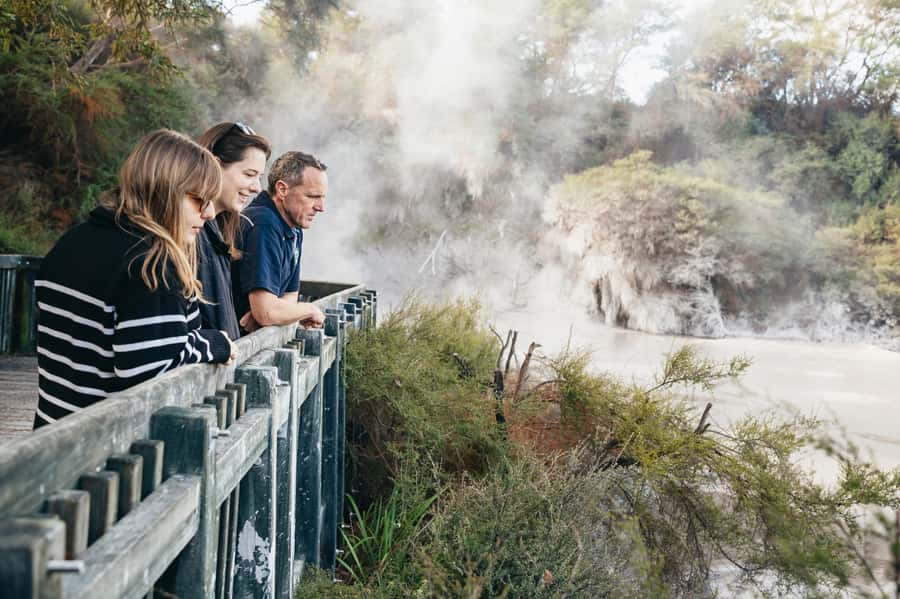
- Te Manaroa Spring: A short walk brings you to a major hot-water spring, where boiling water rises from below.
- Small-group guiding: The group is limited to eight, giving you a better chance to ask questions and set a comfortable pace.
- Waikite Valley finish: The planned final stop is a silica-rich soak, so bring swimwear and keep your head above the water.
Why this half-day tour works well in Rotorua
Rotorua can feel like a collection of hot pools, sulfur smells, steaming ground, and colorful water until someone explains how the pieces fit together. This tour gives you that framework without turning the day into a classroom lecture.
The route moves between different forms of geothermal activity. You see a broad hot-water lake, a crater lake surrounded by forest, a mud pool that bubbles and bursts, and a spring where very hot water surges from below. That variety matters. Instead of seeing four versions of the same pool, you get a clearer sense of how heat, gases, water, and volcanic ground interact.
At $89 per person, the price is reasonable if you want a guide and transport to several less familiar sites. You are paying for four hours, a small group, a live English-speaking guide, air-conditioned transportation, and entry to Waikite Valley Thermal Pools. It is less attractive if you only want one geothermal attraction or prefer to drive yourself and read signs independently.
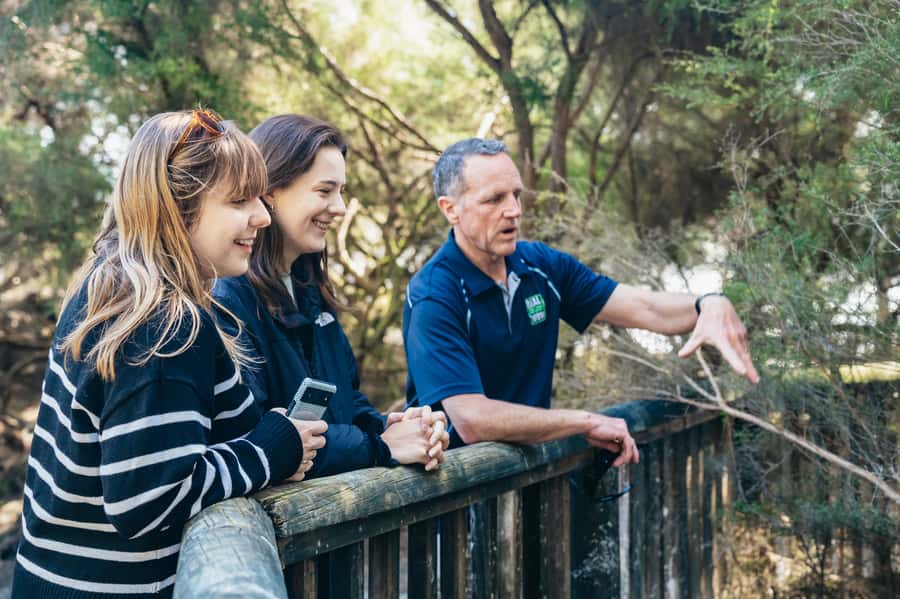
The personal guiding is a large part of the value. The guides named in booking feedback include Stephen, Steve, and Steven. One guide continued with the tour even when only two people had booked, while other comments praise the friendly manner, local insight, and attention to individual interests. That suggests a more personal outing than a full coach tour, though the exact guide depends on the date.
More Hot Spring Day Trips in New Zealand
- From Rotorua: WAI-O-TAPU Geothermal Wonderland Half-Day Tour
★ 4.6 · 76 reviews - ROTORUA – Hell’s Gate Geothermal Park & Mud Spa Day Trip
★ 4.5 · 41 reviews - Half-Day Tour – Ex Rotorua: WAI-O-TAPU Thermal Wonderland
★ 4.0 · 8 reviews
The largest hot-water lake sets the scene
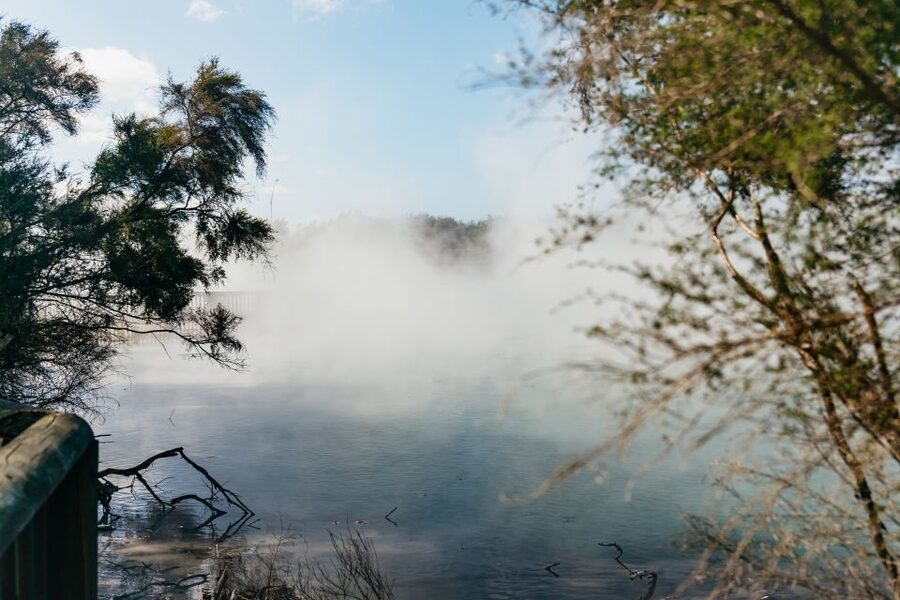
The first stop is Rotorua’s largest hot-water lake. It is not simply a quick photo stop. It gives you an early look at the scale of the geothermal system and helps explain that Rotorua’s heat appears in several forms, from open water to steaming ground and bubbling mud.
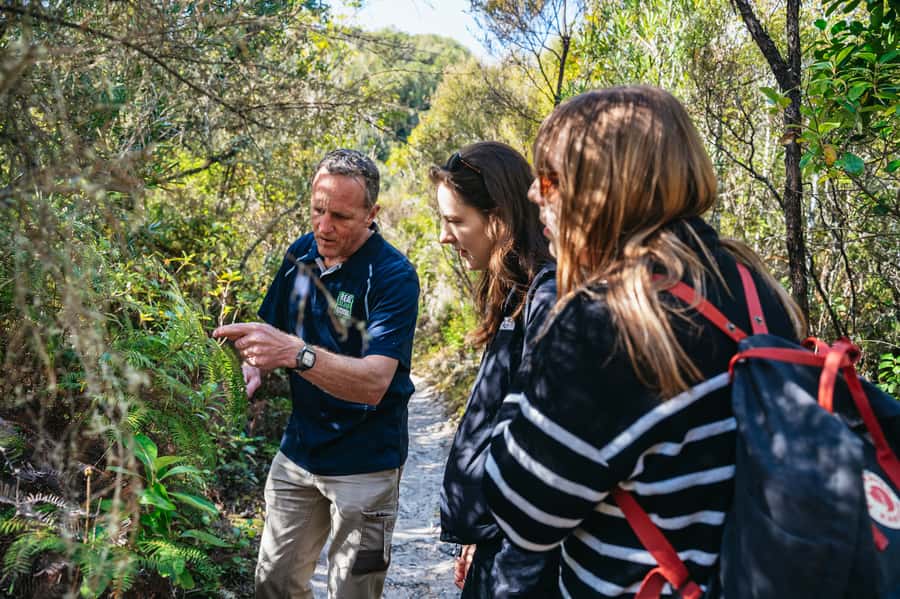
Your guide is especially useful here. The point is not only to look at a lake that happens to be hot. You begin to understand what is happening above and below the surface, and why the area supports such unusual natural features.
This opening stop also gives the tour a calm start. You are not immediately asked to tackle a long walk. You begin with a broad view, then move into shorter walks and more enclosed geothermal settings.
Rainbow Mountain adds forest, color, and a short walk
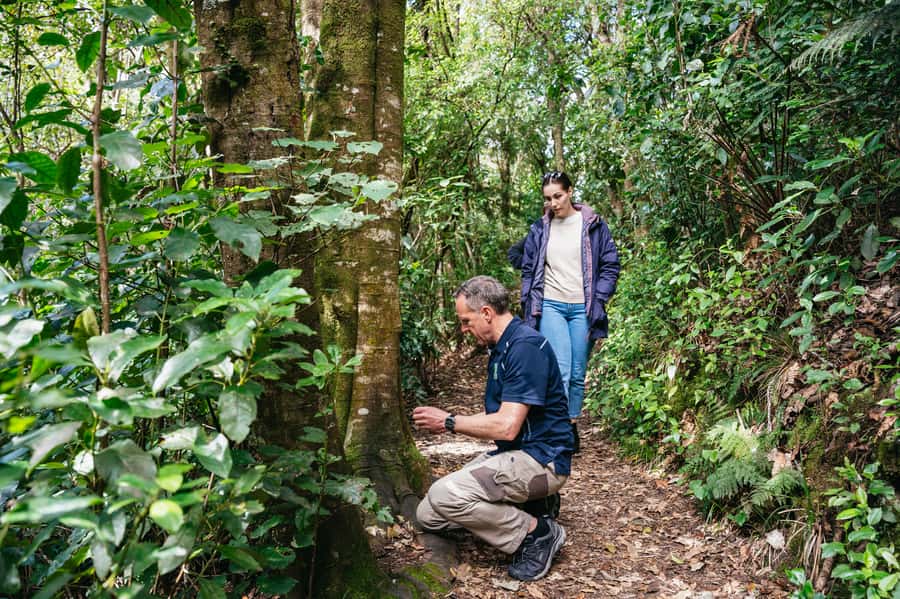
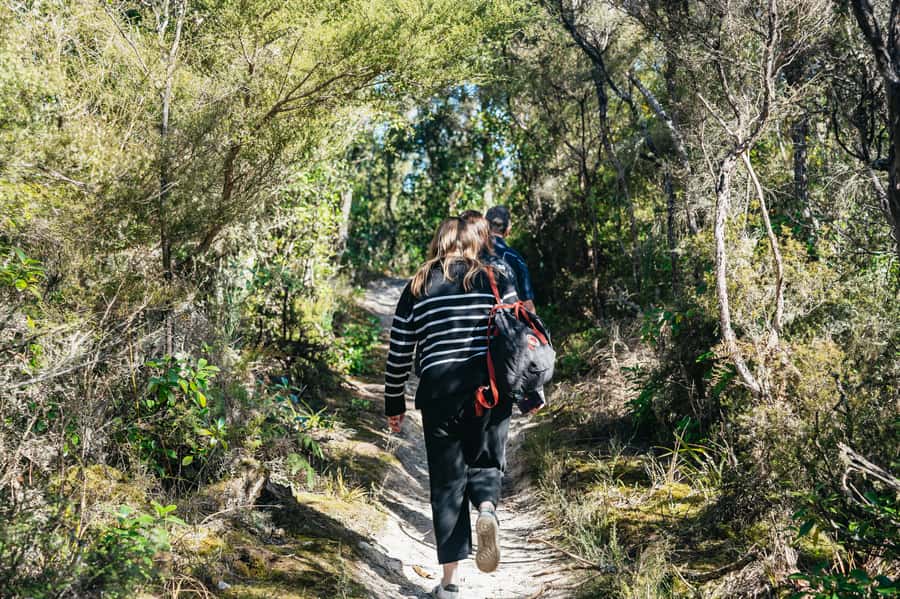
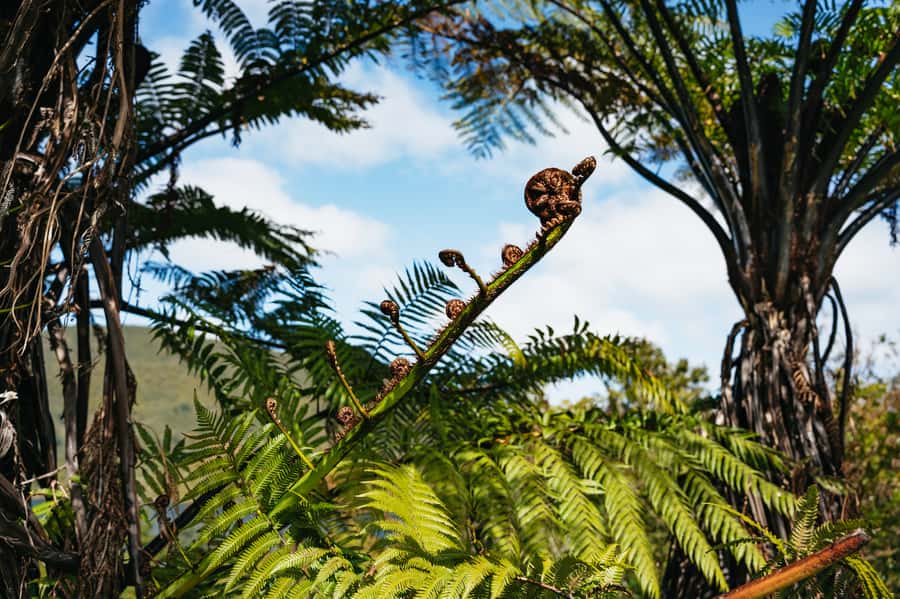
At Rainbow Mountain, you walk through native forest before reaching a colored crater lake. The forest is important because it shows how native vegetation can exist alongside intense geothermal activity. The plants here are not just background scenery. They help make this stop different from a bare volcanic viewpoint.
The walk is part of the appeal, but it also means you should wear proper shoes. The full tour includes walks of up to 2 kilometers, and the ground can include tree roots, rocks, uneven sections, and slippery surfaces. Closed-toe shoes are required, and comfortable footwear is more useful than anything chosen for appearance.
The crater lake is the visual reward. The colors give the stop a strong sense of place, while the surrounding trees soften what could otherwise be a stark volcanic scene. You may find this one of the most photogenic parts of the morning, but the experience is not only about taking pictures. Your guide adds context about the vegetation and the geothermal conditions that shape it.
If you have poor balance, a low level of fitness, or trouble walking on uneven surfaces, this is not an easy sightseeing outing. The distance is modest, but the ground is the issue.
A huge mud pool shows Rotorua at its most active
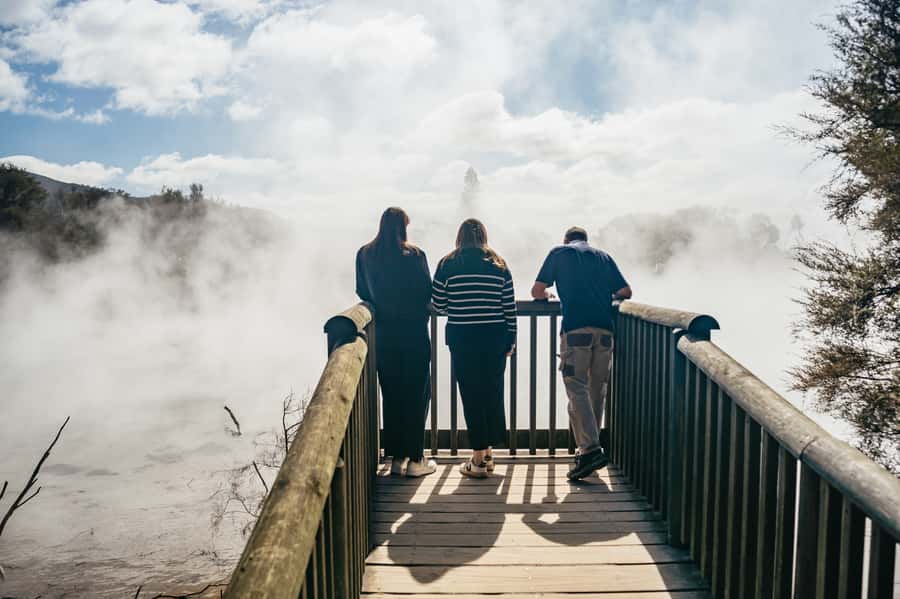
The next stop is a large mud pool, described as the biggest and most active in the region. Here, steam and gases rise through the pool, pushing bubbles of mud to the surface. The bubbles form, swell, and burst, giving the place a slow, restless motion.
Mud pools are a good reminder that geothermal activity is not always dramatic in the form of geysers. This stop is thick, noisy, and constantly changing in small ways. You are watching heat and gas work through wet earth rather than waiting for a timed eruption.
Stay on the formed paths. Geothermal ground can be deceptive, with thin crust, hot fluids, and gases including carbon dioxide and hydrogen sulfide. The safety rules are serious because leaving the trail can lead to severe injury, asphyxiation, or death. This is one of those places where following the guide is not optional good manners. It is basic safety.
The mud pool may be less comfortable for anyone sensitive to strong natural smells or steam. It is also not a place for wandering around to find a better angle. The marked route matters more than the perfect photograph.
Another pool worth the trip:
- Rotorua: Wai-O-Tapu Geothermal Park Entry Ticket
★ 4.6 · 2,601 reviews - Rotorua Rafting: Kaituna River White Water Rafting & Free Sauna
★ 5.0 · 1,952 reviews - Rotorua: Hell’s Gate Outdoor Mud Spa & Guided Walk
★ 4.7 · 1,140 reviews - Rotorua Rafting: Kaituna River Rafting Experience-Free Sauna
★ 4.9 · 401 reviews
Te Manaroa Spring brings you close to boiling water
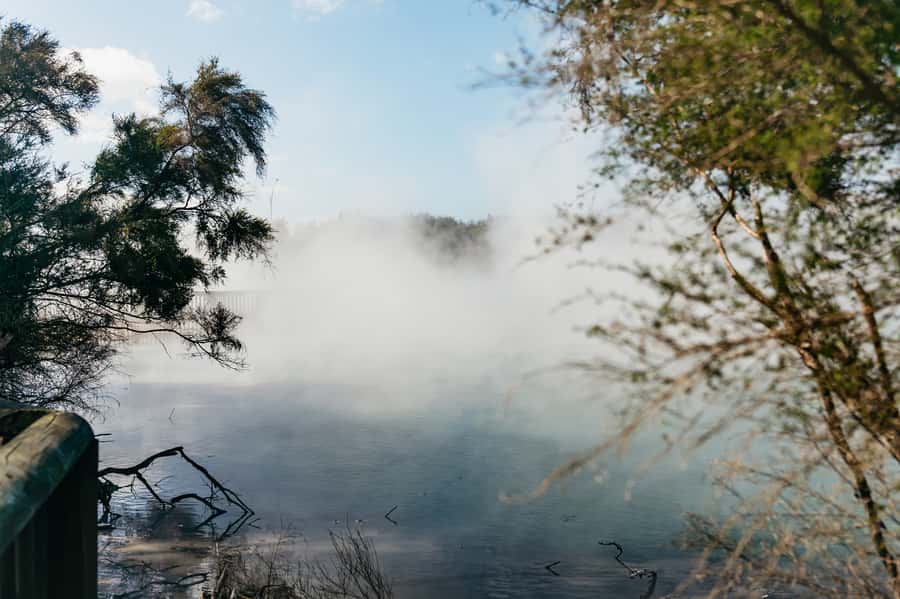
Te Manaroa Spring is reached by a short walk and is described as Rotorua’s largest hot-water spring. Boiling water surges from below, surrounded by vegetation. The combination is striking: the spring is forceful and dangerous, while the plants around it make the setting feel calm.
This is another stop where distance can be misleading. A short walk does not mean a casual stroll across open ground. You still need balance and sensible footwear, and you should stay on the formed path at all times.
I like the way this stop rounds out the geothermal story. The hot-water lake shows broad scale, Rainbow Mountain shows the effect on forest and crater water, and the mud pool shows gases working through wet ground. Te Manaroa Spring gives you a direct view of hot water rising under pressure.
The spring is not a place to touch the water or approach the edge. The attraction is seeing the force of the water from a safe route. Your guide can help you keep a sensible distance and explain what you are seeing.
Waikite Valley is the reward at the end
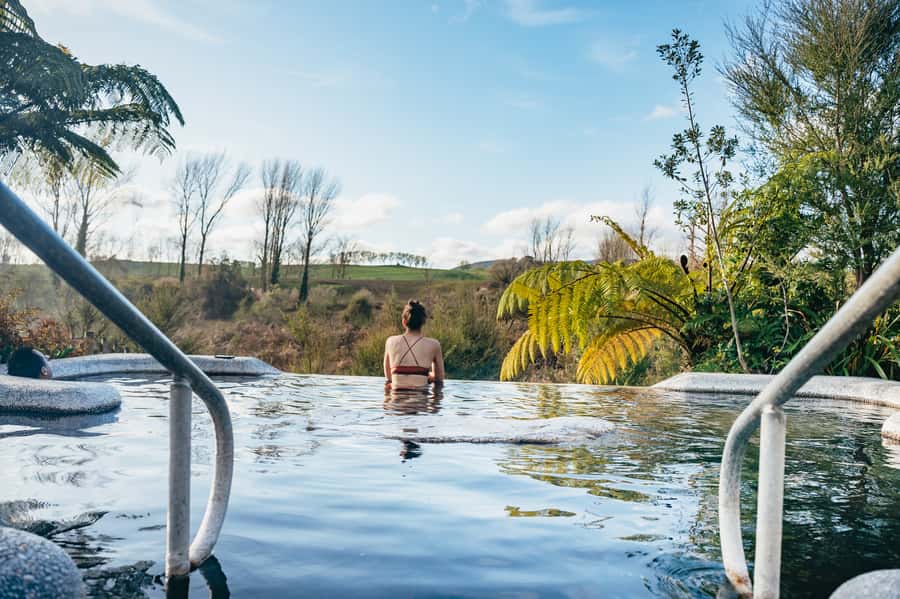
The planned final stop is Waikite Valley Thermal Pools. Entry is included, and swimwear is needed if you want to use the pools. After several stops where you keep your distance from geothermal water, it is a pleasant change to sit in a controlled bathing area.
The pools use silica-rich thermal water, and the setting provides a slower finish than the earlier walks. This is one reason the tour works well as a half-day experience. You do not end with another viewpoint and a hurried drive back. You get time for a soak and a chance to rest.
Keep your head above the water while bathing. The safety information warns of the risk of amoebic meningitis in geothermal waters. That instruction may sound stark, but it is simple to follow and should be taken seriously.
There is one practical point to clarify before booking. A past booking involved a late program change and did not include the Waikite Valley pools. That guest instead had a short visit to the warm waters of Kerosene Creek and found the change especially disappointing because the pool visit was the main reason for booking. The advertised plan is to finish at Waikite, but if that stop is essential to you, confirm the current arrangements before paying and again before departure.
What the small group changes
With a maximum of eight participants, this is a very different proposition from a large bus excursion. You spend less time organizing a crowd, and the guide can respond more easily to questions and interests.
The small size also matters at stops where you need to pay attention to safety instructions. On uneven ground near geothermal features, it is easier to hear where you should walk and where you should not. A guide can also keep the outing moving without making you feel rushed.
The personal side comes through in the feedback about Stephen, Steve, and Steven. One comment describes a guide who remained engaged even with only two people, while others point to his friendliness, strong local knowledge, and personal touches. You should not assume a particular guide will lead your departure, but the experience is built around a local English-speaking guide rather than an audio recording.
The relaxed pace does not mean the tour is physically effortless. You need to manage short walks, roots, rocks, and slippery ground. The small group improves the social experience, but it does not remove the terrain.
Time, transport, and what to bring
The tour lasts four hours, with starting times depending on availability. That makes it easy to fit beside another Rotorua activity, but you should avoid booking something immediately afterward unless you have plenty of time between plans.
Air-conditioned transport is included. This matters because the stops are spread out, and you can cool down or dry off between walks and the final soak. Food and drinks are not included, so plan ahead if you need something during the half-day.
Bring:
- Comfortable clothes
- Closed-toe walking shoes
- Swimwear
- Water and any food you need, since meals and beverages are not included
You may also want a towel and a change of clothes for the pools, although the supplied tour details do not specify towel provision. Asking the operator before departure is sensible.
The tour is not suitable for children under six, wheelchair users, people with mobility impairments, or people with a low level of fitness. That is not a judgment on the tour. It reflects the combination of uneven trails, geothermal hazards, and the need to keep your balance.
Safety is part of the experience
Rotorua’s geothermal areas are beautiful because they are active. That same activity makes them dangerous. Thin crust can hide hot ground, hot fluids can cause serious burns, and gases can be harmful or fatal. Stay on the formed paths and follow every instruction from the guide.
The operator uses a safety management system audited to New Zealand standards, but no system makes geothermal ground harmless. You still need to watch your footing and avoid stepping beyond barriers or marked routes.
The main physical risks are slips, trips, falls, strains, sprains, and broken bones. Comfortable closed-toe shoes are not just a packing suggestion. They are part of being properly prepared.
At the bathing stop, keep your head above the water. Follow that rule even if you see other people behaving casually. A thermal pool is controlled compared with a mud pool or spring, but geothermal bathing still has health risks.
How the $89 price compares in value
At $89, this is priced as a guided nature outing rather than a simple entry ticket. The best value comes from the combination of transport, a small group, interpretation, several stops, and pool entry.
I would consider it good value if you do not have a car, do not want to plan a route through several out-of-the-way geothermal sites, or want a guide to explain what you are seeing. It also saves you from choosing between different attractions and handling the driving yourself.
I would think twice if Waikite Valley is your only priority. The pool entry is included, but the past route change shows that the final stop may not be guaranteed in every circumstance. If soaking is the main purpose of your day, check the current plan before booking.
The 4.9 rating from 15 reviews points to a very strong overall response, but the sample is small. The clearest strengths are the guides, the personal feel, and the range of geothermal stops. The clearest weakness is the risk of an itinerary change affecting the final soak.
Who should book the Thermal Path Tour
You should book this tour if you want a compact introduction to Rotorua’s geothermal environment and prefer unusual stops over a single major attraction. It suits adults and older children who can walk up to 2 kilometers on uneven ground and follow safety directions closely.
It is especially useful for you if you value explanation. The sites are more rewarding when you understand why a mud pool bubbles, why a spring surges, and how vegetation survives near geothermal heat.
You may want another option if you use a wheelchair, have mobility limits, dislike uneven paths, or want a very gentle outing. You should also reconsider it if you need a guaranteed bathing stop and cannot accept a possible program change.
Free cancellation is available up to 24 hours before the start time, and you can reserve now and pay later. Those terms give you some flexibility, but they do not replace checking the current itinerary if Waikite Valley matters most.
Should you book it?
I would book the Thermal Path Tour for a well-rounded half-day look at Rotorua beyond the most obvious stops. The route gives you four distinct geothermal settings, the group stays small, and the final soak adds a welcome change of pace.
Book it with realistic expectations. This is not a spa day with a few scenic stops attached. You will walk on rough ground, stay alert around dangerous hot water and gases, and accept that local conditions can affect the plan. If that sounds right, the $89 price buys a thoughtful, personal introduction to one of New Zealand’s most unusual regions.
FAQ
How long does the Thermal Path Tour last?
The tour lasts four hours.
How much does the tour cost?
The price is $89 per person.
How many people are in the group?
The group is limited to eight participants.
Is transportation included?
Yes. Comfortable air-conditioned transportation is included.
Is a guide included?
Yes. An English-speaking live guide leads the tour.
What places will the tour visit?
The planned route includes Rotorua’s largest hot-water lake, Rainbow Mountain and its crater lake, a large active mud pool, Te Manaroa Spring, and Waikite Valley Thermal Pools.
Is entry to Waikite Valley Thermal Pools included?
Yes, entry to Waikite Valley Thermal Pools is included in the planned tour.
How much walking is involved?
The tour includes walks of up to 2 kilometers. The ground may include tree roots, rocks, uneven sections, and slippery surfaces.
What should I bring?
Bring comfortable clothes, comfortable closed-toe shoes, and swimwear. Food and beverages are not included.
Freshly added soaks in New Zealand
- Boutique tour , Mt Maunganui, NZ farm, Rotorua lakes/geothermal★ 4.5 · 50 reviews
- Half-Day Tour – Ex Rotorua: WAI-O-TAPU Thermal Wonderland★ 4.0 · 8 reviews
- From Rotorua: WAI-O-TAPU Geothermal Wonderland Half-Day Tour★ 4.6 · 76 reviews
- ROTORUA – Hell’s Gate Geothermal Park & Mud Spa Day Trip★ 4.5 · 41 reviews
- Rotorua Cultural & Geothermal Small Group Tour From Auckland★ 5.0 · 22 reviews
- Ex Auckland: Rotorua Māori Village with Haka and Hot Springs★ 5.0 · 55 reviews
- From Auckland: Rotorua Māori Village & Hot Springs with Haka★ 4.8 · 58 reviews
- Hanmer Springs: Thermal Pools Single or Return Entry Ticket★ 4.7 · 107 reviews
Hot Spring Day Trips, compared.
Krakow to Zakopane: Funicular, Tasting and Thermal Baths Day Trip
Read our review →
Zakopane Snowmobiles, Bonfire & Hot Springs Day Tour
Read our review →
Golden Circle Day Tour with optional Blue Lagoon
Read our review →
More soaks worth the detour