
REVIEW · THERMAL BATH TOURS
National Roman Museum and Diocletian Thermal Baths Walking Tour
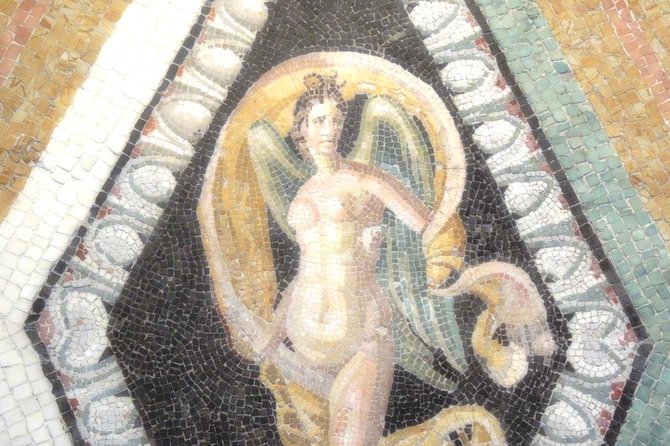
Rome’s great ancient treasures are not all at the Colosseum or Roman Forum. At Palazzo Massimo alle Terme, you can stand close to a tired-looking boxer, glittering mosaics, painted rooms, and statues that once filled Roman villas. The museum is often calm, which lets you look instead of shuffle.
I like the skip-the-line entry and the private format. Your guide can slow down for photographs, explain a statue’s story, or adjust the pace for someone who is less taken with ancient art. I also like the optional Baths of Diocletian visit, where a huge Roman bath complex becomes part archaeological site and part Michelangelo church.
The main caution is time. Two to three hours is not long for four floors of art plus the baths, and one booking ran short after the guide arrived late. At $323.21 per person, this makes the tour a serious splurge, especially for one or two people.
Key points to know before booking
- Palazzo Massimo is the main event: You see Roman sculpture, mosaics, frescoes, coins, jewelry, and gold work from the second century BC through the fifth century AD.
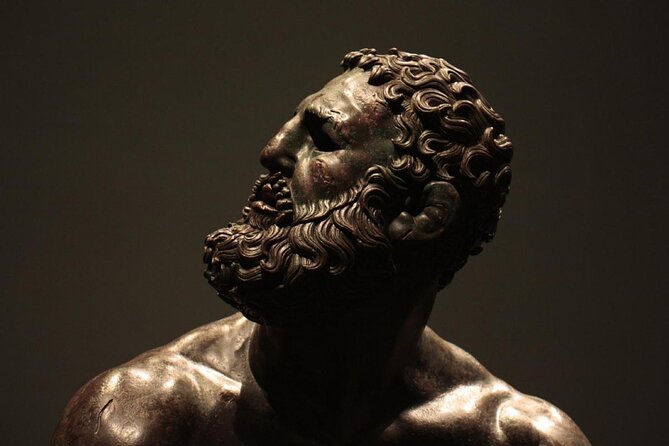
- The Boxer at Rest is a must-see: This battered bronze figure feels startlingly human beside more idealized ancient statues.
- The Baths of Diocletian add scale: The vast complex once included bathing rooms, gyms, libraries, and a swimming pool for as many as 3,000 people at once.
- Michelangelo is part of the story: The Basilica of St. Mary of the Angels was built into the baths in 1561.
- Private guiding has real value here: Guides named Matteo, Mattia, Serena, Damiano, and Giorgio have led tours, with particular praise for clear English and lively explanations.
- Check the timing and ending point: The tour is advertised at about two to three hours, but the details describe both a farewell at the baths and an end back at the meeting point.
Why Palazzo Massimo deserves a place on your Rome plan
Rome can make ancient art feel like background scenery. You pass another marble torso, another mosaic floor, another emperor’s portrait, and your attention starts to fade. Palazzo Massimo helps put meaning back into those objects.
The collection covers a long stretch of Roman artistic life, from the second century BC to the fifth century AD. That range matters. You are not seeing one frozen version of Rome. You are watching artistic styles change as Roman power expanded, absorbed Greek traditions, and developed its own visual language.
The museum occupies four floors, so this is not a quick room with a few famous statues. You can see sculpture, painted frescoes, mosaics, coins, jewelry, and goldsmith work. The mix gives you a better sense of daily life and taste than a lineup of monumental ruins alone.
I especially like the contrast between the famous pieces and the quieter objects. The statues may draw you in first, but a small coin, a piece of jewelry, or a floor pattern can reveal how widely Roman art reached. Your guide’s job is to connect those details so the museum does not feel like a storage area for disconnected finds.
The museum’s quieter atmosphere is another advantage. This is not presented as a guarantee of an empty building, but the experience is often far less pressured than Rome’s biggest sights. You have a better chance to stand in front of a mosaic or statue without a constant stream of people cutting across your view.
More Thermal Baths in Italy:
- Chianciano Terme: Theia Thermal Pools Entrance Ticket
★ 4.4 · 185 reviews - Milan: De Montel Thermal Bath Entrance Ticket
★ 4.6 · 89 reviews - Montecatini Terme Thermal Pool Entrance Ticket
★ 3.5 · 84 reviews
Meeting your guide near Republic Square
The tour begins at the Palazzo Massimo ticket office on Largo di Villa Peretti, only a few steps from Republic Square. That central location is useful if you are already near Termini Station or exploring the area around Piazza della Repubblica.
You meet your English-speaking guide there, receive the admission ticket, and use the skip-the-line access. The ticket is not the whole value of the experience, but it saves you from wasting part of a short tour in an entrance queue.
This is a private activity, so only your group takes part. The description also mentions small-group and group-discount options, so check the exact choice and price when you book. The supplied price is $323.21 per person, which may make more sense for a larger private party than for a couple paying the full individual rate.
You do not get hotel pickup or drop-off. Plan to reach the museum on your own. The meeting point is near public transportation, and children must be accompanied by an adult.
Palazzo Massimo: four floors of Roman art
The first museum stop is scheduled for about an hour. That is enough for a focused route with a guide, but not enough to inspect every gallery. You should think of this as a carefully chosen introduction rather than a full museum study visit.
The Boxer at Rest
The Boxer at Rest is one of the tour’s strongest stops. The bronze figure shows an athlete seated after a fight, with a heavy, weary body and signs of injury. It does not present the polished perfection you may expect from ancient sculpture. Instead, you see exhaustion and physical cost.
A good guide can help you notice how unusual that mood is. The work asks you to look at the face, hands, muscles, and posture as evidence of a person rather than as parts of an ideal body. Several guides, including Matteo and Mattia, have been singled out for bringing this kind of context to the statues.
More Museums in Italy:
- Hellisheiði Geothermal Exhibition: Entry and Audio Tour
★ 4.6 · 88 reviews - Geothermal Energy Exhibition Entry Ticket
★ 4.5 · 34 reviews - Full Day Ice Museum and Chena Hot Springs Tour
★ 4.4 · 32 reviews - Fire & Ice: Chena Hot Springs, Ice Museum + Aurora Adventure
★ 5.0 · 30 reviews
The Discus Thrower
The Discus Thrower offers a useful contrast. Its pose captures a body in controlled movement, and it connects Roman collecting with Greek artistic models. Your guide can explain how Roman art often drew on Greek forms while adapting them for Roman settings and audiences.
If ancient sculpture is not normally your thing, this comparison helps. You do not need to memorize dates or artistic labels. Look at the difference between the boxer’s fatigue and the discus thrower’s poised action. The two pieces can turn a room of marble into a conversation about how artists represented the human body.
The Sleeping Hermaphrodite
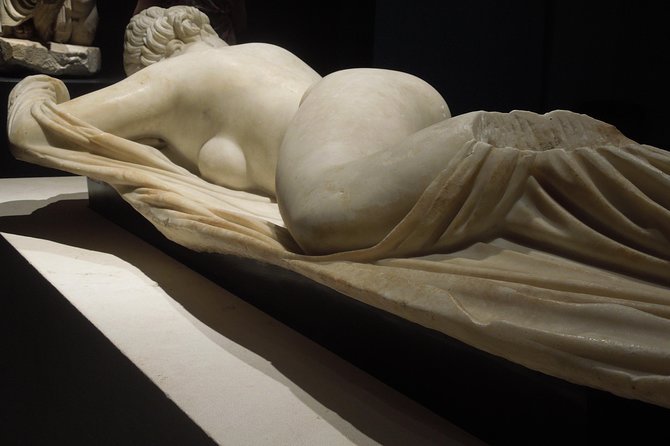
The Sleeping Hermaphrodite is another celebrated work, known for its relaxed sleeping pose and the surprise created by viewing the figure from different angles. It is a piece that rewards slow looking, especially with an explanation of its mythological and artistic setting.
Here, a private guide can be more useful than an audio device. You can ask a direct question, listen to the explanation, and move on when the point is clear. The tour is conducted in English, and past guides such as Serena and Damiano have been praised for making technical art information understandable and engaging.
Livia’s frescoed rooms
The rooms associated with Empress Livia are a change of pace from sculpture. Their painted decoration gives you a look at the interior world of Rome’s wealthy elite. The frescoes are a reminder that Roman homes were not plain stone boxes. Color, garden imagery, and decorative scenes could cover walls and create an imagined setting indoors.
These rooms are especially valuable after visiting ruins with stripped walls. You begin to understand what Roman buildings may have looked like before centuries of weather, rebuilding, and stone removal took their toll.
Mosaics, coins, jewels, and gold work
The museum’s mosaics and smaller objects fill in the social picture. A mosaic can show how Romans decorated floors and organized patterns, while coins offer clues about rulers, money, and public messages. Jewelry and gold work bring the subject closer to personal taste and status.
You should not expect the guide to give equal time to every object. The purpose is to identify the best pieces and explain why they matter. If you want a slow, room-by-room visit, plan to return on your own after the guided portion, assuming museum hours and ticket rules allow it.
The Baths of Diocletian and Michelangelo’s church
The optional second stop takes you to the Baths of Diocletian, built in 298 AD. The complex was once the largest thermal plant in Rome. It included bathing spaces, gyms, libraries, and a swimming pool, and it could accommodate up to 3,000 people at the same time.
That scale is the point. At many Roman sites, you see fragments and try to imagine the original building. Here, the surviving spaces help you picture a major public institution. Roman baths were not just places to wash. They were tied to exercise, social life, leisure, and civic identity.
The tour description assigns about an hour to the baths. Admission is listed as included in the overall experience, with no separate admission charge noted for this stop. If you choose the museum-only version, you will not get this portion.
The most memorable feature for many visitors is the Basilica of St. Mary of the Angels, also called Santa Maria degli Angeli. Michelangelo adapted part of the bath complex for the church in 1561. This creates a striking meeting of ancient Roman engineering and Renaissance design.
Your guide can point out which large architectural features belong to the earlier bathhouse and how the church was fitted into them. That explanation is important because the building can otherwise seem like a grand church with unusual proportions. Once you understand that its walls and scale came from the baths, the place reads differently.
I like this stop because it avoids the usual simple story that Rome moved from ancient times to the Renaissance in a clean line. The basilica shows reuse in action. One civilization’s public bath became a later religious space, and the old structure remained part of the city’s working life.
What the guide adds to the visit
A private museum tour succeeds or fails with the guide. The strongest comments about this experience focus on enthusiasm, clear English, and the ability to connect objects with stories.
Guides named Matteo and Mattia have been praised for their command of Roman art and for adding context to statues, frescoes, and mosaics. Serena has been noted for linking the museum’s architecture and history to modern Rome. Damiano, who also works in art at a university, has been described as especially good at bringing Greek and Roman sculpture to life. Giorgio has also received praise for a solid museum visit.
These names do not guarantee who will lead your booking. They do show the kind of guiding style to hope for: not a rushed list of dates, but explanations that help you see why an object matters.
The private format also helps if your group has mixed interests. One person may want every detail about sculpture, while another prefers frescoes, architecture, or Roman daily life. Ask questions early and tell the guide what catches your attention. A short tour becomes much more useful when the route responds to your interests.
The one clear warning is punctuality and timing. A guide arrived late on one occasion, leaving less time for the museum before the baths. Since the route is already compact, even a small delay matters. Arrive early, keep the meeting point details handy, and raise any timing concern at the start.
Is $323.21 per person good value?
At $323.21 per person, this is not a budget museum visit. You are paying for a private English-language guide, skip-the-line access, and the chance to combine two substantial sites in one outing.
The value is strongest for a small group that wants expert attention. If four or six people share a private booking, the cost may feel more reasonable than paying for several separate private explanations. The group-discount information is worth checking before you commit.
For two people, the price needs more careful thought. You are paying a premium for convenience and interpretation, not for rare access to a closed collection. The museum itself is often lightly visited, so the skip-the-line feature may be less important than the guide.
I would choose this tour if you want a guided introduction and do not want to spend hours planning which works to see. I would skip it if you enjoy reading labels, moving at your own pace, and returning to favorite pieces. The museum can be rewarding without a guide, but the private format helps you get more from a short visit.
The 4.8 rating from 18 reviews and 94 percent recommendation figure suggest strong satisfaction, though the sample is small. The pattern is clear: guide quality is central to the experience. Most of the highest praise goes to explanations, enthusiasm, and the way the guide made the art feel connected rather than random.
Who should book this Rome museum tour?
This is a strong match for you if:
- You already plan to see the Colosseum and Forum and want more Roman art beyond ruins.
- You enjoy sculpture, frescoes, mosaics, or ancient architecture.
- You prefer a private guide who can answer questions in English.
- You want to see the Baths of Diocletian and Michelangelo’s adaptation in one outing.
- You are visiting Rome for a short time and want a focused museum route.
- Your group includes someone who needs a slower or more flexible pace.
It may not suit you if you want a long, unhurried museum morning. The four-floor collection is large, and the scheduled museum portion is only about an hour. Statues also make up a large part of the visit, so anyone who prefers painting or modern art may find the emphasis narrow.
The experience is suitable for most people, and children can attend when accompanied by an adult. Still, young children who need constant movement may find the sculpture galleries and historical explanations demanding.
Practical details that matter
Book as far ahead as you can if your Rome dates are fixed. This experience is booked an average of 48 days in advance, which signals that popular dates may fill well ahead of time.
Free cancellation is available up to 24 hours before the start time for a full refund. Changes or cancellations made less than 24 hours before the start time are not accepted for a refund, and the cut-off follows local Rome time.
Pay close attention to the end point. The tour description says you finish at the Baths of Diocletian, while the meeting-point information says the activity ends back at the starting point. Confirm this detail before booking, especially if you have a train, meal, or later reservation.
Should you book it?
Book this tour if you want the National Roman Museum explained by an expert rather than simply visited. The Boxer at Rest, Livia’s frescoed rooms, the mosaics, and the Baths of Diocletian give you a fuller picture of Roman life than the headline ruins alone.
I would choose the version that includes the baths if the price works for your group. Michelangelo’s church inside the ancient bath complex gives the outing a memorable second act. Just protect your time by arriving early and confirming the meeting and end points.
At this price, the guide must earn the premium. The strongest guides named for this experience, including Matteo, Mattia, Serena, and Damiano, appear to do that through clear English, strong subject knowledge, and lively stories. If you prefer independence, buy a museum ticket and explore alone. If you want a focused route, personal attention, and a better understanding of what you are seeing, this private tour is a sound choice.
FAQ
Where does the tour begin?
The tour begins at the Palazzo Massimo alle Terme ticket office at Largo di Villa Peretti, 2, in Rome. It is a short distance from Republic Square.
What language is the tour offered in?
The tour is offered in English.
How long does the experience last?
The advertised duration is approximately two to three hours. About one hour is scheduled for Palazzo Massimo and about one hour for the Baths of Diocletian when that option is included.
Is admission included?
Skip-the-line admission to Palazzo Massimo is included. The Baths of Diocletian are included when you choose the option with that visit, with no separate admission charge listed for the stop.
Is this a private tour?
Yes. The activity is described as private, meaning only your group participates. Group discounts and small-group options are also mentioned, so confirm the exact booking option before paying.
Does the tour include hotel pickup?
No. Hotel pickup and drop-off are not included. You make your own way to the meeting point.
Can children join the tour?
Yes, but children must be accompanied by an adult.
What is the cancellation policy?
You can cancel up to 24 hours before the experience begins for a full refund. Cancellations or changes made less than 24 hours before the start time are not accepted for a refund.
Freshly added soaks in Italy
- Thermal Baths natural hot spring and Greek Temple of Segesta★ 5.0 · 34 reviews
- Private Full-day Cascate del Mulino Hot Springs from Rome★ 5.0 · 31 reviews
- Saturnia Thermal Spring Small Group Day Trip from Rome with Lunch★ 5.0 · 13 reviews
- from Civitavecchia: Saturnia natural hot springs experience★ 4.0 · 9 reviews
- Day with Thermal Pool, SPA Access, Lunch & Massage★ 4.5 · 2 reviews
- Florence: Day Trip to the Saturnia Thermal Baths★ 4.7 · 32 reviews
- Saturnia: Terme di Saturnia Hot Spring Pools Park Day Ticket★ 4.3 · 60 reviews
- Rome to Saturnia ; Thermal Springs Day Trip with Lunch★ 4.3 · 6 reviews
Thermal Bath Tours, compared.
Széchenyi Spa Day Ticket with Optional Upgrades
Read our review →
Zakopane, Thermal Springs, Cable Car, Local Tasting
Read our review →

Krakow to Zakopane: Funicular, Tasting and Thermal Baths Day Trip
Read our review →
Rudas Turkish Bath or Spa Day Pass & 3-Course Meal
Read our review →More soaks worth the detour