
REVIEW · CHIANG MAI HOT SPRINGS
Chiang Mai: Chiang Rai Temples, Karen Tribe and Hot Springs
Chiang Rai’s famous temples are the main event here, but the day begins with hot springs and a hill-tribe village. Wat Rong Khun, the White Temple, is a surreal work of modern Buddhist art, while the Blue Temple and Huay Pla Kang Temple show very different sides of northern Thai design.
I like the strong value at $35, which covers round-trip transport, a guide, insurance, and three temple entrance fees. I also like the guides’ personal touch. Names such as Benz, Ruby, Kwan, Ann, Dee, and Alex appear often in guest feedback, with praise for clear explanations, photos, snacks, and care for anyone feeling unwell.
The drawback is the distance. This is an 11-hour day with roughly seven hours of driving, and parts of the route can be bumpy or slowed by traffic and roadworks. You see a lot, but this is not a relaxed Chiang Rai stay.
Key points to know before booking
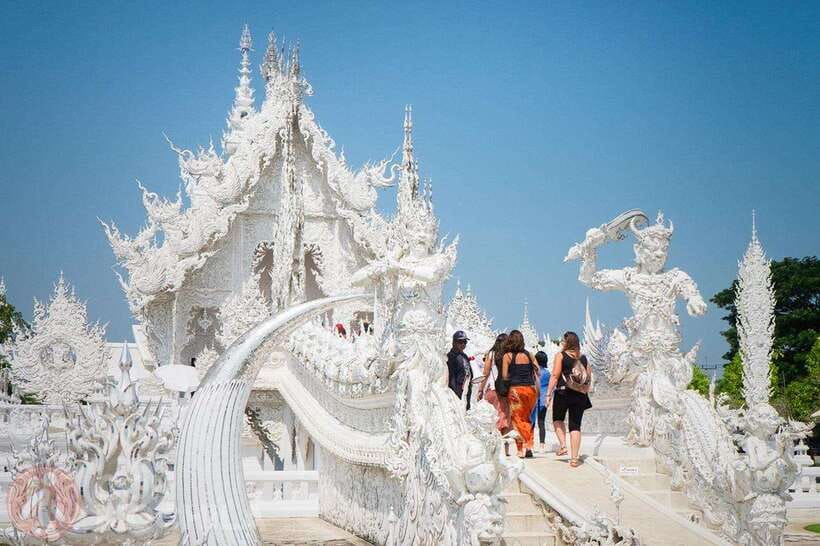
- White Temple centerpiece: Chalermchai Kositpipat’s all-white creation blends Buddhist symbols with startling modern details.
- Three very different temples: Wat Rong Khun, Wat Rong Suea Ten, and Huay Pla Kang each offer a distinct style and mood.
- Long travel day: The return journey to Chiang Mai can take about three hours, so bring water, a charged phone, and patience.
- Karen village visit: The entrance fee is 300 baht extra, and the experience deserves thoughtful consideration rather than a quick photo stop.
- Helpful guides: Guides such as Benz, Ruby, and Kwan are praised for practical help, cultural context, and keeping the group moving.
- Bring earphones: The guide speaks English, while an audio guide is available through a QR code in 41 languages.
Is this Chiang Rai day trip worth the long road?
For $35, this is an efficient way to see the best-known sights in Chiang Rai without arranging a private driver. You pay for the long transfer from Chiang Mai with your time, but the price includes air-conditioned transport, a live guide, mandatory insurance, and admission to the three principal temples.
I see this as a sightseeing-heavy day, not a slow cultural retreat. The vehicle covers the large gap between the two cities, and the guide gives you context along the way. At the stops, you generally get enough time to look around, take photographs, buy a snack, and return to the vehicle.
The biggest benefit is range. In one outing, you see a hot spring, a Karen community, contemporary Buddhist art, a dramatic blue temple, and a hilltop temple with a giant Guan Yin statue. If Chiang Rai is high on your list but you have only one spare day in Chiang Mai, that range is hard to beat at this price.
The tradeoff is simple: you spend more time getting to Chiang Rai than exploring it. Road conditions can be rough, and some passengers find the return trip tiring. I would not book this if you have a flight the same day, or if long coach rides leave you miserable.
More Hot Springs and Thermal Baths in Thailand:
- Krabi: Tiger Cave Temple, Emerald Pool and Hot Springs Tour
★ 4.8 · 3,616 reviews - Krabi: Tiger Cave, Hot Springs and Emerald Pool Jungle Tour
★ 4.2 · 2,643 reviews - Chiangmai to Chiangrai: 3 Temples, Hot Springs& Lalitta Cafe
★ 4.5 · 659 reviews
Mae Kachan Hot Springs gives the morning an easy start
After pickup, the road to Mae Kachan takes about an hour and a half. This first stop is less about a major sight and more about breaking up the journey.
The hot springs are a chance to stretch your legs, look at the mineral water, and rest before the day becomes busier. You can dip your feet in the warm water, but swimming is not allowed. There are also places to buy coffee, Thai tea, roti, and small snacks, along with shops selling jewelry and other goods.
I like this stop because it makes the long drive feel less punishing. You are not expected to rush straight from Chiang Mai to the temples. Still, keep your expectations in check. This is a short roadside visit, not a spa session or a quiet natural park.
Wear shoes that are easy to remove if you want to put your feet in the water. Sunglasses, a hat, sunscreen, and water will help too, especially in the hotter months.
The Karen village requires curiosity and respect
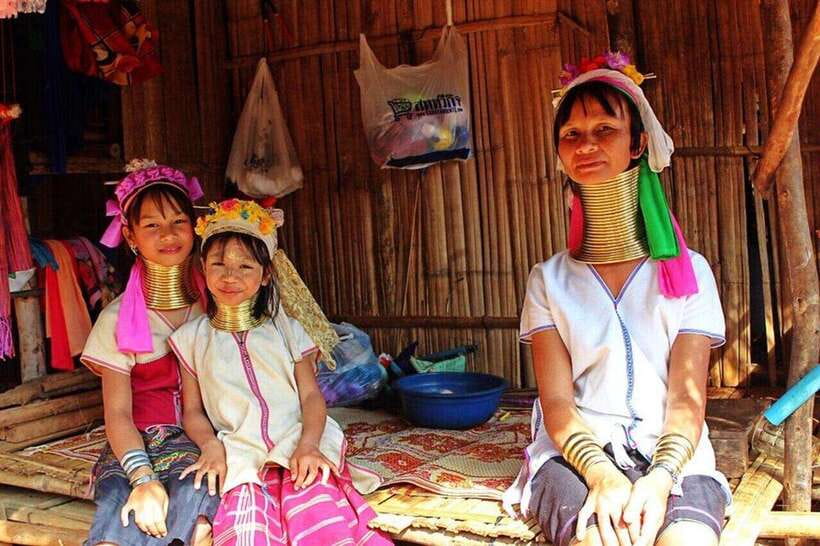
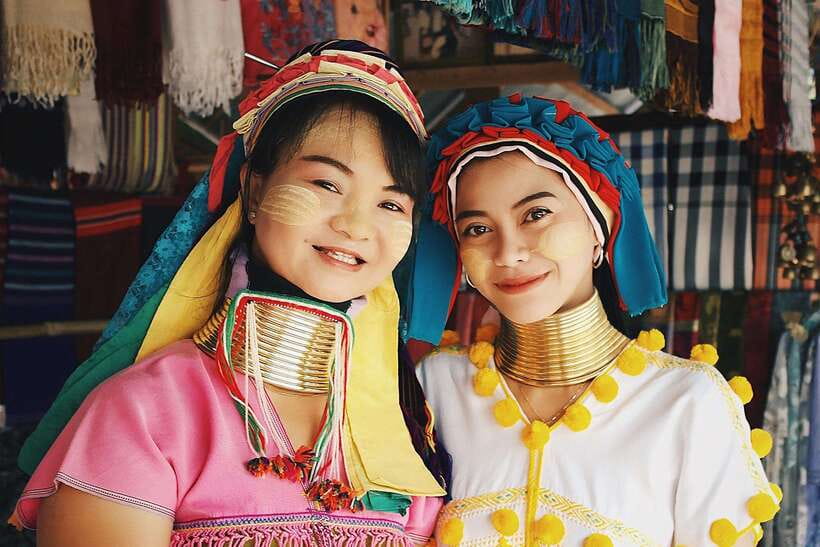
A short drive brings you to the Mae Kachan Karen long-neck village. The community is known for women who wear brass neck rings, a practice passed down through generations. You can see handmade crafts, browse woven goods, and learn about local customs and history.
The entrance fee is 300 baht and not included. Bring Thai currency if you plan to enter. Small purchases can support local makers, and specific items such as scarves made on looms are available according to the experience details.
This stop deserves a little thought before you go. The tradition of neck rings is visually striking, but it can also feel uncomfortable when presented mainly as a spectacle. I suggest you treat the visit as a chance to listen, look carefully at the crafts, and avoid reducing the women and girls to photographs.
The stop lasts only a limited part of a much longer day, so the amount of cultural explanation can depend on the guide and the group. The English-speaking guide can provide background, while the audio guide may help with general information in your preferred language. If this kind of visit concerns you, research the community beforehand and decide if it fits your own travel values.
Wat Rong Khun turns Buddhist architecture into modern art
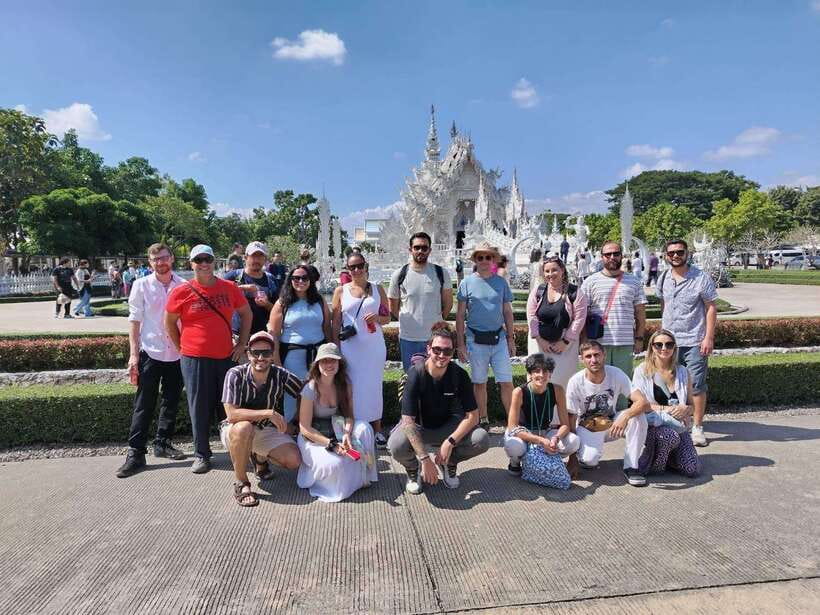
After another long stretch of road, the tour reaches Wat Rong Khun, better known as the White Temple. This is the visual high point for many people.
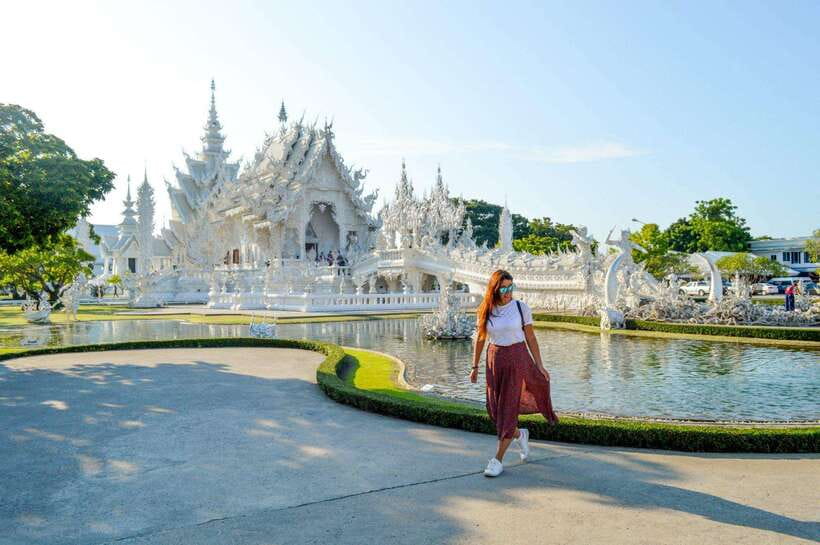
Artist Chalermchai Kositpipat created the temple as a modern interpretation of Buddhist ideas. The white exterior represents purity, while pieces of glass catch the light and suggest wisdom. The surface is packed with fine details, from sculpted figures to symbolic decorations.
Inside and around the temple, traditional religious themes meet surprising modern images. That contrast is part of the appeal. You are not simply looking at an old temple with weathered walls. You are looking at a contemporary artistic statement that uses Buddhist symbolism in a very theatrical way.
Take time to study the entrance and surrounding sculptures rather than racing straight inside. The details reward a close look, and this is one of the places where your phone camera will work hard. The sun can be strong on the white surfaces, so a hat and sunscreen are useful.
A lunch stop follows in Chiang Rai, but lunch is not included. You can choose and pay for your own meal. Guides have helped people find Thai food and vegetarian choices, but the exact restaurant and menu are not specified in advance. Carry small bills, since several food and drink vendors may not have change for 500 or 1,000 baht notes.
Another pool worth the trip:
- Ao Nang: Hot Spring, Emerald Pool & Tiger Cave Temple Tour
★ 4.7 · 576 reviews - All day Krabi Jungle Tour (Hot Spring Water, Emerald Pool, Tiger Cave Temple)
★ 4.5 · 323 reviews - Discover Krabi – Emerald Pool, Hot Springs & Tiger Cave Temple
★ 5.0 · 296 reviews - Krabi: Tiger Temple, Hot Springs & Crystal Pool Jungle Tour
★ 4.2 · 287 reviews
The Blue Temple brings a calmer mood
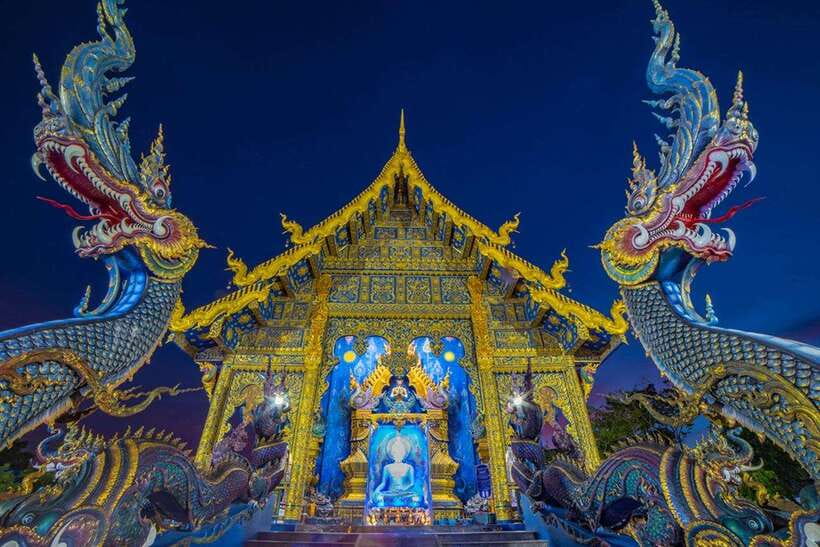
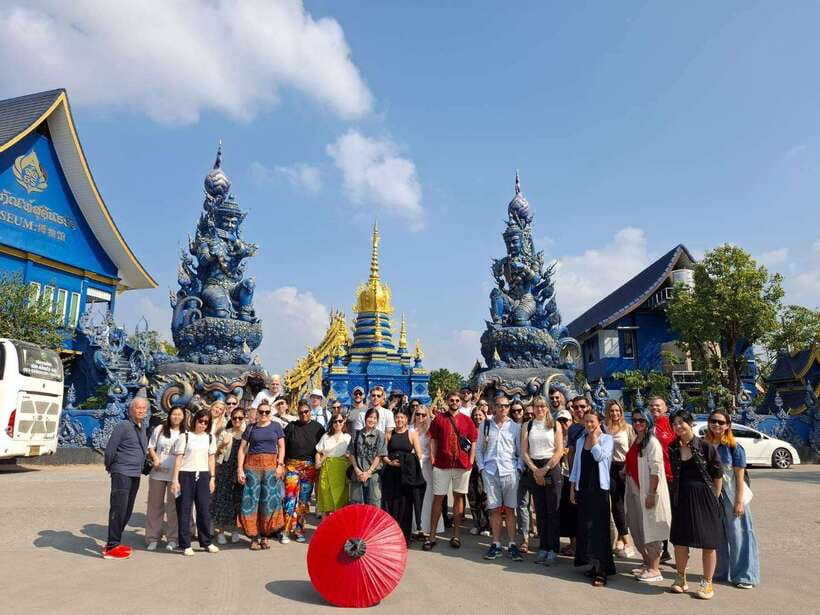
Wat Rong Suea Ten, or the Blue Temple, is about 30 minutes from the White Temple. Its deep blue interior, gold details, and large dragon figures create a completely different mood.
The blue walls make the central Buddha image look bright and calm. Outside, the guardian dragons give the entrance a dramatic edge. Inside, the color scheme is bold but the atmosphere can feel peaceful, especially if you pause rather than treating the temple as another quick photo stop.
This is one of my favorite parts of the route because the contrast with Wat Rong Khun is so clear. The White Temple is light, intricate, and almost otherworldly. The Blue Temple feels more enclosed and atmospheric, with color doing much of the work.
You may find coconut or blue-colored ice cream near the temple, a small treat that helps in the heat. The stop is not only about seeing the building. It also gives you a chance to sit, cool down, and reset before the final temple.
Dress modestly at both temples. Cover shoulders and knees, remove shoes where required, and keep your voice low inside prayer areas. These are active religious places, not just unusual buildings.
Huay Pla Kang Temple ends the sightseeing
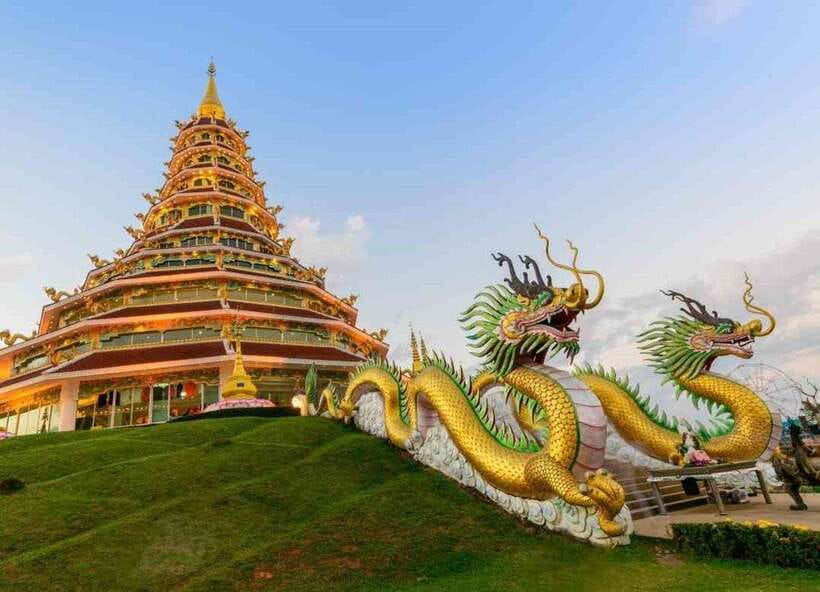
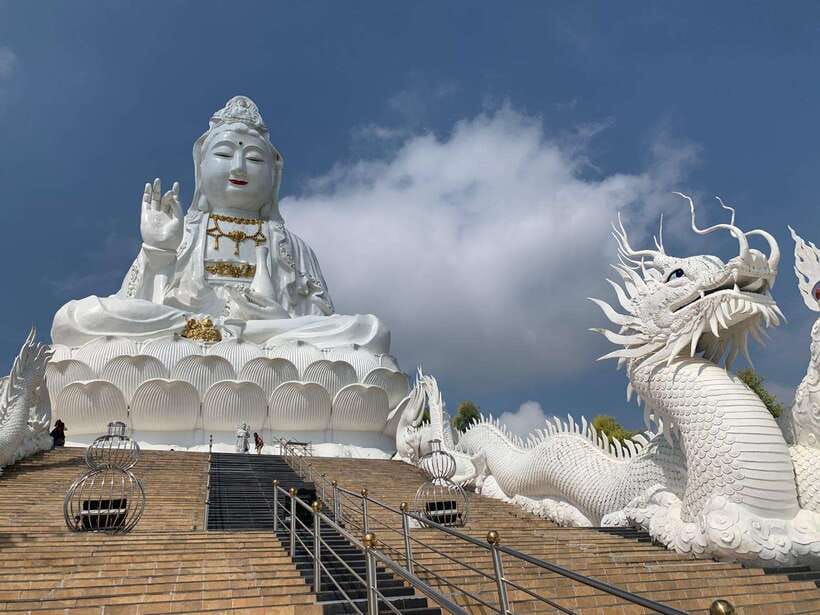
The final major stop is Huay Pla Kang Temple, known for its huge Guan Yin statue and nine-tiered pagoda. It is often described as the red temple because of its color scheme and large hillside structures, though its main attractions are the Guan Yin image and pagoda.
The pagoda is decorated with carved figures and detailed ornaments. If you climb to the top, you get wide views over the surrounding area. The climb can be tiring, especially after a full day in the heat, so pace yourself.
One useful point is that the temple grounds may involve stairs and walking across uneven areas. A small electric vehicle has helped some people with limited energy get around, but this experience is not recommended for people with mobility impairments. Do not assume every part will be step-free.
This stop combines spectacle with a quieter feel than the White Temple. The giant Guan Yin gives the site a strong focal point, while the pagoda invites closer attention to its carvings. There may also be inexpensive food and snacks near the temple, including low-cost pad Thai according to the experience details.
Build in enough time here. Some people feel the final stop is slightly rushed because there is a lot to see, stairs to manage, and sometimes food to grab before the return trip. If the pagoda matters most to you, listen carefully when the guide gives the meeting time.
The guide can make or break a long day
The route is fixed, but the guide shapes how useful it feels. Several guides receive praise for explaining Thai history, Buddhism, architecture, local customs, and practical details in a lively way.
Benz is noted for humor, clear information, picture tips, and attention to older people and children. Ruby is praised for keeping the group entertained during the long drive and explaining what to expect at each stop. Kwan has helped with food choices, timing, mobility needs, and onward transport for someone staying in Chiang Rai.
Other named guides include Ann, Dee, Alex, Kawee, Mon, and Nao. Guides are assigned by the operator, so you cannot count on a particular person. The strongest pattern is that a good guide helps with more than facts. They keep departure times clear, take photographs, answer questions, and notice when someone needs help.
The official guide speaks English. An audio guide is available through a QR code in 41 languages, but you must bring your own earphones. This matters because explanations given on the bus can be easy to miss when you are tired or when road noise gets in the way.
Transport, timing, and small practical details
The advertised duration is 810 minutes, or about 11 hours. In practice, some days can feel closer to 12 hours because of traffic, roadworks, boarding delays, and the distance between Chiang Mai and Chiang Rai.
Pickup depends on the option you choose. The main meeting point is Burger King at Thapae in Hotel M Chiang Mai. Arrive 15 minutes early, and allow extra time to reach the meeting point because Chiang Mai traffic can be slow. The bus will not wait for late arrivals, and missing the departure does not qualify for a refund or a new date.
The return drop-off points include Hotel M Chiang Mai, Burger King, and Thapae. The vehicle is air-conditioned, and some buses have USB ports, so bring your charging cable. Water may be provided, but I would still carry your own bottle.
Pack light. Large bags and luggage are not allowed, and there is no reason to bring anything beyond your day essentials. Comfortable clothing, walking shoes, insect repellent, sunglasses, a hat, sunscreen, and identification are sensible choices.
The tour has a private group option, but the standard format is designed for shared transport. If you want a slow pace, full control of meal stops, or extra time at one temple, a private option may suit you better.
Who should book this Chiang Rai tour?
Book it if you want to see Chiang Rai’s main artistic and religious sights from Chiang Mai without paying for a private car. It works especially well for first-time visitors, photographers, temple fans, and anyone with one free day who accepts a long road trip.
It also suits people who like a guide to handle the timing. You do not need to work out separate transport between Mae Kachan, the village, and the temples, and the entrance fees are already covered at the three main temple stops.
Think twice if you dislike early starts, long drives, heat, stairs, or fixed group schedules. The Karen village may also raise ethical questions for you, so decide in advance if you want to pay the separate entrance fee and take part.
At $35, I see this as a strong sightseeing bargain, provided you value access and variety more than comfort and free time. The White Temple, Blue Temple, and Huay Pla Kang Temple are the reason to go. The hot spring and village make the journey more varied, but the road is the price you pay.
FAQ
How long is the Chiang Rai tour from Chiang Mai?
The activity is advertised as 11 hours, or 810 minutes. Traffic, roadworks, and boarding times can make the day feel closer to 12 hours.
What language does the guide speak?
The official guide speaks English. An audio guide is available through a QR code in 41 languages, but you must bring your own earphones.
Is lunch included?
No. Lunch is not included, so bring money to buy your own meal during the Chiang Rai stop.
Is the Karen village entrance fee included?
No. The long-neck village entrance fee costs 300 baht and must be paid separately.
Can you swim at Mae Kachan Hot Springs?
No. Swimming is not allowed, but you can enjoy the surroundings and dip your feet in the warm water.
Where does the tour meet?
The stated meeting point is Burger King at Thapae in Hotel M Chiang Mai. Arrive 15 minutes before departure.
What temples are included?
The tour visits Wat Rong Khun, known as the White Temple, Wat Rong Suea Ten, known as the Blue Temple, and Huay Pla Kang Temple.
Is the tour suitable for someone with mobility problems?
It is not recommended for people with mobility impairments. The temple grounds include stairs and walking, especially at the nine-tiered pagoda.
Freshly added soaks in Thailand
- Pattaya: Let’s Relax Onsen & Spa Grand Center Point Space★ 4.5 · 14 reviews
- Bangkok: Yunomori Sukhumvit Onsen Hot Springs Spa Pass★ 4.5 · 43 reviews
- Full-Day Chiang Rai Temples Tour from Chiang Mai with Hot Spring★ 4.5 · 48 reviews
- Full-Day Jungle Tour Including Tiger Cave Temple, Crystal Pool and Krabi Hot Springs★ 3.5 · 53 reviews
- Ao Nang: Hot Springs, Emerald Pool, and Tiger Cave Day Tour★ 4.2 · 90 reviews
- Bangkok: Let’s Relax Onsen Thonglor E-Voucher★ 4.4 · 57 reviews
- Tiger Cave Temple, Emerald Pool & Hot Springs Tour from Krabi★ 5.0 · 100 reviews
- Bangkok: All-Day Pass to Yunomori Sathorn Onsen Bath and Spa★ 4.6 · 103 reviews
Chiang Mai Hot Springs, compared.
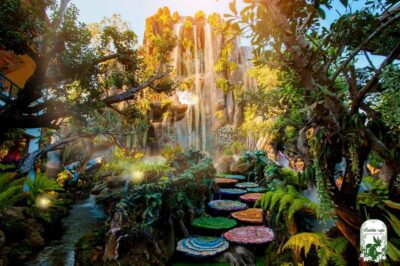
Chiangmai to Chiangrai: 3 Temples, Hot Springs& Lalitta Cafe
Read our review →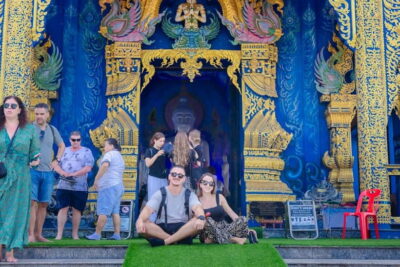
Red, Blue, White Temples & Hot Spring Trip from Chiang Mai
Read our review →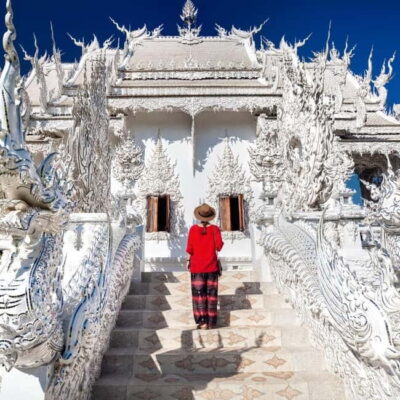
Chiang Rai Famous Temples & Hot Springs Day Trip
Read our review →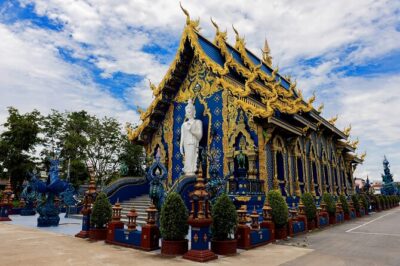
Full-Day Chiang Rai Temples Tour from Chiang Mai with Hot Spring
Read our review →More soaks worth the detour